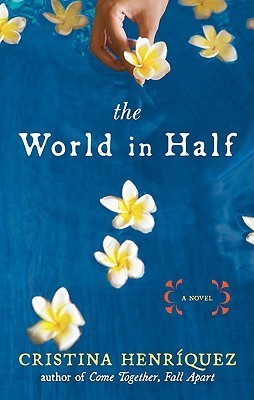
The World in Half
Book Description
Two worlds collide in a gripping tale of family, identity, and longing. When a young girl grapples with her fractured relationship with her father, she embarks on a journey that forces her to confront the chasm between her American life and her father's Guatemalan roots. As secrets surface and bonds are tested, her quest for belonging morphs into a poignant exploration of what it means to straddle two cultures. Each revelation brings danger and hope in equal measure. Will she find the strength to reconcile the halves of her world before they tear her apart?
Quick Book Summary
"The World in Half" by Cristina Henríquez tells the story of Miraflores, a young woman from Chicago grappling with her identity after the revelation that her estranged father, whom she's never met, is dying in Panama. Driven by longing and curiosity, Mira travels to Panama to seek out the truth about her family and her roots. Immersed in a vibrant but unfamiliar culture, she uncovers buried secrets and comes face-to-face with the complexities of belonging to two worlds. Her journey is as much internal as external, exploring themes of family, generational disconnect, and the search for identity. As Mira navigates cultural divides and emotional wounds, she discovers resilience, compassion, and a renewed understanding of what it means to belong.

Summary of Key Ideas
Table of Contents
Identity and Cultural Duality
Miraflores, a biracial young woman raised by her mother in Chicago, has always been conscious of the absence of her Panamanian father. The novel opens with Mira feeling adrift, caught between her American upbringing and her yearning for a connection to her Latin heritage—a duality that leaves her with unresolved questions about who she is and where she truly belongs. This identity conflict intensifies when Mira learns that her father is terminally ill, compelling her to confront a part of her life that has long been shrouded in secrecy and longing.
Family Secrets and Reconciliation
Driven by a mix of hope and trepidation, Mira sets out for Panama, determined to meet her father before it is too late. The unfamiliar sights, sounds, and customs of Panama force her to grapple with the realities of her heritage, contrasting sharply with the world she knows in Chicago. Armed with little more than curiosity and her father's last known address, Mira’s quest becomes a tapestry of small encounters and discoveries, each revealing something new about her father, her family, and herself. The journey forces her to reconcile the fantasy she had about her origins with the complicated truth she uncovers.
The Search for Belonging
Mira’s search brings her in contact with extended family members and her father’s past, revealing both love and betrayal woven through generations. As she uncovers family secrets—including the circumstances surrounding her parents’ separation—Mira is challenged to rethink the narratives she’s built about her own life. The revelations are often painful but necessary, and serve as a catalyst for her personal growth. Along the way, Mira also finds allies and friends who help her navigate this foreign landscape, offering moments of connection that bridge her two worlds.
Intergenerational Trauma and Healing
While Mira’s external journey is marked by the physical search for her father, her internal journey is defined by the struggle to find belonging. She comes to understand that her identity is not a puzzle with only one solution; instead, it is something she can craft from the fragments of both her American and Panamanian heritage. The process helps her mend some of the rifts in herself and in her family, but also teaches her to live with the ambiguity and sorrow that comes from old wounds and imperfect reconciliation.
Embracing Uncertainty and Change
Ultimately, "The World in Half" is a moving exploration of family, identity, and the yearning to belong. Cristina Henríquez renders Mira’s journey with empathy and nuance, capturing the beauty and difficulty of straddling two cultures. By the novel’s end, Mira emerges stronger and wiser, accepting both the pain and possibility that come from embracing all facets of her history. Hers is a story of making peace with the past in order to shape a hopeful future.
Download This Summary
Get a free PDF of this summary instantly — no email required.