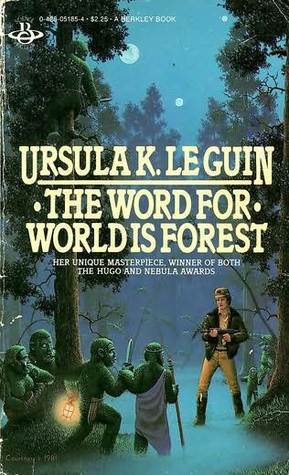
The Word for World Is Forest
Book Description
A world on the brink of destruction, where trees are sacred and life pulses through every leaf. Humanity’s greed clashes with the spirit of the forest as two vastly different cultures collide in a struggle for survival and identity. In this haunting tale, peacekeepers and invaders grapple over what it means to truly belong. Emotion runs deep, and loyalties are tested amidst the lush, vibrant backdrop of an alien world. What sacrifices will be made when the very fabric of existence hangs in the balance? Can harmony be found in the whispers of the trees, or will the forest's voice be silenced forever?
Quick Book Summary
"The Word for World Is Forest" by Ursula K. Le Guin is a powerful novella exploring the collision between an ecologically attuned alien society and human colonizers from Earth. On the planet Athshe, the indigenous Athsheans live in harmony with their lush forests, valuing dreams and the spiritual connections with nature. Human settlers, desperate for resources, exploit both the land and the Athsheans, leading to escalating violence and cultural destruction. The novella centers on the differing worldviews of Davidson, a brutal human commander, and Selver, an Athshean who evolves from a peaceful dreamer to a revolutionary leader. Through their conflict, Le Guin examines themes of colonialism, environmentalism, and the high cost of resistance. The narrative ultimately questions whether reconciliation and understanding are possible after violence and exploitation.


Summary of Key Ideas
Table of Contents
Colonialism and Its Consequences
On the forested planet known to humans as New Tahiti and to its natives, the Athsheans, as "forest," life is governed by ecological balance and deep spiritual connection to nature. The Athsheans live communally, guided by a tradition of dreaming that is integral to their consciousness and culture. Their society is peaceful and adaptable, until the sudden arrival of human colonizers from Earth, whose own home has been ravaged by environmental disaster. The humans view Athshe and its people as resources to be exploited, initiating a regime of deforestation, forced labor, and violence against the natives.
The Relationship Between Humanity and Nature
The core conflict is embodied by two characters: Davidson, a ruthless human military officer driven by greed and prejudice, and Selver, an Athshean who endures trauma at human hands. Davidson oversees the cutting of the forests and brutal suppression of Athshean resistance, enabling exploitation through fear and cruelty. Selver, deeply wounded by the loss of loved ones, is pushed to abandon his culture's pacifism and lead an unprecedented war of resistance. This clash not only transforms Selver but also the entire Athshean society, which begins to reconsider the role of violence in its struggle for survival.
Cultural Identity and Resistance
Le Guin delves into the legacy of colonialism, depicting how the colonizers impose their own values, languages, and systems upon the indigenous people, disregarding the existing, harmonious order. The Athsheans are forced to assimilate or resist, leading to tragic consequences and irrevocable cultural change. The novella critiques the presumption of human superiority and the devastation of both land and lives wrought by imperial ambition. In doing so, it echoes real-world histories of colonization and environmental destruction.
The Role of Violence in Oppression and Liberation
Nature is more than a backdrop; it is a living presence that shapes every aspect of Athshean identity. The importance of dreams represents a consciousness attuned to ecological and psychological balance, contrasting sharply with the utilitarian mindset of the Earthly invaders. The destruction of the forests becomes both literal and symbolic—a mass violation that threatens the essence of Athshean existence. Through Selver’s journey, Le Guin questions whether violence can ever be justified, and if peace is ever truly possible after such profound ruptures.
Dreams and the Meaning of Consciousness
In the aftermath of resistance, neither the Athsheans nor the humans remain the same. Though the Athsheans succeed in driving most colonizers away, they are left forever altered, having learned the capacity for violence. Selver’s final interactions with Davidson reflect the ambiguous moral terrain they both inhabit. The novella closes on an uneasy sense of hope and loss, inviting readers to consider the fragile possibilities of coexistence, the weight of cultural transformation, and the urgent need to respect both different ways of being and the worlds they inhabit.
Download This Summary
Get a free PDF of this summary instantly — no email required.