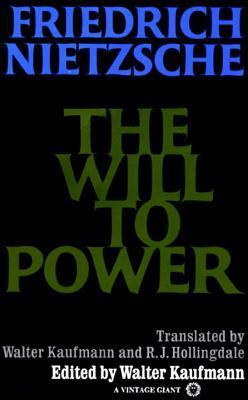
The Will to Power
Book Description
What if the very essence of life pulsates with an insatiable drive for power? In "The Will to Power," Friedrich Nietzsche unleashes a whirlwind of thought-provoking ideas that challenge the foundations of morality, ambition, and the human spirit. Each page ignites a battle between conformity and individuality, urging readers to confront the raw forces that shape our existence. With a compelling exploration of strength, creativity, and the struggle for dominance, it captivates the mind and stirs the soul. Are we mere puppets of fate, or can we seize our destinies with fierce determination?
Quick Book Summary
"The Will to Power" is an assemblage of Friedrich Nietzsche’s notes, reflecting his radical philosophical vision. Central is the concept of the "will to power": the idea that a fundamental drive for dominance, creativity, and expansion underlies all life. Nietzsche critiques traditional morality, arguing it suppresses the vital forces of individuals, especially those with the power and vision to transform society—the so-called "overman." Rather than seeing life as governed by reason or faith, Nietzsche sees it as an expression of chaotic flux, where values are created, challenged, and destroyed in pursuit of higher forms of existence. The book also investigates the decline of religion, the rise of nihilism, and calls for a revaluation of all values. As a posthumously compiled text, it is not a neat narrative but a bracing collection of insights, provocations, and unfinished thoughts, each pushing the boundaries of philosophy and the human spirit.



Summary of Key Ideas
Table of Contents
The Will to Power as Life’s Fundamental Drive
Nietzsche’s central thesis is that life, in all its forms, is driven by an innate "will to power." This concept transcends mere survival or pleasure-seeking, pointing instead toward an intrinsic urge to grow, dominate, and creatively transform the world. Every living being is seen as striving to express and enhance its own power. Nietzsche interprets growth, competition, and even conflict as necessary expressions of this will, rejecting notions that prioritize stability or harmony above all else.
Critique of Morality and Religion
Building on his critique of established values, Nietzsche scrutinizes traditional morality—especially Christian morality—as restrictive frameworks that stifle individuality and strength. He argues that these moral codes were developed by the weak to restrain the strong, promoting values like humility and self-sacrifice at the expense of vitality and excellence. Religion, for Nietzsche, is both a symptom and reinforcer of this subversion of natural drives, leading individuals away from authentic expression and towards a life-denying conformity.
Nihilism and the Crisis of Values
The book delves into the problem of nihilism, which Nietzsche sees as the consequence of the "death of God" and the breakdown of absolute values. With the decline of religion and traditional philosophies, individuals are left without ultimate meaning or purpose. Nietzsche analyzes the psychological and cultural consequences of this crisis, arguing that it creates both profound dangers and unprecedented opportunities for creative self-overcoming.
Creation of New Values and the Overman
To overcome nihilism, Nietzsche calls for a radical "revaluation of values" and the emergence of the "overman" (Übermensch), a figure who creates new values grounded in strength, creativity, and individuality. This requires courage to challenge conventions and embrace uncertainty, fueling cultural transformation. The overman represents the ideal of affirming life’s chaos—not only surviving in a world without predetermined meaning but thriving and shaping it anew, embodying the fullest expression of the will to power.
Eternal Recurrence and the Limits of Knowledge
Finally, Nietzsche engages with the concept of eternal recurrence and the limitations of human knowledge. He contemplates the possibility that existence may endlessly repeat, posing a challenge: can one affirm life so profoundly as to desire its eternal repetition? Furthermore, Nietzsche is skeptical of claims to objective truth or progress. He sees knowledge as product of competing wills and perspectives, shaped by the same underlying drive for power that animates all life. This radical perspectivism invites readers to question the very grounds of certainty and embrace the creative challenge of existence.
Download This Summary
Get a free PDF of this summary instantly — no email required.