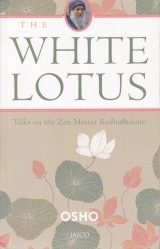
The White Lotus
Book Description
Amidst the chaos of modern life, a profound journey unfolds in "The White Lotus," where desire and self-discovery collide. Through vibrant tales of seekers grappling with love, loss, and enlightenment, the narrative pulses with urgency and insights that shake the very foundations of conventional thought. Each chapter reveals layers of human experience, inviting an intimate dance with truth and transformation. With every revelation, tension builds—what will it mean to awaken? Secrets unravel and a path to liberation beckons. Are you ready to challenge everything you believe and uncover the lotus blooming within?
Quick Book Summary
"The White Lotus" by Osho Rajneesh offers a meditative exploration of Zen and Buddhist philosophy, guiding readers through the labyrinth of human longing, illusion, and the quest for self-realization. Through vibrant parables and candid discourse, Osho confronts the anxieties of modern life—material pursuits, uncertainty, and emotional turmoil—while illuminating a path toward inner awakening. He challenges societal norms and religious orthodoxy, inviting seekers to let go of attachment and externally imposed identities. The journey Osho lays out is neither easy nor linear; it is a dance between doubt and insight, darkness and clarity. Ultimately, "The White Lotus" is both a call to radical self-honesty and a poetic invitation to discover the truth blooming at the core of our being—a truth untouched by fear, ego, or expectation.



Summary of Key Ideas
Table of Contents
The Nature of Desire and Suffering
Osho begins by examining the tangled roots of human desire and the inherent suffering that springs from attachment. Using stories and sharp observations, he reveals how our constant pursuit of pleasure, approval, and security only deepens our dissatisfaction. These cravings are likened to layers of illusion that cloud our perception and trap us in a cycle of longing and disappointment. He argues that recognizing the futility of endless wanting is the first step toward authentic self-understanding and spiritual liberation.
The Art of Present Moment Awareness
Attention then shifts to the transformative power of mindful awareness. Osho emphasizes that enlightenment is not a distant fantasy but is accessible in each moment. By practicing present-moment awareness, readers are encouraged to drop intellectual clutter, habitual worries, and cultural conditioning. This attentiveness is both simple and radical—it reveals the extraordinary within the ordinary and opens the door to genuine freedom. The book advises embracing silence and stillness as portals to deeper insight.
Letting Go of Attachment and Ego
A central theme in the book is the necessity of relinquishing attachments and disentangling from the ego. Osho challenges the reader to examine how identities, beliefs, and external achievements reinforce the illusion of separateness. Through vivid metaphors, he suggests that only by surrendering these attachments can we experience wholeness and peace. Liberation is portrayed not as an act of striving, but as a subtle process of letting go and unlearning.
The Journey of Inner Transformation
The narrative is rich with stories of seekers, mistakes, small epiphanies, and setbacks that punctuate the journey of self-discovery. Osho does not promise a linear or painless path. Instead, he frames inner transformation as an ever-evolving dance, marked by honesty and courage. Failures become stepping stones, and moments of doubt are welcomed as invitations to deeper inquiry. The pulse of the book is one of invitation—not dogma—to trust one’s own inner light.
Awakening to True Nature
Ultimately, Osho guides the reader toward awakening to their true nature, which he likens to the blossoming of a white lotus. This awakening is characterized by profound clarity, compassion, and freedom from fear. It is a state where the boundaries between the self and the world dissolve, replaced by a sense of unity and joy. The closing message is both challenging and hopeful: to awaken is to risk everything familiar, yet what emerges is a life of radical authenticity and peace.
Download This Summary
Get a free PDF of this summary instantly — no email required.