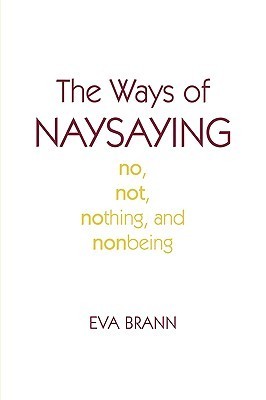
The Ways of Naysaying: No, Not, Nothing, and Nonbeing
Book Description
What if the words we use to negate reality could unlock deeper truths about existence? In "The Ways of Naysaying," Eva Brann masterfully dissects the seemingly simple yet profound concepts of no, not, nothing, and nonbeing. Each chapter invites readers to explore the intricate dance of denial and affirmation that shapes our thoughts and actions. Brann weaves philosophy with practicality, revealing how these essential negations can illuminate our understanding of life, freedom, and meaning. As the boundaries between presence and absence blur, one must ask: what revelations lie beneath the shadows of our refusals?
Quick Book Summary
In "The Ways of Naysaying," Eva Brann investigates the foundational roles of negation in human thought and language. Through close philosophical analysis, she explores how words such as no, not, nothing, and nonbeing operate not as mere absences or denials, but as essential counterparts to affirmation. Brann examines the paradoxes that arise when we discuss what is not—questions of being, freedom, and meaning are all filtered through the lens of negation. By engaging with thinkers across the Western philosophical tradition, she reveals how denial and absence can be as formative as presence and assertion. Brann demonstrates that to confront what is "not" is to deepen our understanding of what is, urging readers to appreciate the philosophical richness behind everyday acts of refusal and distinction.





Summary of Key Ideas
Table of Contents
The Logic of Negation in Human Thought
Eva Brann begins her exploration by considering the unique power of negation in thought and language. Far from being a simple rejection or cancellation, negation structures our perceptions and enables distinctions that make meaning possible. The ability to say “no” or to reject a claim is what allows us to set boundaries, sharpen concepts, and guide inquiry. Brann outlines how even fundamental affirmations rely on a background of negation; we cannot say what something is without, at least implicitly, saying what it is not.
Ontological Implications of Nothingness and Nonbeing
Moving deeper, Brann investigates the philosophical significance of nothingness and nonbeing. Drawing from thinkers such as Plato, Aristotle, and Heidegger, she reveals the ways in which absence is a positive phenomenon, not merely the lack of presence. Nothingness challenges our intuitions about existence and calls into question the boundaries of reality itself. Brann illustrates how encounters with nothing—be it emptiness, void, or silence—provoke reflection about what it means to be and to not be, laying a groundwork for ontological inquiry.
Negation as a Pathway to Freedom and Responsibility
Brann then turns to the existential and ethical dimensions of negation. By examining moments of refusal and denial, she uncovers how negation is intimately connected to freedom. The power to say no, to reject external impositions or internal compulsions, is at the heart of autonomy and responsibility. Brann argues that individuals become truly self-determined through encounters with negation, where each act of refusal defines personal values, commitments, and the boundaries of the self.
The Interplay of Absence and Presence in Meaning
Another key theme is the dynamic relationship between presence and absence. Brann delves into how meaning is generated not just by what is present, but also by what is absent or withheld. This interplay is central to language, art, and social life. By attending to the unspoken, the excluded, and the negated, we gain richer insight into the patterns of significance that shape experience. Brann encourages readers to see absence not as a deficiency, but as a vital element in the creation of meaning.
Finally, Brann invites readers to embrace the productive power of naysaying. By engaging with negation thoughtfully, we can interrogate assumptions, clarify understanding, and cultivate a deeper appreciation for existence. The practice of questioning, doubting, and challenging—hallmarks of philosophy—depend on the fertile ground of negation. Brann closes with the suggestion that our refusals and denials are not dead ends, but gateways to discovery, opening pathways to wisdom, freedom, and meaning.
Download This Summary
Get a free PDF of this summary instantly — no email required.