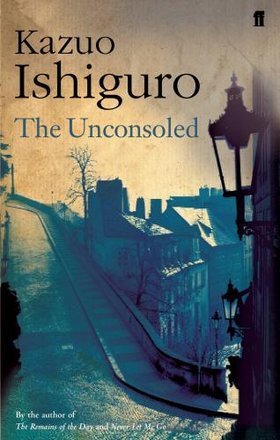
The Unconsoled
Book Description
A man wakes up in an unfamiliar city, pursued by shadows of expectation and obligation that blur the line between reality and dream. As he navigates a labyrinth of peculiar encounters, the weight of his past unravels amidst a symphony of surrealism and profound human connection. Swirling emotions and convoluted relationships entangle him, revealing the desperate quest for meaning in a world that demands everything yet offers little in return. Each step forward becomes a dance with uncertainty, challenging the boundaries of identity and purpose. Will he find his own path, or remain trapped in a never-ending performance?
Quick Book Summary
"The Unconsoled" by Kazuo Ishiguro is a labyrinthine, dreamlike novel that follows Ryder, a famed pianist, as he arrives in an unfamiliar European city to give an important performance. Navigating a tangled web of obligations, surreal encounters, and shifting realities, Ryder becomes increasingly lost both physically and emotionally. The city's inhabitants—each with their own pressing needs and enigmatic motives—draw Ryder into their troubles, making it impossible for him to fulfill any single promise. The story unfolds in a surreal fashion, with distorted time and logic, mirroring a mind caught between memory, confusion, and fragmented identity. Through its ambiguous narrative, "The Unconsoled" explores the burden of expectation, the complexity of human connection, and the perpetual quest for meaning in an uncertain world, ultimately portraying the human condition as a continuous struggle to reconcile ambition, memory, and personal obligation.


Summary of Key Ideas
Table of Contents
The Labyrinth of Memory and Identity
Ryder, a celebrated pianist, lands in a nameless Central European city where he’s been invited to perform at a mysterious, pivotal concert. Upon arrival, he finds his schedule inexplicably packed with strange meetings and impossible tasks, most of which he cannot recall agreeing to. His encounters with residents—including hotel staff, city officials, fans, and a woman who may be his wife—are tinged with a surreal, dreamlike logic, causing Ryder to question what is expected of him and who he really is. The boundaries between past and present, public and private, become porous as Ryder lurches from one bewildering obligation to the next.
Burden of Expectation and Obligation
Throughout the novel, Ryder bears the crushing weight of others’ expectations. Every city dweller seeks his help with deeply personal problems, viewing him as a potential savior for the local music culture and their own private pains. Ryder’s inability to satisfy their pleas triggers mounting anxiety and a sense of inadequacy, mirroring the universal human struggle to live up to real and imagined duties. This burden is compounded by his own confusion, as his identity seems to blur and fragment in each interaction, leaving him increasingly isolated and unmoored.
Surrealism and the Nature of Reality
Ishiguro’s narrative blurs reality and dream, enveloping Ryder in an atmosphere where logic and chronology continually unravel. Rooms and streets transform, time loops unpredictably, and emotional states shift without explanation. The city’s geography and Ryder’s memories fuse and dissolve, evoking the surreal landscape of the subconscious mind. This fluidity challenges both Ryder and the reader to question what is real, reflecting how memory, expectation, and perception shape personal reality.
Isolation and Human Connection
Despite perpetual crowds, Ryder remains emotionally isolated. Connections with family, particularly a woman named Sophie and a child who could be his son, are elusive and unresolved. Attempts at intimacy—whether with his possible family or with strangers—repeatedly collapse under the weight of ambiguity and obligation. Yet amidst these failures, moments of empathy and yearning for understanding emerge, underscoring the fragility and necessity of human connection even in a world of relentless misunderstanding.
Quest for Meaning in Uncertainty
By the novel’s end, Ryder’s quest for clarity and fulfillment remains unresolved, mirroring the open-ended uncertainties of real life. The relentless demands he faces are never fully reconciled, and his search for purpose—both as an artist and as an individual—is as fragmented as the city’s surreal streets. Ishiguro paints existence as an unending performance, where meaning is sought more in the striving than in any definitive conclusion, and solace remains as elusive as the answers Ryder seeks.
Download This Summary
Get a free PDF of this summary instantly — no email required.