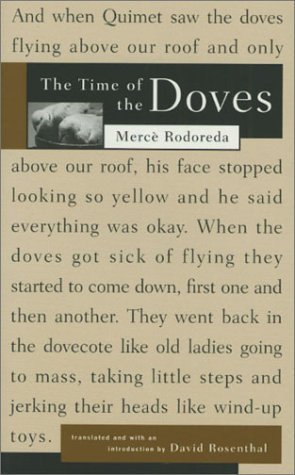
The Time of the Doves
Book Description
In a city torn apart by war, one woman's heart beats in rhythm with the chaos that surrounds her. Through the shifting shadows of love, loss, and betrayal, the haunting story of a young girl's coming-of-age unfolds amid the ruins of her beloved Barcelona. As fragile bonds are forged and shattered, secrets simmer beneath the surface, daring to ignite the flames of passion and despair. Loyalties are tested, and each moment is steeped in the weight of the past. Will she dare to seize the love that eludes her in a world on the brink of collapse?
Quick Book Summary
"The Time of the Doves" by Mercè Rodoreda is a poignant portrait of Natalia, a young woman in Barcelona whose life is interwoven with the tumultuous history of Spain before, during, and after the Civil War. Navigating the devastation of conflict and the intricacies of personal hardship, Natalia seeks meaning and survival amid loss, hardship, and emotional struggle. Her resilience is tested by traumatic events, ill-fated loves, and the daily grind of poverty, but through intimate inner monologues, Rodoreda crafts a raw and lyrical exploration of a woman’s struggle for selfhood. The book’s evocative, stream-of-consciousness style draws the reader into Natalia’s world, where fleeting moments of tenderness and hope illuminate an otherwise stark and unforgiving existence. Ultimately, the novel stands as a testament to human endurance and the quiet ways people reclaim agency in a shattered world.





Summary of Key Ideas
Table of Contents
The Impact of War on Everyday Life
Natalia’s story unfolds in pre-war Barcelona, where she works in a bakery and meets Quimet, whose intense affection quickly develops into marriage. The early sections see Natalia swept up in the rhythms of domestic life, as she navigates Quimet’s controlling nature, the arrival of their children, and the claustrophobic demands of her household. Rodoreda’s stream-of-consciousness narration immerses the reader in the quiet moments and internal anxieties of a woman whose desires are often suppressed by cultural norms and her husband’s expectations.
The Search for Identity and Selfhood
As the Spanish Civil War erupts, the narrative transforms, mirroring the chaos within Barcelona and Natalia’s psyche. Daily life becomes a struggle for survival: hunger, loss, and uncertainty infiltrate every aspect of existence. Natalia is forced to shelter her children from violence, deal with scarcity, and cope with the absence of Quimet, who joins the fight. The war not only devastates the city but fractures families, turning ordinary joys into rare blessings and reshaping Natalia’s understanding of herself.
The Burden of Memory and Trauma
With the war’s end, Natalia returns to a changed Barcelona, haunted by trauma. She faces the loss of loved ones and the pressure to rebuild life from the ruins. The emotional burden of past memories lingers, challenging her capacity for hope. Through encounters with new people, such as Antoni—who offers tentative prospects for love and support—Natalia gradually confronts her grief. She contemplates her role as a mother and individual, seeking meaning amid the lingering aftermath of conflict.
Resilience in the Face of Adversity
Throughout, Rodoreda underscores resilience and adaptability. Natalia proves to be quietly determined, finding small freedoms in acts of care, moments with her children, and the fleeting possibility of happiness. Love, depicted both as a source of comfort and pain, is intricately tied to questions of dependence and autonomy. Simultaneously, Rodoreda reveals how trauma shapes memory, influencing Natalia’s decisions and her uncertain hopes for renewal.
The Complexity of Love and Human Connections
Ultimately, "The Time of the Doves" is less a war story and more an examination of ordinary endurance. Natalia’s journey is marked by internal transformations as much as by external upheaval. In capturing the quiet heroism of her protagonist, Rodoreda crafts a universal meditation on survival, identity, and the possibility of reclaiming life from the wreckage of history. Through evocative prose, the novel stands as both an intimate confession and a powerful chronicle of resilience.
Download This Summary
Get a free PDF of this summary instantly — no email required.