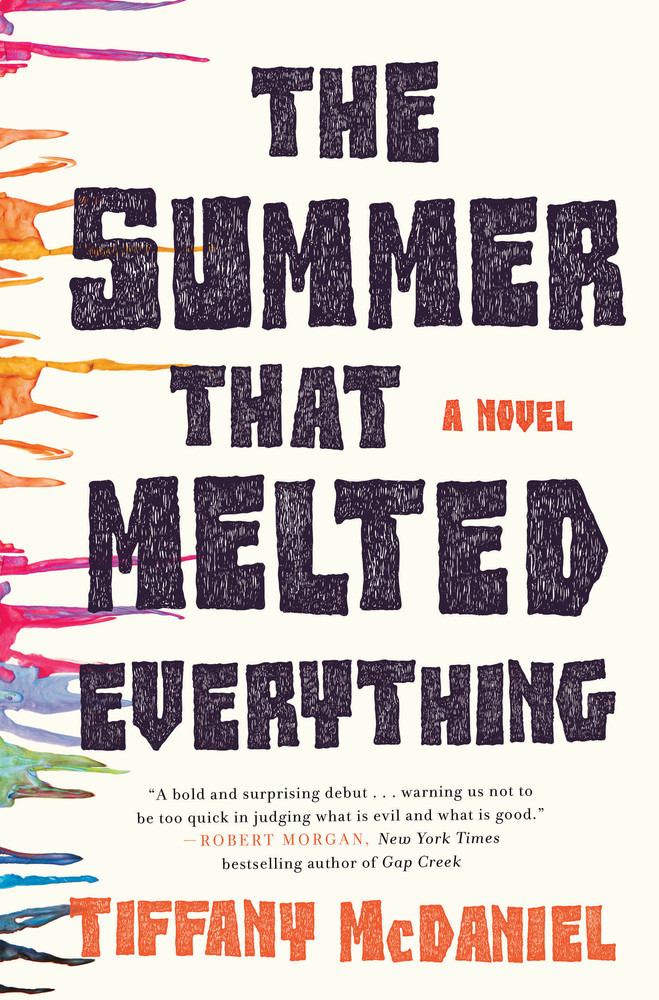
The Summer that Melted Everything
Book Description
A sweltering summer invites chaos to a small town when a mysterious boy claiming to be the Devil arrives, igniting fear and suspicion among the townsfolk. As heat waves blend reality with myth, relationships fracture, secrets unravel, and innocence shatters. Families turn against each other, driven by paranoia and desperation as the line between good and evil blurs. A young boy must confront his own demons and the unraveling world around him, where every neighbor hides their sins. Will the truth emerge before everything melts away?
Quick Book Summary
"The Summer That Melted Everything" by Tiffany McDaniel is a genre-blending novel set in the fictional town of Breathed, Ohio, during the summer of 1984. The arrival of a strange, enigmatic boy claiming to be the Devil coincides with an unprecedented heatwave, causing tension and fear to rise among the townspeople. Through the eyes of young Fielding Bliss, the story explores how suspicion, prejudice, and mob mentality can quickly infect a community, exposing hidden cruelties and forcing each member to confront their own morality. As secrets are revealed and relationships are tested under the unrelenting sun, the boundaries between innocence and guilt blur. The novel ultimately reflects on loss, the dangers of judgment, and the complicated nature of evil and redemption.






Summary of Key Ideas
Table of Contents
Innocence Lost and Coming of Age
Set during the hottest summer on record in the small town of Breathed, Ohio, the story unfolds with the arrival of Sal, a mysterious boy who appears when Fielding’s father, the town prosecutor, publishes an invitation to the Devil in the local paper. Sal, dark-skinned, barefoot, and gentle, proclaims himself the Devil, confounding townspeople with his quiet demeanor and ambiguous origins. Fielding quickly befriends Sal, bringing him into the Bliss family’s world. The oppressive heat serves as a metaphor for rapidly escalating tensions and unaddressed secrets simmering among the towns residents.
Mob Mentality and Paranoia
As Sal settles in, fear and suspicion quickly build. The townsfolk begin to scapegoat Sal, blaming him for tragedies and accidents that strike the town as the temperature climbs. Heightened by the oppressive climate, paranoia breeds cruelty, and the sense of community that once bound Breathed together begins to deteriorate. Rumors, prejudice, and hysteria run rampant, revealing the darker sides of otherwise upstanding citizens. The narrative explores how quickly societies can turn against those they view as outsiders, especially when fear takes root.
The Power of Prejudice and Fear
Fielding’s journey with Sal is a poignant coming-of-age story, culminating in a heartbreaking loss of innocence. The heatwave and Sal’s presence force Fielding to confront the complexities of good and evil, justice and mercy, and right and wrong. The line between perpetrator and victim, sinner and saint, becomes increasingly blurred. The novel excavates both personal and communal guilt, asking the reader to consider how innocence can be corrupted by collective fear and how easily evil can wear the face of righteousness.
Blurring the Lines Between Good and Evil
At the heart of the narrative are the relationships between family and friends, especially the bond between Fielding, Sal, and Fielding’s older brother Grand. These relationships are tested as the town’s suspicion grows, truths are revealed, and trust is broken. Forgiveness emerges as a central theme, examining whether redemption is possible in a fractured community. The novel is also an exploration of grief, as Fielding is forced to navigate loss, betrayal, and the consequences of actions driven by fear.
Family, Friendship, and Forgiveness
Ultimately, "The Summer That Melted Everything" is a study of humanity’s capacity for both compassion and cruelty. Through vivid magical realism and lush prose, McDaniel questions the nature of evil, challenging the very idea of a scapegoat. By the end, the story illustrates that the most dangerous devils are often not outsiders, but the darkness lurking within ourselves and our communities.
Download This Summary
Get a free PDF of this summary instantly — no email required.