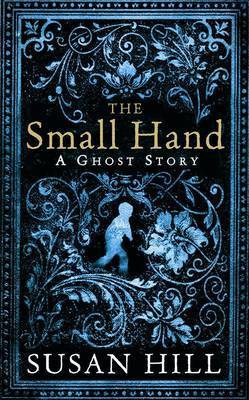
The Small Hand
Book Description
A chilling encounter with a child's ghostly hand sets the stage for a haunting journey into memory and remorse. As a once-successful rare book dealer grapples with the shadows of his past, a sinister presence threatens to unravel his carefully constructed world. The small hand's grasp tightens around his heart, drawing him deeper into a web of unresolved fears and unspoken truths. Every flicker of doubt and glint of nostalgia sharpens the suspense, leading to a reckoning that could change everything. Can he confront the specters of his own making before they consume him whole?
Quick Book Summary
"The Small Hand" by Susan Hill weaves a haunting tale of grief, guilt, and the supernatural. Adam Snow, a rare book dealer, stumbles upon a dilapidated Edwardian house and feels the chilling touch of a child's invisible hand. This brief moment triggers a cascade of increasingly disturbing and vivid experiences, as the ghostly presence becomes both a physical and psychological threa t. Haunted by the past and driven by curiosity, Adam delves into the house’s tragic history, uncovering secrets that blur the line between memory and reality. Hill’s atmospheric prose and slow-building suspense draw readers into a world where the boundaries between life and death are perilously thin, and where confronting inner demons is the only path to peace.


Summary of Key Ideas
Table of Contents
Haunting Power of Memory and Remorse
Adam Snow, a London-based rare book dealer, arrives at the remote and overgrown garden of a mysterious Edwardian house. While lingering outside, he suddenly feels a small, cold hand slip into his own—though no child is to be seen. The eeriness of this encounter latches itself to Adam’s psyche, and he becomes haunted by questions about the house’s history and the identity of the invisible child seeking his attention. The opening scene sets the stage for an exploration of suppressed memories and latent fears, tapping into the gothic tradition’s powers of suggestion and ambiguity.
The Interplay of Past and Present
Adam’s curiosity morphs into obsession as recurrent visions and a persistent sense of unease invade his daily life. The spectral touch intensifies, often seizing Adam in moments of vulnerability—especially during journeys through dark country roads or lonely nights. Gradually, his once-controlled world begins to unravel; sleep eludes him, his work suffers, and his relationships become strained. The line between reality and the supernatural becomes increasingly blurred, with Adam unsure whether he is pursued by a ghost or haunted by the ghosts of his own past.
Psychological vs. Supernatural Horror
Loneliness and isolation pervade Adam’s life, amplifying the gothic atmosphere and giving space for his psychological torment to grow. The rural settings and deserted buildings Hill describes are not merely backdrops; they deepen Adam’s feelings of alienation and vulnerability. As Adam’s connections to friends and colleagues fade, the small hand’s grip tightens, pushing him ever further from the comforts of rational thought and community. The sense of being watched and stalked lingers, leading Adam to question the nature of his own sanity.
Isolation’s Grip on the Human Psyche
Driven by both fear and curiosity, Adam investigates the house and the mysterious events tied to the location. Through research and conversations, he learns of a tragic event: a child lost under desperate circumstances at the site. Each revelation not only deepens his connection to the spectral hand but also draws Adam toward a confrontation with his own hidden regrets and traumas. Hill cleverly plays with the ambiguity of whether Adam’s experiences are supernatural phenomena or manifestations of repressed guilt.
Uncovering Buried Secrets
In the novel’s climax, Adam is forced to confront the origins of the small hand and the source of his overwhelming dread. This reckoning brings catharsis but at a devastating price, as the boundaries between the living and the dead momentarily collapse. By the novel’s end, the haunting is not only an external sequence of chills but an internal reckoning, underscoring how the unresolved shadows of our past can extend powerfully—and sometimes fatally—into the present.
Download This Summary
Get a free PDF of this summary instantly — no email required.