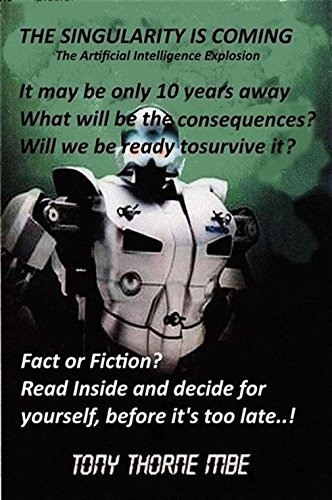
The Singularity is Coming: The Artificial Intelligence Explosion
Book Description
Humanity stands on the cusp of a monumental transformation—where artificial intelligence evolves beyond our wildest dreams. In 'The Singularity is Coming: The Artificial Intelligence Explosion,' Tony Thorne masterfully unveils the breathtaking possibilities and perilous implications of a future shaped by intelligent machines. As breakthroughs surge and ethical dilemmas loom, the balance of power teeters perilously. Questions of identity, control, and evolution collide in this gripping examination of an impending paradigm shift. Can society harness this revolution for the greater good, or will we unleash forces beyond our understanding? Dare to confront the future.
Quick Book Summary
"The Singularity is Coming: The Artificial Intelligence Explosion" by Tony Thorne explores the rapidly advancing frontier of artificial intelligence and the transformative moment known as the Singularity, when AI outpaces human capabilities. Thorne paints a vivid picture of how this paradigm shift could reshape society, offering remarkable innovations and exposing profound risks. The book delves into the technological accelerants propelling AI, the ethical minefields we must navigate, and the potential societal upheaval stemming from economic, political, and existential changes. Thorne challenges readers to consider how humanity can guide this evolution responsibly, weighing the promise of AI-driven utopia against the peril of surrendering control to autonomous technologies.



Summary of Key Ideas
Table of Contents
The Accelerating Pace of AI Development
Tony Thorne begins by examining the technological trends fueling rapid AI development. Through examples of exponential advancements in computing power, machine learning, and deep neural networks, he illustrates how the convergence of big data and powerful algorithms is making AI systems increasingly capable of tasks once thought uniquely human. This accelerating trajectory sets the stage for the approaching Singularity—the inflection point where machine intelligence surpasses human intelligence, fundamentally altering our relationship with technology.
Ethical Conundrums and Moral Responsibility
With progress comes a minefield of ethical dilemmas. Thorne navigates concerns about AI safety, bias, and the delegation of critical decisions to increasingly opaque systems. He discusses the responsibilities of creators and regulators to ensure aligned values, safety mechanisms, and transparency. The book explores the tensions between privacy and progress, the risks of autonomous weapons, and the challenges of embedding ethics in machines that could develop their own goals and motivations beyond human control.
Societal and Economic Disruptions
Societal and economic impacts form another pillar of Thorne's analysis. The book discusses the potential for widespread job displacement as machines automate labor and creative work alike. Thorne delves into the shifting balance of power, as corporations and nation-states harness AI capabilities, potentially exacerbating inequalities or sparking new competitions for dominance. The coming explosion of intelligence raises pressing questions about who benefits from this new order and who may be left behind.
Human Identity, Autonomy, and Evolution
A central concern is how the Singularity may redefine what it means to be human. Thorne examines debates around consciousness, human enhancement, and integration with machines. He probes the psychological and philosophical implications, questioning whether individuality, creativity, or free will can persist in a world where minds may be augmented or even outmoded by artificial agents. The narrative explores scenarios of coexistence, symbiosis, or replacement of human intellect by superintelligent entities.
Navigating an Uncertain Future
In conclusion, Thorne urges careful, collective stewardship of the AI revolution. He presents frameworks for ethical innovation, international collaboration, and proactive governance to navigate the unknowns of the Singularity. Balancing promise and peril, the book calls for vigilance, adaptability, and a renewed sense of human purpose in shaping technology that could surpass us. Ultimately, Thorne challenges readers to confront the future courageously, advocating for responsible progress that safeguards humanity’s values and agency.
Download This Summary
Get a free PDF of this summary instantly — no email required.