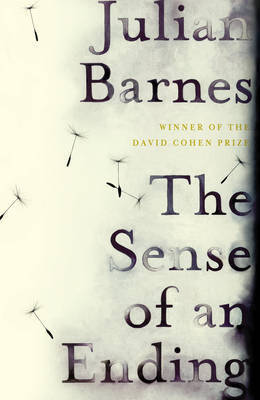
The Sense of an Ending
Book Description
A forgotten letter, a long-buried secret, and a life suddenly unraveled—Julian Barnes’ 'The Sense of an Ending' plunges deep into the labyrinth of memory and regret. As an ordinary man confronts the shadows of his past, the ripple effects of choices made long ago pulse with urgency. Relationships fray, truths emerge, and the boundaries of reality blur in a gripping exploration of how we construct our identities. Each revelation takes a sharper turn, revealing that the final chapters of life are not always what they seem. When does memory become a betrayal, and how far would one go to uncover the truth?
Quick Book Summary
"The Sense of an Ending" by Julian Barnes is a thought-provoking meditation on memory, regret, and the elusiveness of truth. The novel centers on Tony Webster, a retired and relatively contented man whose tranquil existence is shattered by an unexpected bequest from the mother of his first girlfriend, Veronica. As Tony seeks to unravel the mysteries of his past relationships, particularly his friendships from youth and the tragedy that befell his friend Adrian, he is forced to reconsider the narratives that have shaped his life. The story elegantly explores how subjective memory can occlude the truth, and how the past, when revisited, can reveal uncomfortable realities that challenge one’s self-perception. Barnes crafts a moving, elegantly written portrait of an ordinary man facing the consequences of youthful actions and misremembered history.





Summary of Key Ideas
Table of Contents
The Subjectivity of Memory
Tony Webster lives a quiet, unremarkable life, marked more by routine than by profound events. In his youth, Tony forms a close bond with a group of intellectual friends, among whom is the enigmatic and cerebral Adrian Finn. Their friendships are tested by love, as Tony begins a relationship with Veronica Mary Ford, which ultimately sours. Adrian and Veronica later become involved with each other, a revelation that sows discord and ultimately leads to tragedy. The suicide of Adrian casts a long shadow over the group, rooting itself in Tony’s mind as a symbol of unresolved guilt and confusion.
Consequences of Past Actions
Four decades later, Tony’s orderly existence is disrupted when he receives a letter from Veronica’s deceased mother, unexpectedly bequeathing him a small sum of money and Adrian’s diary. The diary, however, is withheld by Veronica, compelling Tony to reconnect with her and confront the tangled web of their shared past. As he attempts to piece together the story of Adrian’s demise and Veronica’s role, Tony must also reckon with the limitations of his own recollections and the possibility that his memories have been shaped by self-preservation and denial.
Guilt and Responsibility
Throughout his investigation, Tony is forced to confront how deceptively comforting memories can be, often tailored by the mind to avoid pain or culpability. The narrative oscillates between Tony’s present and evocative fragments of his youth, illustrating the unreliability of perspective and the ease with which details slip away or are altered. The closer Tony comes to the truth, the more he realizes that the reality of past events may have been more complex, even cruel, than he ever imagined.
Constructing Personal Narratives
Ultimately, the revelations Tony uncovers force him to accept uncomfortable truths about his own role in the misfortunes he has tried to forget. Adrian’s suicide was partially prompted by a cruel letter Tony wrote out of jealousy and anger, a fact Tony had deliberately omitted from his conscious memory. The uncovering of this fact, and the understanding of how little he truly knew those around him, leaves Tony grappling with remorse and a deeper understanding of the self-deceptions that shape identity.
The Elusiveness of Truth
"The Sense of an Ending" masterfully interrogates the nature of memory, the stories we tell ourselves, and the ways in which the past can reassert itself in unexpected, sometimes devastating ways. Barnes crafts a subtle, resonant tale about aging, the fallibility of recollection, and the moral complexities that linger long after the events themselves have faded. The novel urges readers to question the reliability of their own narratives and consider the hidden consequences of their actions.
Download This Summary
Get a free PDF of this summary instantly — no email required.