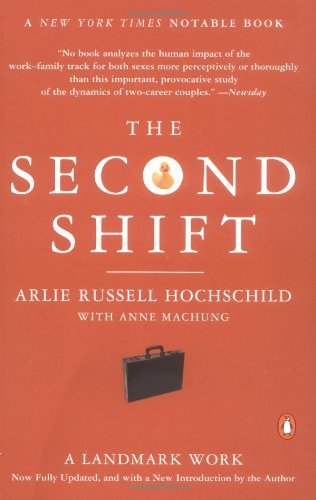
The Second Shift
Book Description
What happens when the clock strikes five, but the workweek is far from over? In "The Second Shift," Arlie Russell Hochschild takes readers into the heart of the family home, where women juggle jobs and domestic duties, battling exhaustion and unrecognized labor. This eye-opening exploration uncovers the silent struggles of working mothers who clock in for their most demanding shift after leaving the office. With each poignant story, the stakes rise, revealing the hidden costs of societal expectations and personal aspirations. How long can this relentless cycle continue before something breaks?
Quick Book Summary
"The Second Shift" by Arlie Russell Hochschild investigates the hidden labor endured by working women who, after finishing their jobs, face a 'second shift' of household chores and childcare at home. Drawing from in-depth interviews with dual-income couples, Hochschild exposes the emotional and physical toll this division places on women, along with the persistent societal norms that uphold it. The book challenges the assumption that earning a wage has automatically solved issues of gender equality within families. Instead, it shows that societal and familial expectations continue to burden women disproportionately, often leaving them drained, undervalued, and facing an uphill battle for recognition and support. Hochschild's analysis not only reveals personal struggles but also incites a wider conversation about equity, gender roles, and the changing landscape of American domestic life.





Summary of Key Ideas
Table of Contents
The Invisible Labor of Housewives
Arlie Russell Hochschild’s study introduces the concept of the "second shift," referring to the unpaid domestic responsibilities—such as cooking, cleaning, and childrearing—that working women undertake in addition to their professional jobs. Through detailed ethnographic interviews with fifty couples, Hochschild builds a comprehensive portrait of how women’s workforce participation hasn’t led to an equal sharing of housework. Despite advancements in women’s careers, the expectation persists that women alone should manage the home, creating a double burden that is largely unseen and unacknowledged.
Gender Roles and Societal Expectations
The book delves into how stubborn gender norms shape family life. Men often see their contribution to domestic duties as helping out, rather than taking equal ownership. Societal narratives and early socialization reinforce that housework is primarily a female responsibility, making it difficult for couples to renegotiate roles. This pattern persists across class and ethnic divides, although its specifics may differ. Hochschild highlights the stories of real families trying—and often failing—to find balance, showing how even well-meaning men and women can struggle against ingrained expectations.
Marital Dynamics and Division of Labor
Central to Hochschild’s analysis is the role of emotional labor: the management of feelings and relationships that keeps a household functioning smoothly. Women are typically held accountable not only for physical tasks but also for fostering emotional harmony and managing the well-being of children and partners. This emotional work remains invisible, yet it is crucial to family health and satisfaction. Hochschild argues that this dimension of labor is both exhausting and undervalued, contributing to women’s chronic fatigue, diminished career growth, and emotional burnout.
Emotional Labor and Family Well-being
The strains of the second shift reverberate through marriages, affecting satisfaction and even pushing some couples toward conflict or divorce. Hochschild shows how the lack of recognition for women’s contributions sows resentment. Attempts to balance work and home often lead to elaborate negotiation over chores, schedules, and childrearing, with mixed results. Some families manage to forge more equitable arrangements, but many fall back into traditional roles, highlighting the resilience of deep-rooted gender ideologies.
Paths Toward Greater Equality
Hochschild concludes with discussions on solutions and societal change. She advocates for a fundamental reevaluation of how families, workplaces, and policies acknowledge and support caregiving. Practical suggestions include better parental leave, workplace flexibility, and the encouragement of fathers’ involvement in domestic life. Ultimately, "The Second Shift" calls for collective efforts to shift both attitudes and structures, so that the burdens and joys of family life are more evenly shared and recognized.
Download This Summary
Get a free PDF of this summary instantly — no email required.