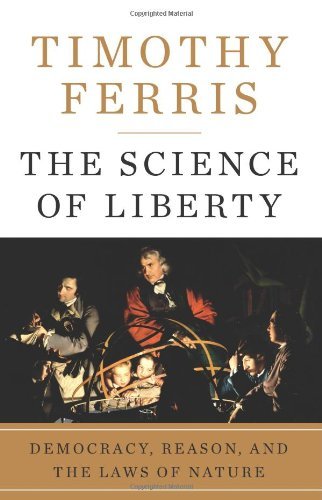
The Science of Liberty: Democracy, Reason and the Laws of Nature
Book Description
What if the fate of democracy hinges on the very fabric of the universe? In 'The Science of Liberty,' Timothy Ferris captivates with a bold exploration of how reason, natural laws, and the human spirit intersect to form the bedrock of freedom. This compelling narrative weaves together philosophy, science, and history, revealing how enlightenment thought fuels progress and empowerment. With each page, the stakes rise, challenging the reader to ponder the delicate balance between liberty and chaos. Can reason truly triumph over tyranny, or is democracy destined to be just an experiment?
Quick Book Summary
"The Science of Liberty" by Timothy Ferris investigates the intricate relationship between democracy, reason, and the laws of nature as understood through science. Ferris argues that the rise of free societies is deeply connected to the philosophical developments spawned by the Scientific Revolution and Enlightenment. Using rich historical examples, he illustrates how evidence-based inquiry and the embrace of rationality laid the groundwork for modern democratic institutions. Ferris warns, however, that democracy’s success is not guaranteed and depends on citizens maintaining a commitment to liberty, skepticism, and critical thinking. The book ultimately positions the scientific method as both a catalyst for personal and political freedom and as a necessary defense against authoritarianism in any era.






Summary of Key Ideas
Table of Contents
The Interdependence of Science and Liberal Democracy
Timothy Ferris opens by exploring how the emergence of the scientific method transformed human thought and shaped new ways of organizing societies. He illustrates that the questioning and empirical spirit of science during the Scientific Revolution seeded principles of open inquiry and debate—inspiring Enlightenment thinkers like Locke, Montesquieu, and Jefferson. These philosophical shifts fostered an environment hospitable to democracy, where laws were subject to reason and change rather than divine rule or tradition. Ferris situates science not as a cold discipline, but as a historical force entwined with the human quest for liberty.
The Role of Reason and Skepticism in Political Freedom
Central to Ferris’s argument is the idea that scientific reasoning—skepticism, the testing of hypotheses, and peer review—became foundational to liberal democratic systems. He shows that the core values of democracy, such as freedom of speech, equality before the law, and tolerance of dissent, echo the open-ended experimentation found in science. The book navigates how evidence and dialogue are critical to policymaking, warning that when politics disregards reason in favor of ideology, liberty is threatened. Ferris emphasizes that the success of free societies hinges on a populace willing to continuously examine and question authority.
Exposing the Dangers of Authoritarianism and Illiberalism
Ferris delves into the dark side of political history, examining how societies that suppress scientific thinking and embrace dogma often descend into authoritarianism. He discusses examples from the Soviet Union, fascist regimes, and theocracies to illustrate the perils of subordinating facts and free thought to ideology. Ferris argues that without a grounding in reason and open inquiry, societies risk stagnation, oppression, and the loss of individual autonomy. These cautionary tales highlight the fragility of democracy and the persistent threats posed by those who seek power without accountability or respect for truth.
Science as a Catalyst for Social Progress
The narrative then celebrates science’s broader impact on social and political progress. Ferris cites advances like the abolition of slavery, expansion of human rights, and improvements in health and technology as products of societies that respect freedom and evidence-based innovation. He contends that science helps demystify the world, empower citizens with knowledge, and provide tools to challenge injustice. In contexts where scientific literacy and democratic norms flourish together, societies are more adaptive, peaceful, and prosperous.
Ongoing Challenges to Liberty
Ferris concludes by acknowledging that democracy is never guaranteed but must be actively maintained. He outlines current challenges posed by misinformation, anti-intellectualism, and rising authoritarian movements. The survival of liberty depends on an informed citizenry, steadfast in upholding both scientific skepticism and political openness. Ferris’s work is both a warning and a call to action: if science and democracy are to endure, they must be perpetually defended and renewed by each generation.
Download This Summary
Get a free PDF of this summary instantly — no email required.