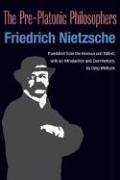
The Pre-Platonic Philosophers
Book Description
What if the dawn of Western thought held secrets that could unravel everything we believe? Dive into Nietzsche’s provocative exploration of the pre-Platonic philosophers, where chaos meets creation and elemental strife shapes the essence of existence. Witness the clash of ideas that challenged the very fabric of truth, as primal forces and ancient wisdom collide in an intellectual battleground. Amidst the shadows of Socrates and the light of Plato, a vivid tapestry of raw, untamed philosophy emerges. Can these archaic thinkers illuminate the complexities of modern life, or will their insights be forever lost in time?
Quick Book Summary
"The Pre-Platonic Philosophers" by Friedrich Nietzsche investigates the earliest thinkers in Western philosophy, prior to Socratic and Platonic dominance. Nietzsche seeks to uncover the primal origins of philosophical inquiry by examining how figures like Heraclitus, Anaximander, and Parmenides wrestled with fundamental questions of existence, change, and reality. He argues that these archaic Greek thinkers were bold explorers, whose raw and dynamic ideas were later systematized—and, in his view, somewhat diluted—by Socratic and Platonic rationalism. By revisiting their fragmentary insights, Nietzsche not only traces the evolution of philosophical thought but also revives a sense of untamed creativity, chaos, and the search for truth. Ultimately, he asks what modern thought might learn from these early visionaries, whose works shimmer with passion and elemental strife.




Summary of Key Ideas
Table of Contents
Origins and Essence of Pre-Platonic Thought
Nietzsche opens by asserting the importance of studying pre-Platonic philosophers to gain insight into the genesis of Western thought. He emphasizes that these early thinkers were not just primitive versions of later philosophers but originators who struggled directly with chaos, being, and the unknown. Their philosophies were marked by an immediacy and visceral engagement with the world, unmarred by the later predominance of system-building and dialectic. Nietzsche admires their courage to confront big questions without the safety net of established methodologies or consensus.
Strife, Change, and the Nature of Existence
Central to Nietzsche’s analysis is the role of strife and change, as embodied by philosophers like Heraclitus and Anaximander. He explores how these figures grappled with the reality of flux, seeing the cosmos as a dynamic interplay of forces rather than a static order. Nietzsche draws out the intense creativity and tension in their thoughts, contrasting this worldview with later traditions that sought stability and unchanging foundations. He suggests that this primordial chaos is closer to life itself, depicting philosophy’s origins as an embrace of uncertainty rather than a retreat from it.
The Dichotomy Between Reason and Instinct
Nietzsche contends that pre-Platonic philosophy is characterized by a potent mix of reason and instinct. These thinkers did not yet split the rational faculty from the more visceral aspects of human experience. Their inquiries into cosmology, existence, and morality were deeply colored by myth, intuition, and personal struggle. Nietzsche warns that the subsequent elevation of reason at the expense of instinct—seen in Socratic and Platonic philosophy—results in an impoverishment of thought, losing touch with its vital roots.
The Transition to Socratic and Platonic Philosophy
As Nietzsche traces the historical trajectory from the pre-Platonics to Socrates and Plato, he highlights a fundamental transformation in philosophical methodology. Socratic rationalism and Platonic idealism seek to impose order, to domesticate the raw energies of earlier philosophical speculation. Nietzsche suggests this shift marks both a gain in systematic clarity and a loss of creative vitality. He critiques the way later thinkers marginalize or reinterpret the original, chaotic impulses of the pre-Platonics.
Relevance of Ancient Wisdom for Modern Times
In concluding, Nietzsche calls for a renewed appreciation of the pre-Platonic spirit in philosophy. He argues that their willingness to dwell in uncertainty, to accept conflict and ambiguity, offers important lessons for modern thinkers disillusioned with rigid systems. By reviving the passionate, exploratory energy of these early philosophers, Nietzsche believes contemporary philosophy can reconnect with the elemental forces that first stirred humanity’s quest for meaning.
Download This Summary
Get a free PDF of this summary instantly — no email required.