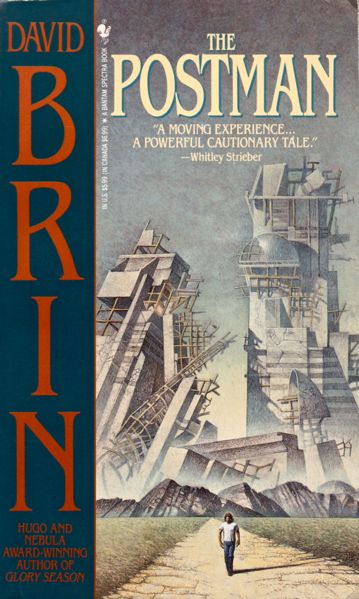
The Postman
Book Description
In a post-apocalyptic world where civilization lies in ruins, the only thread of hope is a forgotten symbol of connection—a mail carrier. When he dons an old postman's uniform and takes to the desolate roads, he unknowingly ignites a spark of rebellion against oppressive warlords. Each letter he delivers becomes a message of hope, inspiring fragmented communities to rise and reclaim their humanity. But as power-hungry factions close in, he must confront his own demons and decide how far he’ll go to protect the fragile flame of hope. Can one man’s journey restore faith in humanity’s future?
Quick Book Summary
"The Postman" by David Brin is a gripping post-apocalyptic novel about a drifter who discovers a United States Postal Service uniform and, out of desperate need, impersonates a postman. What begins as a ruse to gain shelter and food becomes something far greater. As he travels through the shattered remnants of the Pacific Northwest, delivering letters and messages, he revives hope in the hearts of isolated survivors. His presence sparks the belief that the United States—once symbolizing stability and unity—might still exist. Amid threats from brutal warlords and the enigmatic HyperSurvivors, the "Postman" faces moral dilemmas about deception, leadership, and the true nature of heroism. Ultimately, the novel explores whether stories and symbols can save humanity when all else has unraveled.



Summary of Key Ideas
Table of Contents
The Power of Symbols and Stories
Set in a ravaged American landscape, "The Postman" follows Gordon Krantz, a survivor journeying through a world devastated by war and ecological collapse. As nomadic bands and despotic warlords dominate the ruins, Gordon stumbles upon an abandoned mail carrier’s uniform. Putting it on to keep warm, he inadvertently assumes the identity of a postman from the "Restored United States." This small act, though rooted in desperation, allows him to facilitate connections between fragmented communities seeking signs of hope and order.
Hope and the Rebuilding of Society
The symbol of the postman—and the letters he begins to deliver—sparks new faith in humanity among isolated settlements. People cling to the idea that a greater society persists beyond their horizon, and that order and civilization can be restored. Gordon’s growing legend fosters cooperation and communication, even as he grapples with guilt for perpetuating a well-intentioned lie. His actions become a focal point for resistance against the rule of violent militias—especially the HyperSurvivors, who preach a creed of brutal strength over compassion.
Human Nature and Leadership
Throughout his journey, Gordon encounters a range of characters: from resourceful survivors to hopeful visionaries and hard-hearted leaders. He learns that leadership often arises not from strength, but from the ability to inspire. His own doubts and fears mirror those of the people he encounters. As his myth grows, so does his struggle to maintain sincerity and courage in the face of overwhelming adversity.
The Ethics of Deception and Survival
The crisis deepens as various factions converge, including the repressive Holnist warlords determined to crush any rebirth of order. Gordon’s role challenges him to weigh the morality of using deception for the greater good. When it becomes clear that the truth may shatter the very hope he’s helped create, he must decide whether to admit his falsehood or use his status to rally people against tyranny. The tension between the necessity of hope—however manufactured—and the obligation to truth forms the core of his ethical journey.
Conflict Between Civilized Values and Brutality
In the climax, Gordon’s inspired communities stand together against barbarism, showing that civilization can be reborn through unity, empathy, and shared ideals. The story ends not with a return to the old world, but with a fragile, collective commitment to building something better. Brin’s novel ultimately asserts that stories, symbols, and the willingness to act—flawed though they may be—are crucial catalysts for humanity’s recovery. The Postman’s journey is less about a single hero and more about the power of belief to heal and restore a shattered world.
Download This Summary
Get a free PDF of this summary instantly — no email required.