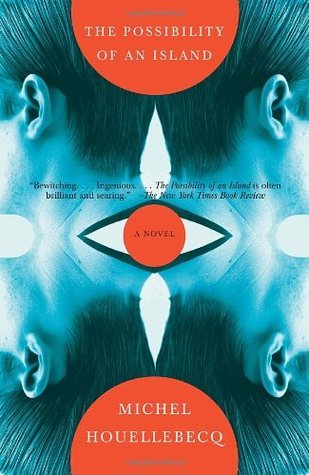
The Possibility of an Island
Book Description
In a near-future world where humanity’s longing for connection teeters on the brink of extinction, an isolated writer navigates the haunting depths of love, despair, and existential longing. As he grapples with the echoes of his past relationships and the eerie allure of a new breed of beings, the line between man and clone blurs, plunging him into a chilling exploration of what it means to truly live. With each revelation, the stakes skyrocket, threatening to unravel everything he knows. Can one find redemption amidst the desolation of a fractured society, or is true solitude inevitable?
Quick Book Summary
Set in a bleak near-future France, "The Possibility of an Island" follows Daniel, a disillusioned comedian-turned-writer who becomes entangled with a new quasi-religious movement promising immortality through cloning. As Daniel confronts the failures of love and human connection, the story weaves in the perspectives of his distant clones, who inhabit a post-apocalyptic world marked by isolation and emotional sterility. Through these interwoven narratives, Michel Houellebecq explores the boundaries between humanity and technology, the nature of desire, and the existential quest for meaning. The novel raises haunting questions about the future of civilization, the cost of detachment, and the possibility—or impossibility—of genuine connection in a fractured society.




Summary of Key Ideas
Table of Contents
Isolation and the Search for Meaning
The novel begins with Daniel, a successful yet jaded comedian, as he navigates the empty excesses of modern life. Disenchanted with the superficiality of human relationships and driven by existential disillusionment, Daniel drifts from one unsatisfying encounter to another. While passions flare and fade in his relationships, particularly with Isabelle and Esther, Daniel is unable to overcome a persistent sense of emptiness. His cynicism leads him to the Elohimite movement, a cult-like group that preaches salvation and eternal life through science and genetic engineering, promising an escape from the burden of mortality.
Humanity versus Post-Humanism
The narrative is innovatively structured, alternating between Daniel and his future clones—Daniel24 and Daniel25—who live in vastly different, post-human eras. In these bleak futures, society comprises solitary neo-humans, products of the Elohimite vision, engineered for emotional neutrality and physical perfection. Yet these new generations, deprived of authentic emotion and subjectivity, grapple with profound existential isolation. The clones reflect upon Daniel’s life, seeking answers to questions he never resolved. Houellebecq uses these parallel narratives to contrast genuine human experience with synthetic existence, illustrating the enduring hunger for connection, even when the self is radically transformed.
The Illusion and Failure of Love
A central theme of the novel is the failure and illusion of love. Daniel’s pursuit of romantic fulfillment consistently ends in disappointment and detachment. The narrative delves into how love, sex, and connection lose potency in a society obsessed with pleasure but unable to sustain meaningful bonds. Daniel’s story is mirrored by the muted yearnings of his clones, who, despite having access to memory banks of their predecessor’s experiences, remain emotionally stunted and incapable of truly connecting with others. Houellebecq suggests that intimacy, laden with pain and risk, cannot be algorithmically recreated or clinically manufactured.
The Allure and Danger of Immortality
The promise of immortality—a central offering of the Elohimite religion—proves a double-edged sword. Transcending death by transferring consciousness to cloned bodies is depicted not as a triumph, but a curse of unending solitude. The clones endure a sterile existence, cut off from organic experiences, sensation, and the very suffering that once made life meaningful for Daniel. The human desire to overcome mortality is shown as fundamentally flawed, leading not to liberation but to an amplified, permanent disconnection from the world and each other.
Through Daniel’s existential journey and his clones’ sterile wanderings, Houellebecq broadens the philosophical inquiry into the nature of humanity. The book ultimately asks whether redemption or genuine connection is possible in a world engineered against suffering and individuality. It grapples with the paradox of longing for connection in societies—both present and future—organized around isolation. "The Possibility of an Island" stands as a chilling meditation on the limits of utopian aspiration and the enduring, tragic beauty of human vulnerability.
Download This Summary
Get a free PDF of this summary instantly — no email required.