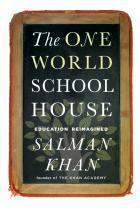
The One World Schoolhouse: Education Reimagined
Book Description
Imagine a world where education knows no boundaries, where every learner can unlock their potential at their own pace. In "The One World Schoolhouse: Education Reimagined," Salman Khan unveils a revolutionary vision for the future of learning, blending cutting-edge technology with timeless teaching principles. Transforming the concept of a classroom, he challenges the status quo and shows how to make education accessible and engaging for everyone. With astonishing success stories and groundbreaking insights, this book invites you to envision a global classroom where curiosity reigns supreme. Are you ready to join the education revolution?
Quick Book Summary
In "The One World Schoolhouse: Education Reimagined", Salman Khan, the founder of Khan Academy, shares his transformative vision for global education. Khan critiques traditional schooling models that focus on memorization and rigid pacing, advocating instead for mastery-based learning and technology-driven instruction. He explores his own experience in founding Khan Academy and the ways digital tools can personalize education, breaking down economic and geographic barriers. Through real-life examples and well-researched arguments, Khan demonstrates how education can be made accessible, engaging, and effective for every learner. The book serves as both a memoir and a manifesto, calling educators, parents, and policymakers to join a revolution that makes high-quality, flexible learning a universal right.


Summary of Key Ideas
Table of Contents
Mastery-Based Learning Instead of Fixed Timelines
Salman Khan begins by critiquing the traditional school system, emphasizing its limitations: rigid schedules, age-graded classrooms, and one-size-fits-all curricula. He argues that this structure often leaves students behind or bored, as it advances regardless of a child’s understanding. Through his personal teaching journey, Khan discovered that genuine learning is stifled when students are moved forward before mastering foundational concepts. He proposes shifting from a time-based model to a mastery-based one, allowing learners to progress at their own pace.
Technology as a Tool for Personalized Education
Embracing technology, Khan explores how online platforms can make education more flexible, accessible, and personalized. With tools like Khan Academy, students from anywhere in the world can access high-quality lessons and practice at their own pace. Data analytics offer real-time feedback, helping students and teachers identify strengths and weaknesses. This approach transforms passive classrooms into active learning environments, integrating videos, interactive exercises, and automated assessments to uphold a focus on deep understanding.
Redefining the Role of Teachers
Khan advocates for reimagining the teacher’s role—from a lecturer delivering information to a mentor guiding individual progress. With technology handling basic instruction and practice, teachers can devote more attention to creative facilitation, mentorship, and fostering collaborative learning. This shift frees educators to address students’ unique challenges, encourage curiosity, and build critical thinking skills, rather than being bound by standardized tests and lectures.
Globalizing Access to Knowledge
A central theme is democratizing education by dismantling economic and geographic barriers. Khan shares stories of diverse learners—urban and rural, privileged and disadvantaged—who thrive through self-paced, technology-enabled learning. He envisions a global classroom where resources are shared openly, empowering everyone, regardless of background, to unlock their potential. The book challenges organizations, governments, and families to embrace this vision and collaborate for educational equity worldwide.
The Importance of Lifelong Curiosity
Underlying Khan’s argument is the belief that nurturing curiosity and self-directed learning is key to meaningful, lifelong education. He draws on historical examples and research illustrating that intrinsic motivation, exploration, and creative problem-solving drive real understanding. By redesigning education to support these qualities, Khan believes we can cultivate empowered, curious learners—prepared for the unpredictability of the modern world.
Download This Summary
Get a free PDF of this summary instantly — no email required.