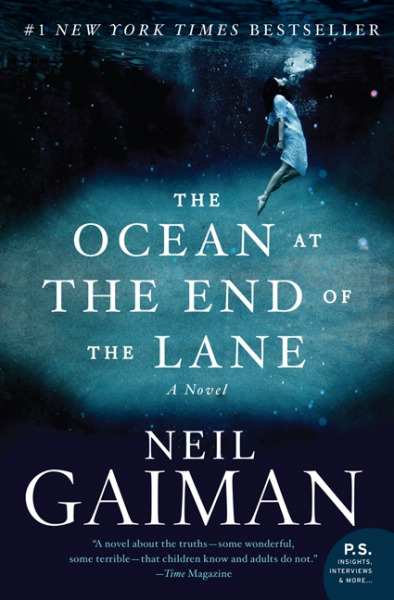
The Ocean at the End of the Lane
Book Description
A boy's mysterious journey at the edge of a starlit ocean plunges him into a world where memories twist like dark currents, revealing hidden monsters and ancient magic. When an unimaginable threat emerges, he forms an unbreakable bond with a girl who knows more than she should. Together, they navigate the perilous landscape of childhood fears and forgotten dreams, battling more than just the shadows that haunt them. Love and loss collide in a tale that blurs the lines between reality and imagination. What happens when the past refuses to be buried and secrets rise from the depths?
Quick Book Summary
The Ocean at the End of the Lane by Neil Gaiman follows an unnamed man who returns to his childhood home and is swept back into memories of a series of fantastical and terrifying events that befell him as a seven-year-old boy. After a lodger commits suicide, dark supernatural forces infiltrate his world, leading him to form a bond with his mysterious neighbor, Lettie Hempstock. Through Lettie's guidance and the power of the ocean she claims is at the end of the lane, the boy is drawn into magical battles against ancient, malevolent entities that blur the lines between reality and fantasy. The story explores the profound impact of memory, childhood fear, love, and loss, ultimately meditating on the vulnerability of innocence and the resilience found in friendship.





Summary of Key Ideas
Table of Contents
The Fluid Nature of Memory and Reality
The book opens with an unnamed middle-aged man returning to his hometown for a funeral. While aimlessly driving, he visits a farmhouse at the end of the lane where he remembers befriending Lettie Hempstock during his lonely childhood. As memories return, he recalls the strange and magical events that took place years ago—events long forgotten and tinged with the surreal quality of dreams.
Childhood Innocence and Adult Perspective
As a seven-year-old, the boy experiences the aftermath of a traumatic tragedy when their family lodger dies by suicide. This act releases an ancient, dark force into his world in the guise of Ursula Monkton. Disguised as a caretaker, Ursula insidiously infiltrates his family, exploiting fears and causing a rift between the boy and his parents. His only refuge is the eccentric Hempstock family—Lettie, her mother, and grandmother—who seem to possess knowledge and power far beyond ordinary.
The Power of Friendship and Sacrifice
Lettie promises to protect the boy, introducing him to the ocean she insists lies in a simple pond. As they confront magical threats and monstrous creatures, reality and fantasy intertwine. The Hempstocks wield ancient magic, exposing the boy to a realm governed by rules he cannot fully understand. The boy faces terrifying creatures that emerge from his deepest anxieties, learning that bravery often appears in the face of the incomprehensible.
Ancient Magic and Hidden Worlds
At its core, the novel explores the contrasts between the innocence of childhood and the complexities of adulthood. Through the narrative, memory itself is portrayed as mutable; the protagonist’s recollections shift, fade, and return as if washed by tides. The protective qualities of family and friendship are examined, highlighting Lettie's selfless courage and the lasting imprint she leaves on the narrator. Though fantastical, the experiences serve as metaphors for real emotional scars and the resilience found in confronting past traumas.
Confronting Fear and Loss
The journey concludes with a bittersweet resolution. Although Lettie is gravely sacrificed to save the boy, her fate remains ambiguous, adding to the mythic quality of the tale. As the man leaves the Hempstock farmhouse in the present, it’s clear that the boundaries between magic and memory remain porous. The ocean at the end of the lane encapsulates the mysteries and wonders of childhood, serving as a reminder that even the most frightening memories can be tempered by love and hope.
Download This Summary
Get a free PDF of this summary instantly — no email required.