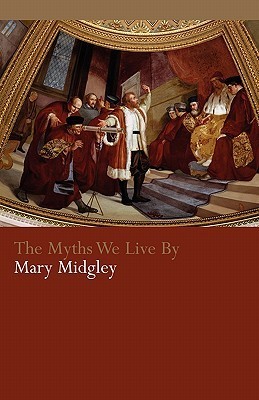
The Myths We Live By
Book Description
What if the stories we tell ourselves shape the very world we inhabit? In "The Myths We Live By," Mary Midgley takes readers on a compelling journey through the tangled web of beliefs that govern our lives. From science to ethics, she unearths the powerful narratives that distort our understanding and challenge our perceptions. With clarity and wit, Midgley invites you to confront the myths that both unite and divide humanity. What truths might you discover when you peel back the layers of conventional wisdom? Dare to question the very narratives that shape your reality—what will you uncover?
Quick Book Summary
"The Myths We Live By" by Mary Midgley examines the powerful narratives and unspoken assumptions that influence how we see ourselves, society, and the natural world. Midgley challenges the view that science alone offers unbiased truth, arguing that even our most rational beliefs are structured by deeper myths—stories, metaphors, and cultural habits of thought. She explores how these myths shape ethical perspectives, scientific methods, and social values. With accessible language and thought-provoking examples, Midgley invites readers to recognize and critically reflect on the myths underpinning their worldviews. Her book illuminates the importance of balancing rational inquiry with an awareness of the stories and metaphors that profoundly steer human behavior and collective understanding.



Summary of Key Ideas
Table of Contents
The Shaping Role of Myths in Modern Society
Mary Midgley argues that myths are not outdated relics but continuing and essential aspects of human existence. Far from being confined to ancient stories or religious rituals, myths are frameworks—expressed through narratives, images, and analogies—that help individuals and societies make sense of the world. These myths inform our most basic assumptions about nature, progress, morality, and identity. Midgley demonstrates that modern secular societies are just as reliant on complex mythologies as those of the past, though the stories may now be couched in scientific or philosophical terms rather than religious ones.
The Limits and Language of Scientific Rationalism
A central critique in the book is directed at the overreach of scientific rationalism. Midgley contends that contemporary science often tries to claim exclusive authority over truth by minimizing the role of metaphor, narrative, and subjective experience. However, language, including scientific discourse, is itself deeply metaphorical. The ways we frame questions, interpret results, or define what counts as evidence are all subtly shaped by guiding myths. Midgley’s analysis reveals that scientific thinking, however rigorous, is always embedded within broader cultural narratives.
Interplay Between Science, Ethics, and Values
The book delves into the complex relationship between scientific inquiry and ethical reasoning. Midgley shows how the values guiding scientific progress—ideas of objectivity, competition, or survival—emerge from deeper societal myths. For example, the myth of unending progress can drive both technological innovations and environmental crises. She emphasizes the importance of recognizing these underlying stories to clarify ethical debates on issues like animal rights, environmentalism, and technological intervention. Understanding the mythic dimension enables more responsible and reflective engagement with social and scientific dilemmas.
Challenging Reductionism in Human Understanding
Midgley challenges the reductionist tendencies in much of modern thought, resisting the view that complex phenomena (like consciousness or society) can be entirely explained in terms of their parts. She highlights how such reductionism is itself a product of mythic thinking—the myth that everything complicated can be reduced to its simplest components. Instead, Midgley advocates for a pluralist approach, valuing different forms of knowledge and explanation. She shows that genuine understanding often requires integrating scientific facts with insights from literature, history, and philosophy.
Throughout the book, Midgley calls on readers to become more conscious of the enabling and constraining power of the myths they live by. By acknowledging that myths are inescapable but also malleable, individuals and societies can choose which stories best serve human flourishing and coexistence. Her work is both a critique of blind faith in reason and a call to embrace, update, and scrutinize the narratives that guide us. In doing so, Midgley offers a richer, more humane philosophy—one attentive to both reason and imagination in shaping our collective destiny.
Download This Summary
Get a free PDF of this summary instantly — no email required.