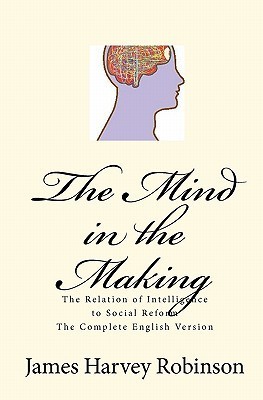
The Mind in the Making: The Relation of Intelligence to Social Reform
Book Description
Imagine a world where the limits of human intelligence are pushed beyond boundaries. In "The Mind in the Making," James Harvey Robinson unravels the intricate dance between intellect and social reform, revealing the powerful connection that can shape societies and ignite change. With compelling arguments and groundbreaking insights, Robinson challenges conventional wisdom, advocating for a revolution in thought that could redefine progress and justice. This electrifying exploration reveals how our understanding of the mind can spark a movement toward a brighter future. Are we ready to harness the true potential of our intelligence for the greater good?
Quick Book Summary
In "The Mind in the Making," James Harvey Robinson explores the relationship between human intelligence and social progress. He argues that the way we think—our intellectual habits and assumptions—influences the structure and advancement of society. Robinson contends that traditional education and rigid thinking limit our potential, and he advocates for the development of more flexible, critical, and creative intellectual habits. By fostering adaptive and independent thought, individuals and societies can confront social problems more effectively. Robinson’s work is a rallying call for mental reform as the foundation for social improvement, challenging readers to reconsider how they use their minds in the pursuit of justice and progress.



Summary of Key Ideas
Table of Contents
The Role of Critical Thinking in Social Change
James Harvey Robinson begins by examining the history of human thinking, highlighting how societal progress is intimately tied to the ways in which people perceive and interpret the world. He discusses how our collective intellectual development has provided humanity with tools to address challenges, but also notes that outdated modes of thought often hamper genuine progress. These inherited assumptions restrict our ability to adapt to new conditions and can perpetuate social injustices, making mental evolution essential for transformative social reform.
Challenging Established Beliefs and Traditions
Robinson critiques the limitations imposed by traditional education and cultural norms, arguing that much of what we learn reinforces conformity and discourages independent thought. The mind, he asserts, is too often shaped by rote learning, dogma, and the uncritical acceptance of authority. This intellectual inertia stalls creativity and genuine understanding, which are necessary for a thriving, just society. He calls for education systems that prioritize critical inquiry, skepticism, and adaptability to free individuals from mental rigidity.
Education as a Tool for Intellectual Freedom
Central to Robinson's thesis is the necessity of questioning established beliefs and traditions. He posits that progress depends on the courage to scrutinize and, when necessary, abandon outdated ideas. Robinson recognizes this is uncomfortable, as deeply held convictions are intertwined with identity and social order. Nonetheless, he asserts that fearless examination of ideas drives innovation and paves the path toward equitable reform. Only by exposing habitual, unexamined thought can society break cycles of stagnation and injustice.
The Evolution and Flexibility of Human Thought
Robinson further explores the evolutionary nature of intelligence, emphasizing that the mind is not fixed but dynamic, continuously shaped by new experiences and knowledge. He encourages embracing flexibility and openness, allowing individuals to shed prejudices and adjust to changing circumstances. This adaptability, he argues, empowers societies to overcome obstacles, solve emerging problems, and foster cooperative progress in a rapidly evolving world.
Personal Responsibility in Social Reform
The book concludes with a compelling appeal to personal responsibility in shaping both individual minds and the broader culture. Robinson urges every person to cultivate self-awareness about their cognitive habits, strive for intellectual honesty, and contribute positively to public discourse. Change, he contends, is a collective endeavor—and by championing independent and creative thinking, each individual plays a vital role in steering society toward a more just and enlightened future.
Download This Summary
Get a free PDF of this summary instantly — no email required.