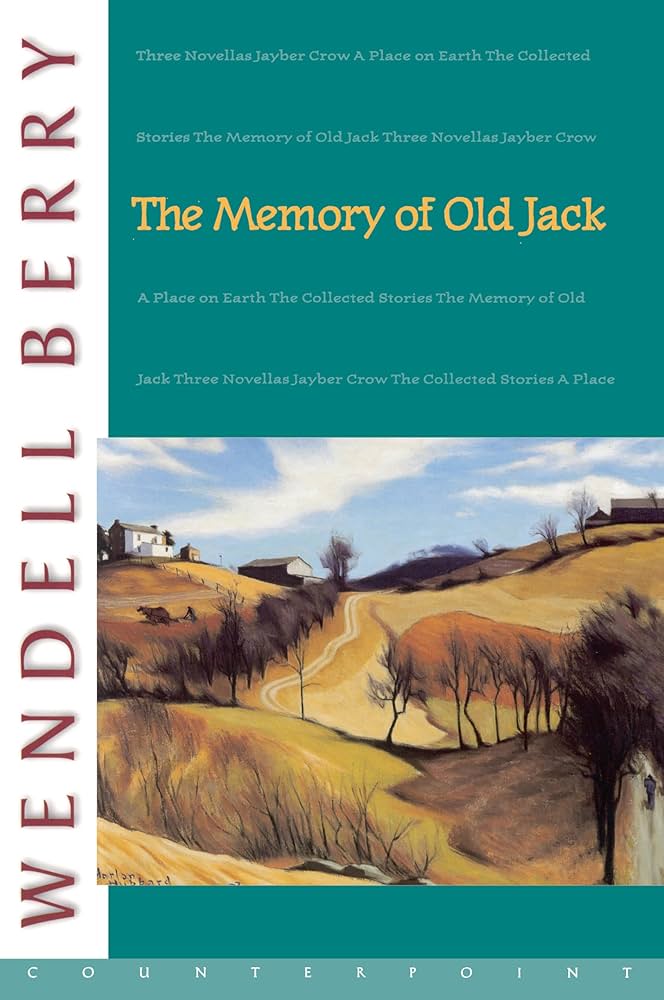
The Memory of Old Jack
Book Description
A lone farmer stands at the crossroads of memory and regret, his world steeped in the rich soil of a rural Kentucky town. Jack Beechum’s life unfolds like a tapestry, woven with the threads of family, love, and the relentless passage of time. As he reflects on his past, the weight of unfulfilled dreams and strained relationships threaten to unravel the fabric of his existence. In the quiet shadows of his farm, every remembered smile hides pain, and every laughter echoes with loss. Can old Jack find redemption in the very memories that haunt him, or will they consume him entirely?
Quick Book Summary
The Memory of Old Jack, by Wendell Berry, is a poignant exploration of memory, aging, and the human condition, set in the fictional rural town of Port William, Kentucky. The story unfolds over the course of a single autumn day in 1952, as Jack Beechum, now nearing the end of his long life as a farmer, reflects on his many years on the land. Through Jack’s memories, the novel traces his youth, his ambitions, his marriage, and the myriad disappointments and joys that have defined his existence. Berry’s compassionate narrative examines themes of work, love, regret, and redemption, using Jack’s individual journey to paint a broader portrait of rural American life. Ultimately, the novel raises profound questions about legacy, connection, and the meaning found in both sorrow and resilience.


Summary of Key Ideas
Table of Contents
The Passage of Time and Memory
Set in the fictional farming community of Port William, Kentucky, "The Memory of Old Jack" centers on Jack Beechum, an aging farmer whose life has been intertwined with the rhythms of the land. The narrative unfolds on a September day in 1952, as Jack, at the age of 92, sits in his favorite chair and drifts through memories of his boyhood, his early ambitions, and the pivotal moments that shaped his life. Berry’s writing richly evokes the sights, sounds, and emotional tonality of rural life, planting the reader deep in the landscape that has both nurtured and challenged Jack over decades.
The Connection to Land and Community
Jack’s memories are both a source of comfort and pain. He recalls the innocence and vigor of youth, including the early death of his father, which forced him to assume adult responsibilities. His pride in the land is intricately linked to his sense of self, but time has also borne witness to change and decline—of both the landscape and the traditional way of life. The inexorable passage of time, juxtaposed with the permanence of the farm, raises questions about continuity, loss, and what remains enduring at the heart of a life fully lived.
Regret, Loss, and the Quest for Redemption
Central to Jack’s recollections are his relationships with others—his deep yet often unspoken bond with his daughter Clara, his strained and ultimately tragic marriage to Ruth, and his loyalty to friends and neighbors. Ruth's emotional distance and his inability to bridge that gap become recurring sources of regret. In the autumn of his life, Jack’s interactions are colored by longing for connection, forgiveness, and understanding—sentiments that echo the universal human desire for reconciliation before death.
Family, Marriage, and Human Relationships
Throughout the novel, Berry contrasts the cyclical nature of agriculture and seasons with the linear and finite journey of human existence. The farm is a locus of diligence, routine, and renewal—a living memory that outlasts individual lives. In tending the soil and witnessing its transformations, Jack both enacts and observes the cycles of nurturing and letting go. The land, with its enduring presence, offers the hope of redemption and continuity, even as Jack faces his own mortality and memories that threaten to overwhelm him.
Cycles of Nature and Human Life
In his final hours, Old Jack’s mind moves between lucidity and confusion, between the peaceful acceptance of his fate and the unresolved tensions of his past. If reconciliation is not fully achieved, there is nevertheless a sense of grace in Jack’s acceptance of his life’s complexity. Berry’s narrative holds up the dignity of an ordinary man’s struggles and triumphs, affirming the profound significance that can be found in each individual life, even as it is contained within the ebb and flow of memory and time.
Download This Summary
Get a free PDF of this summary instantly — no email required.