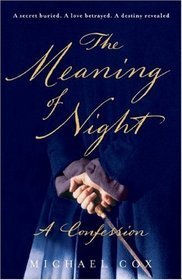
The Meaning of Night
Book Description
A chance encounter under the shrouded streets of Victorian London ignites a deadly feud in Michael Cox's 'The Meaning of Night.' When a mysterious murder draws a desperate man into a perilous web of deceit, secrets, and forbidden desires, he must navigate a treacherous world where nothing is as it seems. Betrayals lurk around every corner, and love may be the most dangerous game of all. As darkness descends, one man’s quest for vengeance intertwines with the fate of others, leading to a chilling climax. How far would you go to claim your destiny when shadows whisper lies?
Quick Book Summary
Set against the fog-drenched streets of Victorian London, "The Meaning of Night" by Michael Cox is a masterful tale of obsession, revenge, and the elusiveness of truth. The novel follows Edward Glyver, an erudite yet embittered man who commits a murder to prepare himself for a far greater crime: reclaiming what he sees as his rightful inheritance. As Glyver navigates a world rife with deception, he encounters nemeses, forbidden loves, and the haunting weight of the past. Gothic in atmosphere and intricately plotted, the book explores the darkness within the human soul, the seductive power of secrets, and the obsession that can arise from love and betrayal. The story builds relentlessly toward a chilling climax in which Glyver’s quest threatens to unravel everyone connected to his fate.



Summary of Key Ideas
Table of Contents
Obsession and the Quest for Revenge
The opening of the novel plunges readers into the morally ambiguous mind of Edward Glyver, who coldly commits a murder, revealing both the depths of his obsession and the haze of justification he creates for his actions. Not merely an act of brutality, Edward’s crime is preparation for a larger plot: to oust his nemesis, Phoebus Daunt, and reclaim his inheritance from the wealthy, secretive Duport family. Through his confessional narration, Edward lays bare the roots of his vendetta, rooted in betrayal, lost love, and the twisting corridors of an aristocratic legacy.
The Corrupting Power of Secrets
As Edward embeds himself deeper into Victorian London’s elite circles, the historical backdrop becomes a labyrinth of ambition and duplicity. Michael Cox paints a richly immersive portrait of societal mores, class boundaries, and the delicate dance between servants and masters. Atmosphere is thickened by elements of gothic fiction: somber settings, cryptic documents, and characters living double lives. The city’s dark underbelly, filled with opium dens and shadowy conspirators, mirrors Edward's descent into moral ambiguity and paranoia.
Victorian Society and Social Stratification
Secrets lie at the heart of the novel, driving both plot and character. Edward’s pursuit is motivated by half-remembered truths and long-concealed family scandals. The narratives of inheritance and lineage serve to underscore the power that secrets hold over individuals and generations. As the truth gradually surfaces, each revelation upends loyalties and heightens the sense of danger. The layering of clues and misdirection sustains suspense, inviting readers to question whose account is reliable—or whether redemption is even possible for the protagonist.
Love, Betrayal, and Desire
The entanglements of love and desire further complicate the pursuit of justice. Edward’s passions, especially his feelings for Emily Duport, blur the line between righteousness and obsession. Relationships are colored by distrust, manipulation, and betrayal, raising questions about whether love can truly transcend the poison of past wrongs or whether it merely intensifies them. Among tangled alliances and betrayals, loyalties shift unpredictably, and the question of who can be trusted becomes paramount to Edward’s survival.
Fate, Destiny, and the Search for Identity
The climax swells as Edward’s schemes threaten to consume him, entwining fate with free will. Torrid confrontations reveal the tragic costs of vengeance and obsession. By the novel’s end, the intricate web of lies and secrets is both unraveled and left hauntingly intact, challenging the reader’s notions of justice and identity. Cox’s narration leaves us questioning whether anyone can ever evade the shadows of their own making, and how destiny shapes every life, for better or worse.
Download This Summary
Get a free PDF of this summary instantly — no email required.