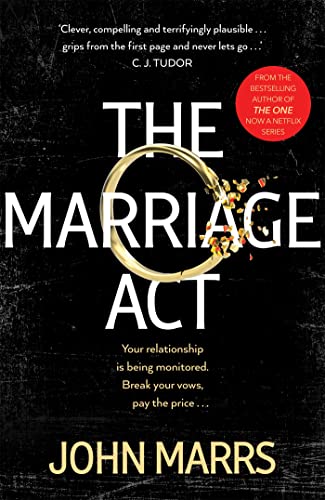
The Marriage Act
Book Description
Love is a transaction, and in a world where marriage is a matter of a mandatory contract, two strangers find their lives intertwined in the most unexpected ways. As they navigate the murky waters of legal obligations and heartfelt desires, secrets emerge, threatening to shatter everything they thought they knew about commitment. Tensions rise, loyalties are tested, and the boundaries of affection and obligation blur. Will they embrace a new definition of love, or will the very system that binds them tear them apart? In a society that redefines relationships, what cost are they willing to pay for a chance at happiness?
Quick Book Summary
In John Marrs’s dystopian thriller "The Marriage Act," a near-future Britain enforces mandatory marriage contracts as a means of social control, fostering an unsettling new society. Citizens face relentless surveillance through government-issued devices that monitor their relationships, enforcing loyalty and conformity. Against this backdrop, multiple individuals struggle with the constraints of their forced unions and the pressure to comply—or rebel. As the government’s true motivations become clearer, personal secrets threaten to unravel lives, and the characters must confront what love, freedom, and happiness truly mean when every commitment is a legal obligation. Through intertwining stories, Marrs explores how authoritarian systems can corrupt intimacy, the lengths people go to for connection, and the price of individual defiance.






Summary of Key Ideas
Table of Contents
State Control Over Personal Relationships
Set in a near-future United Kingdom, "The Marriage Act" posits a chilling reality: to combat social decay, the government mandates marriage contracts for all adults. Failure to comply results in penalties ranging from social exclusion to criminal charges. This system, controlled through monitoring devices called Audite boxes, pressures citizens into unions not based on love, but compliance and state-defined morality. These technological tools allow pervasive intrusion, blurring the lines between private life and public regulation while incentivizing obedience with promises of societal advantages.
Surveillance and Loss of Privacy
The heart of the novel lies with a cast of diverse characters—some eager for the marriage contract’s benefits, others coerced or desperate. Their stories, though unique, intersect as they navigate the emotional and practical realities of a society where love is regulated. The central duo, bound by the system but emotionally distant, must navigate a relationship built on legal obligation. Secrets soon surface: infidelities, hidden pasts, and moral quandaries, all intensified by the constant risk of surveillance exposing their truths.
The Nature of Love and Obligation
Marrs explores the psychological impacts of enforced intimacy. Relationships, instead of being sanctuaries, become battlegrounds where partners weigh genuine affection against fear of government punishment or social ostracism. Individuals grapple with maintaining autonomy, their internal desires often at odds with the relentless external pressure to conform. As characters are forced to confront the boundaries between duty and genuine connection, the concepts of trust, identity, and fulfillment are redefined within the system’s oppressive structure.
Resistance and Rebellion
Amid growing dissatisfaction, threads of rebellion emerge. Grassroots resistance movements form, using underground networks and coded messages to defy the government’s control. These acts of defiance, whether subtle deception or outright sabotage, carry significant consequences. The tension escalates as enforcement intensifies and characters risk everything for autonomy or for the hope of real human connection. The personal becomes political as every choice is scrutinized under the system’s watchful gaze.
Consequences of Enforced Conformity
By weaving together these intertwined narratives, "The Marriage Act" interrogates the true cost of happiness and love in a world where commitment is transactional and freedom is sacrificed for security. The novel’s conclusion leaves readers contemplating the boundaries of state authority, the resilience of the human spirit, and the inherent dangers in legislating affairs of the heart. Marrs exposes the fragile nature of trust and affection under surveillance, questioning whether happiness can ever thrive when love is no longer a matter of choice.
Download This Summary
Get a free PDF of this summary instantly — no email required.