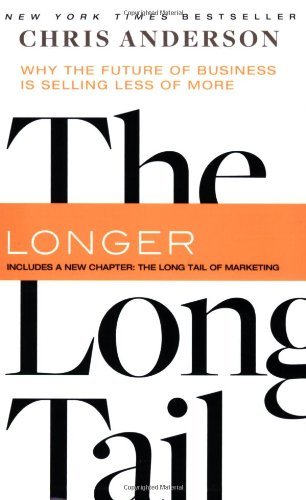
The Long Tail: Why the Future of Business is Selling Less of More
Book Description
Imagine a world where niche markets reign supreme, and success isn't measured by blockbuster hits but by a diverse catalog of specialized offerings. Dive into 'The Long Tail' as Chris Anderson unveils the revolutionary shift in business, where the power of the internet transforms how products are discovered and consumed. Explore the boundless possibilities of selling less of more, and witness the rise of forgotten gems alongside mainstream favorites. As conventional wisdom crumbles, what new opportunities will emerge for entrepreneurs willing to embrace the long tail? Is the future of commerce ready to be rewritten?
Quick Book Summary
"The Long Tail" by Chris Anderson revolutionizes the way we understand markets and consumer demand in the era of the internet. Anderson argues that the digital economy enables businesses to successfully cater to obscure and niche interests, not just mainstream hits. Thanks to lowered distribution and inventory costs online, it is now profitable to offer a vast range of products, each appealing to a small segment of the population—collectively forming the "long tail" of the sales distribution curve. Instead of focusing only on bestsellers, businesses can thrive by targeting these diverse, smaller markets. The book analyzes how companies like Amazon, Netflix, and iTunes lead this transformation, leveraging data and recommendation engines to connect people to niche products. Anderson challenges traditional notions of uniform consumer behavior and demonstrates the immense value in serving "less of more."



Summary of Key Ideas
Table of Contents
The Economics of Abundance
Chris Anderson's central thesis in "The Long Tail" is that the internet has fundamentally changed how businesses can serve customers, moving away from a focus on blockbuster products to a model that celebrates the vast diversity of consumer tastes. In the physical world, limited shelf space and high distribution costs forced retailers to concentrate on the most popular products. Online, those constraints disappear, making it possible to offer thousands or millions of niche items. The long tail, representing all the products that individually sell only a few copies, becomes a major new market segment when aggregated.
Niche Markets and Aggregate Demand
Anderson delves into the economics that drive this shift. Online platforms like Amazon, Netflix, and iTunes can stock and distribute virtually limitless inventories at marginal cost. As a result, obscure books, films, and music—once economically invisible—can generate significant total revenues. Additive demand from niche products often rivals or surpasses the mass-market hits. The technology lowers the barriers to entry for creators, allowing anyone to publish or distribute and catering to all imaginable interests.
Democratization of Production and Distribution
The book highlights how niche markets are unlocked by advances in filtering, recommendation systems, and search. Algorithms and user reviews guide consumers through abundant choices, making discovery easy and intuitive. This democratization of production and distribution, coupled with refined filters, ensures that even the most specialized products find their audience. The result is a marketplace tailored to the "culture of abundance," matching supply and demand with unprecedented efficiency.
The Role of Filters and Recommendation Systems
The implications for business are profound. Companies must rethink their models, shifting from a focus on selling a few big hits to embracing a broader portfolio of specialized offerings. Success comes not just from stocking popular items, but from catering to diverse preferences and fostering community. Entrepreneurs and businesses that recognize the power of the long tail can build sustainable competitive advantages, capturing audiences overlooked by traditional retailers.
Shifts in Business Strategy in the Digital Era
Finally, Anderson explores the societal impacts of the long tail phenomenon. The growing prominence of niche markets changes the culture, moving away from homogenized mainstream consumption toward individualized, diverse interests. Consumers gain access to a wider array of products that align with their true passions. The long tail not only represents a new economic opportunity, but also a democratization of culture, empowering both creators and consumers in the digital age.
Download This Summary
Get a free PDF of this summary instantly — no email required.