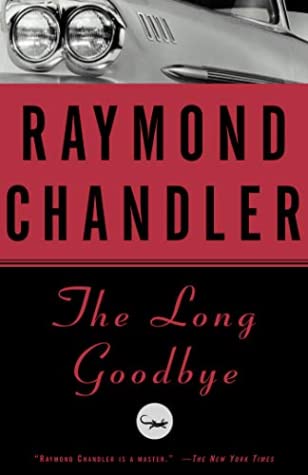
The Long Goodbye
Book Description
A haunting farewell lingers in the shadows of Los Angeles, where private detective Philip Marlowe is pulled into a web of betrayal and deception. As he navigates a labyrinth of lost love and dark secrets, the line between friend and foe blurs, and trust becomes a commodity harder to find than the truth. Each encounter deepens the stakes, as Marlowe wrestles with his own demons while seeking justice for a friend accused of murder. With every turn, danger lurks, and loyalties are tested. Can Marlowe untangle the lies before it's too late, or is this the ultimate goodbye?
Quick Book Summary
In Raymond Chandler's classic noir novel "The Long Goodbye," private detective Philip Marlowe is ensnared in a treacherous case when he befriends the troubled Terry Lennox. Lennox soon flees to Mexico, leaving Marlowe facing police scrutiny for his alleged involvement in a murder. As Marlowe investigates, he encounters an array of complex characters—from the enigmatic author Roger Wade to a circle of wealthy, corrupt Angelenos—all of whom harbor secrets. The narrative explores themes of loyalty, morality, and the ambiguity of truth against a backdrop of postwar Los Angeles. As Marlowe delves deeper, the case forces him to confront not only the city's depravity but the darkness within himself, culminating in an emotionally charged and bittersweet farewell.



Summary of Key Ideas
Table of Contents
Loyalty and Betrayal
Philip Marlowe, Chandler’s iconic private detective, crosses paths with Terry Lennox, a scarred and mysterious war veteran, through a chance late-night encounter. Marlowe demonstrates compassion by helping Lennox out of tight spots, developing an uneasy yet genuine friendship. When Lennox’s wife is found brutally murdered, Lennox disappears to Mexico, and Marlowe’s unswerving loyalty puts him at odds with the police. Marlowe’s refusal to betray Lennox’s trust, even under pressure, underscores the novel’s central question: how much should one risk for a friend, especially when that friend’s innocence is uncertain?
The Moral Ambiguity of Justice
In his investigation, Marlowe is drawn into the affairs of Roger Wade, a talented but self-destructive writer, and his wife, Eileen. Their volatile relationship reflects the widespread dysfunction and moral decay among the elite characters populating postwar Los Angeles. Everyone Marlowe meets seems compromised, creating a pervasive sense of deceit. The boundaries between victim and perpetrator blur, forcing Marlowe to navigate not only legal complexities but also the ethical labyrinth of his personal convictions.
The Corrupting Influence of Wealth and Power
The narrative explores the toxic influence of wealth and privilege, particularly in the form of the affluent Wade family and the power-brokers they associate with. Marlowe finds himself maneuvering through circles where money shields misdeeds and corrupt behavior goes unchecked. This corruption taints the pursuit of justice, making Marlowe’s task not simply solving a crime but contending with an entire system designed to protect the powerful at the expense of the vulnerable.
The Isolation of the Detective
Marlowe’s journey isolates him emotionally and psychologically. His solitary nature, compounded by repeated betrayals and mounting dangers, leaves him a figure at odds with society and even with those he tries to help. Chandler uses Marlowe’s interior monologue to highlight disillusionment and fatigue, emphasizing that the detective’s sense of honor increasingly alienates him from a cynical world. His loyalty sets him apart, but it also extracts a toll, as each revelation peels away layers of trust and hope.
Disillusionment in Postwar America
By the novel’s end, the motif of goodbye becomes more than just loss; it is a reckoning with reality. When the final truths are revealed, Marlowe comes to terms with the depths of betrayal and the impossibility of truly knowing anyone. "The Long Goodbye" closes not with triumph but with hard-earned wisdom and emotional scars, as Marlowe must let go—not just of his friend, but of ideals that once guided him. The farewell is both literal and symbolic, an end to innocence and a somber acceptance of a compromised world.
Download This Summary
Get a free PDF of this summary instantly — no email required.