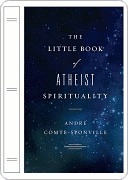
The Little Book of Atheist Spirituality
Book Description
What if spirituality exists beyond the confines of religion? In 'The Little Book of Atheist Spirituality,' André Comte-Sponville unveils a profound worldview that celebrates wonder, joy, and the beauty of existence, all without divine intervention. This captivating exploration challenges conventional beliefs, offering a fresh perspective on love, morality, and the pursuit of meaning. Each thought-provoking chapter uncovers the richness of a life lived with purpose, blending philosophy with heartfelt insights. Can one find fulfillment and transcendence in a universe that is entirely secular? Discover the possibility of a vibrant spirituality free from dogma.
Quick Book Summary
"The Little Book of Atheist Spirituality" by André Comte-Sponville is a compelling exploration of how spirituality can thrive independent of religious belief. The author asserts that transcendent experiences, a sense of awe, and deep meaning are accessible to atheists and agnostics alike. He distinguishes spirituality from religion by rooting it in human consciousness, love, and our appreciation for existence. The book delves into questions of morality, wonder, and death, encouraging readers to find fulfillment in the present rather than in supernatural promises. Drawing from philosophy, science, and psychology, Comte-Sponville frames a secular spirituality that is grounded in reason and emotion, ultimately illustrating that one can cultivate purpose, joy, and ethical living without faith in God.


Summary of Key Ideas
Table of Contents
Spirituality Without Religion
André Comte-Sponville opens with the provocative assertion that spirituality need not be confined to religion or belief in the divine. He examines the nature of spirituality, emphasising experiences of awe, interconnectedness, and meaning that arise purely from human consciousness. By distinguishing between spirituality and religion, he lays the foundation for a worldview in which deep, transcendent feelings are not dependent on supernatural beliefs or rituals.
Transcendence and Human Experience
The book explores how everyday moments and emotional connections provide the basis for a secular spirituality. Comte-Sponville highlights love, empathy, and wonder as essential human experiences that can fill life with a sense of purpose. Using philosophical arguments, he demonstrates that atheism need not be synonymous with nihilism or despair; rather, it can open the way for genuine gratitude and joy in existence. Spiritual satisfaction is achieved through clarity of thought and emotional richness, rather than religious faith.
Morality and Meaning in a Secular World
Morality, the author argues, is not a gift from the divine but a product of human nature and society. He adopts a philosophical and psychological perspective to illustrate how ethical values develop from empathy, reason, and shared humanity. This section reassures the reader that it is possible—and even necessary—to live morally without invoking God, relying on compassion and critical thinking to guide moral choices.
The Nature of Wonder and Joy
Death and mortality are central themes Comte-Sponville addresses with sensitivity. He urges readers to accept impermanence and the finite nature of life as sources of meaning, not despair. By acknowledging our mortality, we are better able to appreciate the present, embrace our relationships, and invest in actions that leave a lasting impact. Recognizing the brevity of life lends richness to each moment and magnifies the beauty found in the everyday.
Embracing Mortality and Impermanence
Ultimately, the book celebrates a form of spirituality that is unburdened by dogma and rooted in rationality, wonder, and love. Comte-Sponville encourages his audience to cultivate mindfulness and gratitude, to seek fulfillment in the here and now. His vision of atheist spirituality is vibrant and life-affirming, offering philosophical and practical tools for anyone, religious or not, to discover meaning and transcendence in a secular universe.
Download This Summary
Get a free PDF of this summary instantly — no email required.