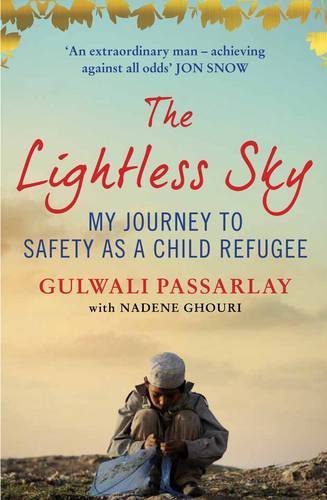
The Lightless Sky: My Journey to Safety as a Child Refugee
Book Description
A boy’s longing for safety becomes a harrowing odyssey across continents. Gulwali Passarlay's 'The Lightless Sky' unravels a gripping tapestry of desperation, courage, and resilience as he navigates treacherous borders, facing danger and heartbreak at every turn. Each step toward freedom is a battle against despair, testing limits and igniting hopes. Torn from family and home, the journey reveals the indomitable spirit of a child fighting for his future. Can one heart, scarred yet unyielding, illuminate a path through darkness?
Quick Book Summary
"The Lightless Sky" recounts Gulwali Passarlay’s extraordinary journey from Afghanistan to the United Kingdom after being forced to flee his country at the age of twelve. Amidst the turmoil of war and losing his father, Gulwali and his brother embark on a perilous migration across continents, facing smugglers, harsh conditions, and relentless danger. The memoir vividly explores the terror and brutality of life as a refugee, along with the resilience required to survive. Throughout his odyssey, Gulwali’s determination to reunite with family and build a future sustains him. His personal narrative offers a powerful insight into the refugee crisis, illuminating the humanity behind the headlines and the search for safety, belonging, and hope in the darkest circumstances.





Summary of Key Ideas
Table of Contents
The Journey of Forced Migration
Gulwali Passarlay’s ordeal begins with the eruption of conflict in Afghanistan, which upends his childhood. After his father’s death and the increasing threat from both the Taliban and NATO forces, Gulwali’s mother is forced to make an unimaginable decision: send her sons away with smugglers in hope of a safer life. Separated early from his beloved brother Hazrat, Gulwali is thrust into the unknown, his memories of home both an anchor and a source of sorrow as he embarks on his odyssey.
The Trauma and Resilience of Displacement
The book offers a gripping account of the harrowing journey that follows, spanning over a year and more than 12,000 miles. Gulwali experiences hunger, sickness, and the constant threat of violence or exploitation as he passes through Iran, Turkey, Greece, and onward through Europe. He endures peril by boat, rail, and foot, navigating an illicit network of smugglers who see refugees as commodities. The people he encounters—other refugees and locals—display the spectrum of human behavior, from kindness and camaraderie to betrayal and cruelty.
Navigating Humanity and Inhumanity
Separation from family, especially from Hazrat, is a persistent agony for Gulwali. Long stretches of uncertainty compound his sense of displacement and loss, yet also fuel his determination. His identity is continually tested and unstable, stripped of the familiar but not of hope. The drive to reunite with his brother and fulfill his mother’s hopes offers not only motivation but is a source of resilience, allowing him to endure suffering both physically and emotionally.
The Search for Family and Belonging
The narrative is infused with Gulwali’s reflections on the mechanisms of migration and the hostile reception refugees often face. He offers a child’s perspective on detention, dehumanization, and bureaucratic hurdles, contrasting these with moments of unexpected generosity and solidarity. As he arrives in the UK, the struggle for acceptance continues, revealing the complicated aftermath of survival. The memoir uncovers the reality that the search for safety is not over upon reaching a new country—it is merely the beginning of another battle for dignity and a sense of belonging.
The Impact of War and Politics on Individual Lives
Ultimately, "The Lightless Sky" highlights the human cost of war and displacement, exploring how politics and conflict shape lives in the most intimate ways. Gulwali’s story is an impassioned plea for empathy as he sheds light on the systemic challenges facing refugees. The memoir bridges individual experience and broader political crises, making a compelling case for compassion and understanding in a world frequently marked by division and indifference.
Download This Summary
Get a free PDF of this summary instantly — no email required.