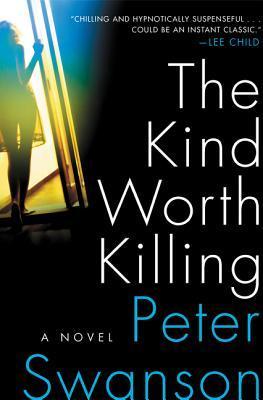
The Kind Worth Killing
Book Description
Two strangers meet at an airport bar, and a chance conversation spirals into a sinister pact. Ted, disillusioned and seeking escape from his crumbling marriage, finds an unlikely ally in Lily, a mysterious woman with her own dark intentions. As their chilling plan unfolds, betrayal and deceit lurk around every corner, testing trust and moral boundaries. With every whisper and glance, the stakes rise, propelling them into a lethal game where desire and danger intertwine. Who can truly be trusted when the line between predator and prey blurs? In a world where nothing is as it seems, how far will they go to get what they want?
Quick Book Summary
In Peter Swanson's "The Kind Worth Killing," two strangers, Ted and Lily, meet at Heathrow Airport and, during a candid conversation, form a deadly pact: Ted wants his unfaithful wife, Miranda, dead, and Lily agrees to help. However, as the plan to murder Miranda unfolds, layers of deception unravel. Lily isn’t who she seems, carrying a history of calculated killings, and Miranda has her own secrets and ambitions, including an affair and a parallel plot. What initially appears to be a simple act of vengeance quickly turns into a complex web of manipulation, betrayal, and violence. As trust dissolves and alliances shift, the novel explores how far people will go to find freedom or revenge, blurring the line between victim and perpetrator.



Summary of Key Ideas
Table of Contents
Strangers and the Formation of Deadly Pacts
On a night at Heathrow Airport, Ted Severson, brooding over his wife Miranda's infidelity, meets the enigmatic Lily Kintner. In a confessional tone induced by alcohol, Ted shares his woes, and jokingly suggests killing Miranda. Instead of recoiling, Lily responds calmly and even offers to help, describing an intimacy among strangers unlikely to ever meet again. Their bond intensifies as they plan the murder, drawing Ted into Lily’s dark world.
Deception and Hidden Motives
Lily’s backstory reveals a troubled yet calculating mind. From childhood, she’s held deep resentment toward those who have wronged her, claiming justice through murder. Her narrative threads through the book, providing insight into her detached perspective on morality and killing. As she manipulates Ted, it becomes unclear whether she’s motivated by empathy, thrill, or a warped sense of justice.
The Nature of Morality and Justice
Miranda, Ted’s wife, is no mere victim. She is portrayed as ambitious and cunning, engaged in an affair with Brad, the couple’s contractor. Miranda’s own plans and suspicions complicate the murder plot. When it becomes apparent that Ted and Lily are conspiring against her, Miranda works tirelessly to turn the tables, enlisting Brad and setting a trap that unmasks hidden agendas.
Betrayal and Shifting Alliances
Amidst mounting tension, betrayal becomes a constant. Trust unravels as shifting alliances expose each character’s willingness to cross moral boundaries for self-preservation. The police, investigating Miranda’s subsequent murder attempt, are manipulated by Lily, who unflinchingly eliminates threats—including Ted—when suspicion points her way. The mutual manipulation culminates in a deadly face-off, where it’s never clear who is truly in control.
The Blurred Line Between Predator and Prey
Swanson’s novel masterfully blurs the line between predator and prey, forcing both characters and readers to question notions of justice and culpability. Each revelation adds a layer of ambiguity, upending expectations and forcing a reevaluation of every motive. The result is a relentless psychological thriller where survival depends not on innocence, but cunning—a world in which the kind worth killing may ultimately be a matter of perspective.
Download This Summary
Get a free PDF of this summary instantly — no email required.