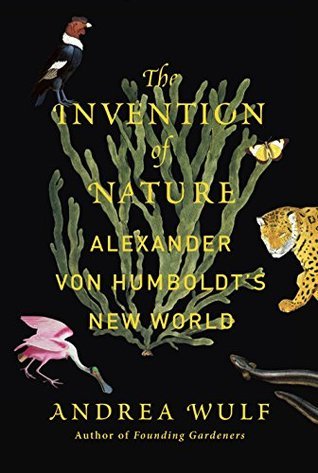
The Invention of Nature: Alexander von Humboldt's New World
Book Description
A visionary explorer races through uncharted jungles and soaring peaks, forever altering our understanding of the natural world. Alexander von Humboldt's adventurous spirit and groundbreaking ideas inspired generations, intertwining science, art, and politics in a celebration of nature's beauty and complexity. Each step he took unraveled new mysteries, revealing the interconnectedness of life and the urgency of environmental consciousness. With every discovery, the stakes rise, echoing through time to challenge us today. What if rediscovering Humboldt’s legacy could unlock a deeper appreciation for nature and ignite a revolution in how we see the world?
Quick Book Summary
"The Invention of Nature" by Andrea Wulf provides a sweeping biography of Alexander von Humboldt, one of history’s most influential naturalists and explorers. Wulf chronicles Humboldt’s intrepid journeys through South America, his monumental scientific observations, and the birth of ecology as he connected nature’s intricate web. Humboldt’s vision merged science with art and politics, and his holistic understanding of nature profoundly shaped leading thinkers such as Darwin, Thoreau, and Muir. Wulf demonstrates how Humboldt’s passionate advocacy for environmental protection and his warnings to safeguard ecosystems foreshadow today’s ecological concerns. Through vivid storytelling, the book revives Humboldt’s legacy as a visionary whose ideas about the unity and interconnectedness of nature continue to resonate, inspiring deeper environmental awareness and responsibility.



Summary of Key Ideas
Table of Contents
Nature as an Interconnected Web
Andrea Wulf’s biography of Alexander von Humboldt resurrects a trailblazing scientist whose observations transformed how humanity understands nature. From an early age, Humboldt was insatiably curious, immersing himself in diverse disciplines and embarking on a series of adventurous expeditions. His voyages through South America, including treacherous journeys along the Orinoco River and the Andes, were driven by the belief that knowledge of nature required direct engagement. Humboldt amassed a monumental array of scientific data, sketching plants, mapping geography, and recording climate, forever changing the study of natural history.
The Art and Adventure of Exploration
A defining feature of Humboldt’s philosophy was his conviction that nature operated as an interconnected web rather than as a collection of isolated parts. Through meticulous exploration and observation, he revealed that plants, animals, climate, and geology were intricately linked. This insight laid the foundation for the field of ecology. He illustrated these ideas visually in his groundbreaking “Naturgemälde,” a diagram synthesizing relationships along a single mountain. Humboldt’s writings emphasized patterns and connections, challenging reductionist science and prompting scholars to adopt more holistic approaches.
Influence on Science, Art, and Politics
Humboldt did not limit the reach of his ideas to scientific circles; he actively engaged with artists, writers, and politicians. His cosmopolitanism and charisma allowed him to influence a generation of visionaries. Wulf traces how Humboldt’s ideas ignited the imagination of figures like Charles Darwin, who credited him as his inspiration, Henry David Thoreau, who adopted his ideals in Walden, and John Muir, who advocated for American national parks. Humboldt’s advocacy for freedom of speech, anti-slavery, and the democratization of knowledge wove his environmental thinking with social consciousness.
Environmental Awareness and Early Warnings
Long before environmentalism became widespread, Humboldt warned of deforestation, soil degradation, and the destructive capacity of human activity. He saw the global implications of local actions, such as colonial mining and environmental exploitation. His prescient writings foreshadowed today’s ecological crises, arguing for stewardship and respect for the planet. Through Wulf’s narrative, Humboldt emerges not only as a scientist but as an environmental prophet who called for balance between man and nature and championed preservation.
Reviving Humboldt’s Legacy
Wulf concludes with an urgent call to rediscover Humboldt’s legacy. Despite once being a household name, Humboldt faded into relative obscurity in the twentieth century. By resurrecting his multidisciplinary thinking and passion for environmental harmony, Wulf proposes that we can reignite a sense of wonder and responsibility toward the natural world. Humboldt’s vision of interconnectedness offers a template for the urgent challenges of our era, reminding us that science, art, and politics must collectively strive for sustainability and reverence for nature.
Download This Summary
Get a free PDF of this summary instantly — no email required.