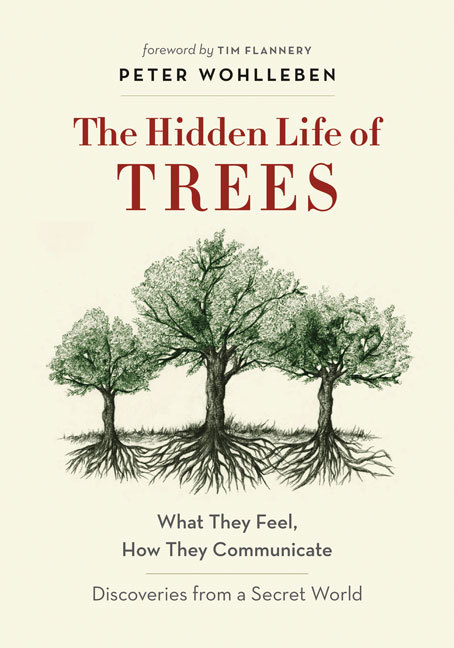
The Hidden Life of Trees: What They Feel, How They Communicate: Discoveries from a Secret World
Book Description
Beneath the forest canopy lies a world more intricate than we can imagine. Trees, long thought to be silent sentinels, wield a language all their own—intertwining roots, shared nutrients, and even warnings of danger. Peter Wohlleben unveils the secret lives of these towering giants, revealing their emotions, friendships, and remarkable communication systems. As he guides you through this hidden realm, you’ll uncover astonishing revelations about the bonds they forge and the ecosystems they nurture. What if understanding these silent beings could change the way we perceive our relationship with nature forever?
Quick Book Summary
Peter Wohlleben's "The Hidden Life of Trees" unveils the astonishing, complex world of forests, where trees interact socially, communicate danger, and form deeply interconnected communities. Drawing on decades of experience as a forester and recent scientific research, Wohlleben reveals how trees are far from solitary beings. They nurture and protect their young, share resources through underground fungal networks, and even "warn" each other about threats like insect infestations. The book challenges conventional views, suggesting that forests are collective superorganisms whose survival hinges on cooperation. By highlighting trees' ability to feel, adapt, and connect, Wohlleben invites readers to reconsider their relationship with the natural world, advocating for a deeper respect for forest ecosystems and renewed environmental stewardship.


Summary of Key Ideas
Table of Contents
Tree Communication and Social Networks
Wohlleben introduces readers to the idea that trees are social entities, capable of communicative actions that ensure their survival and well-being. Through underground fungal networks, often called the "wood wide web," trees transmit nutrients and information. These networks allow older and healthier trees to support weaker ones by sharing water, food, and chemical signals. Such cooperation defies the notion of competition as the only driving force in forests, revealing a penchant for community and mutual assistance.
The Dramas of Forest Life
The book explores the daily dramas unfolding in forest life, from trees warding off pests to weathering storms or coping with disease. Wohlleben demonstrates that trees are not passive: they mount chemical defenses against insect attacks, sometimes warning their neighbors through air- or root-borne signals. The timing of leaf unfurling, flowering, and seed production is often synchronized for collective advantage, illustrating how trees actively manage their environment.
Mutual Support and Resource Sharing
A major theme is the mutual support and resource-sharing among trees. Wohlleben shares cases where trees feed their stumps or nurture saplings, ensuring the survival of forest kin and maintenance of stability in their ecosystem. Rather than promoting unchecked growth, healthy trees in undisturbed forests self-regulate to sustain the group. This cooperative approach ensures resilience against environmental threats and underpins the longevity of ancient woodlands.
Adaptations and Survival Strategies
Trees face constant environmental challenges and have evolved remarkable adaptations for survival. From water conservation during droughts to shedding leaves in harsh winters, trees display sophisticated behaviors. Wohlleben argues they are sensitive to pain-like stimuli and environmental changes, adjusting their strategies accordingly. Their slow yet deliberate actions—slowing growth to strengthen wood, altering chemical composition, or adjusting root depth—speak to an intelligence embedded in nature.
Implications for Human Understanding and Conservation
Wohlleben closes by challenging readers to rethink humanity's relationship with forests. Understanding the sentience, interconnectedness, and agency of trees necessitates a more respectful approach to forestry and conservation. If trees are truly social, feeling beings, our sense of stewardship should be guided by empathy and ecological responsibility. "The Hidden Life of Trees" presents forests not as resources to be exploited, but as vibrant communities with much to teach us about cooperation, resilience, and the value of kinship.
Download This Summary
Get a free PDF of this summary instantly — no email required.