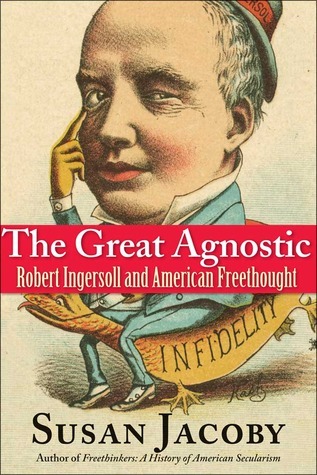
The Great Agnostic: Robert Ingersoll and American Freethought
Book Description
A fiery orator challenged the status quo in an era when dogma reigned supreme. Robert Ingersoll, known as “The Great Agnostic,” captivated audiences with his audacious embrace of reason over religion. As he confronted the cultural and moral fabric of 19th-century America, he sparked a movement that ignited both fervent admiration and ruthless backlash. His words, a potent mix of skepticism and humanity, rallied the freethinkers against oppression and ignorance. But in a society clinging to belief, could one man truly change the course of a nation? What legacy does a voice of reason leave in the shadows of faith?
Quick Book Summary
Susan Jacoby's "The Great Agnostic" chronicles the life and impact of Robert Ingersoll, a towering figure in 19th-century American freethought. Ingersoll, known for his electrifying oratory and devotion to reason, challenged the deep-seated religious dogmas of his era. Jacoby explores Ingersoll's personal journey, his passionate advocacy for secularism and civil liberties, and his pivotal role in shaping the American discourse around faith and skepticism. The book highlights his relentless criticism of organized religion, his persuasive arguments for rational inquiry, and the social and political obstacles he faced. Jacoby situates Ingersoll within the broader currents of American history, showing how his bold ideals resonated with, and sometimes threatened, a nation in flux. Ultimately, the book assesses Ingersoll's lasting legacy for freethinkers and the ongoing struggle for intellectual freedom.



Summary of Key Ideas
Table of Contents
Ingersoll’s Rise as a Public Orator and Agnostic
Robert Ingersoll emerged from modest origins to become one of the most influential and charismatic public speakers of the Gilded Age. His oratory drew enormous crowds and captured national attention, not merely for its style but for its substance: he directly challenged traditional religious doctrines, advocating for reason, skepticism, and the separation of church and state. Ingersoll’s embrace of agnosticism set him apart in an era where open dissent from religious orthodoxy often meant social and professional ostracism. His personal integrity and wit enabled him to foster a space for honest doubt and inquiry, inspiring others who questioned the prevailing moral and spiritual dogmas.
The Battle Between Faith and Reason in 19th-century America
The 19th-century United States was marked by profound tension between scientific progress and religious belief, with Darwinism and biblical literalism clashing in public debate. Ingersoll inserted himself at the heart of these controversies, leveraging his popularity to promote freethought and expose the intellectual limits of religious dogma. He contended that moral progress depended not on scriptural authority, but on human empathy and rational judgment. Jacoby situates Ingersoll’s thought within wider developments, such as abolition, women’s rights, and the secularization of education, showing how his advocacy contributed to larger struggles for social and intellectual emancipation.
Secularism, Civil Liberties, and Social Reform
Ingersoll’s work went beyond critique of religion; he was a relentless champion of civil liberties and social reform. He argued passionately against the use of religion to justify slavery, women’s subordination, and legal discrimination. His vision of a just society relied on promoting reason and compassion rather than imposed dogmas. This positioned him as a forerunner to later civil liberties activism and marked an essential but underappreciated lineage in American secularism. Jacoby emphasizes Ingersoll’s efforts to humanize public discourse, particularly his belief that human happiness and collective well-being were achievable without recourse to the supernatural.
The Backlash and Marginalization of Freethinkers
Despite his popularity, Ingersoll and his followers faced intense opposition from religious institutions, political leaders, and the press. His refusal to conform to orthodox beliefs limited his career opportunities and left him on the margins of mainstream history. Jacoby meticulously documents the strategies employed to sideline freethinkers, including professional ostracism, character attacks, and erasure from the historical record. Yet, Ingersoll’s resilience and rhetorical skill enabled him to build a lasting freethought movement, one that, although diminished in the short term, would help lay the groundwork for later advancements in secularism and free expression.
The Enduring Legacy of Robert Ingersoll
Jacoby concludes that Ingersoll’s legacy remains vital for understanding both the possibilities and limits of dissent in America. His unapologetic embrace of reason and advocacy for intellectual freedom prefigured 20th-century movements for secularism and civil rights. The book argues that rediscovering Ingersoll’s story helps illuminate the ongoing tension between faith and reason in American life, as well as the courage required to defend unpopular truths. Ingersoll’s life stands as a testament to the enduring power of eloquence, integrity, and critical inquiry.
Download This Summary
Get a free PDF of this summary instantly — no email required.