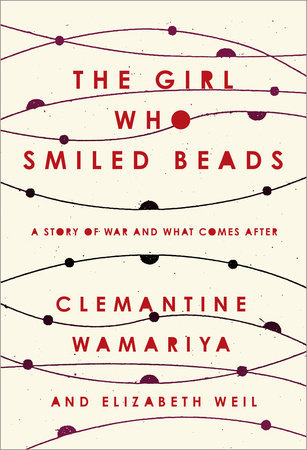
The Girl Who Smiled Beads: A Story of War and What Comes After
Book Description
A single smile can hide a world of pain. In 'The Girl Who Smiled Beads,' Clemantine Wamariya takes you on an unforgettable journey through war-torn Rwanda and the haunting aftermath that follows. As she navigates the treacherous landscape of loss and survival, sisterhood and hope emerge as her guiding lights. Wamariya's vivid narrative captures the heart's resilience amidst chaos, challenging the line between trauma and healing. As she unravels her story, the urgent question lingers: How do we reclaim our lives when the past threatens to define us?
Quick Book Summary
In 'The Girl Who Smiled Beads,' Clemantine Wamariya delivers a searing memoir of survival, identity, and the elusive search for belonging in the wake of the Rwandan genocide. At age six, Clemantine and her older sister Claire are forced to flee their home, embarking on a harrowing six-year journey through refugee camps and foreign countries. The narrative interweaves Clemantine's past traumas with her experiences adapting to American life after being granted asylum. As she struggles to reconcile her past with her present, Clemantine grapples with the limitations of storytelling, the burden of being a symbol of survival, and the challenge of defining herself beyond tragedy. Above all, her memoir powerfully illustrates the resilience of the human spirit and the ongoing struggle to craft an identity after profound loss.



Summary of Key Ideas
Table of Contents
The Dislocation of War and Refuge
The memoir opens with six-year-old Clemantine Wamariya and her fifteen-year-old sister Claire fleeing their idyllic life in Rwanda as violence from the 1994 genocide erupts. Over six years, they endure constant displacement, traveling through seven African countries and surviving in harsh conditions within multiple refugee camps. The trauma they experience is ever-present: hunger, violence, and the uncertainty of the next day become their new reality. Clemantine vividly conveys the fear and confusion of childhood during war, while Claire emerges as a protector, improvising ways for them to survive and maintain hope in a world turned upside down.
Sisterhood and Resilience in Survival
After receiving asylum and relocating to the United States, Clemantine finds herself grappling with a new set of challenges. While material safety is restored, emotional and psychological healing prove elusive. She faces the bewildering task of assimilating into American culture while being haunted by her past. Clemantine struggles with others’ expectations: she is frequently asked to retell her story, often in search of inspiration or closure that she herself has not found. The memoir explores how the trauma of war does not vanish but lingers, affecting every step of her journey toward education and self-reliance.
Challenges of Assimilation and Identity
The bond between Clemantine and Claire remains a central pillar throughout their trials. Claire’s maternal instinct and resourcefulness save them repeatedly, but their relationship is shaped by the sacrifices and resentments born from survival. As the sisters follow diverging paths in adulthood—Claire embracing community and motherhood, Clemantine seeking education and self-definition—their interactions reflect broader questions about family, belonging, and the cost of endurance over years of upheaval and loss.
The Limitations of Storytelling and the Search for Healing
Clemantine sharply examines the limitations and expectations of storytelling, particularly regarding traumatic events. She resents being reduced to a symbol of hope or tragedy, pushed to share her narrative before audiences seeking neat lessons or closure. Through her journey, she articulates the persistent fragmentation that trauma inflicts on memory and identity. The memoir highlights the ways in which narratives about refugees and survivors can flatten real, messy human experiences, often serving the needs of outsiders rather than survivors themselves.
Redefining Self Beyond Tragedy
Ultimately, Clemantine’s memoir is about reclaiming agency and resisting the tyranny of the past. She learns that healing is not a finite state but an ongoing process, marked by choosing who she wants to become beyond her history. The book closes with Clemantine challenging notions of resilience that depend on erasure or simplification, instead advocating for the right to anger, ambiguity, and self-creation. In sharing her story, Clemantine invites readers to consider how we define ourselves through—and despite—trauma, and what it truly means to transcend painful origins.
Download This Summary
Get a free PDF of this summary instantly — no email required.