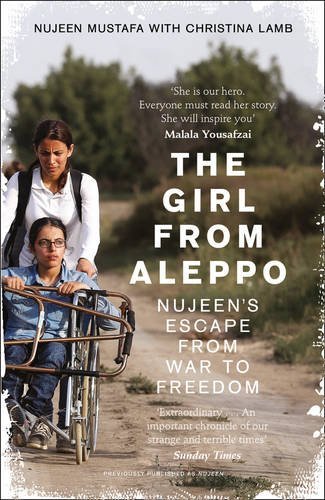
The Girl from Aleppo: Nujeen's Escape from War to Freedom
Book Description
Trapped in a war-torn city, a girl with dreams of freedom battles fear with courage, her wheelchair a symbol of resilience amid chaos. Nujeen's journey from the rubble of Aleppo to a new life in Europe unfolds like a heart-stopping odyssey, where every danger is a test of hope and every step is a testament to the strength of the human spirit. This gripping memoir reveals the stark realities of displacement while shining a light on the power of dreams against all odds. Will Nujeen's pursuit of freedom triumph over the haunting shadows of war?
Quick Book Summary
"The Girl from Aleppo: Nujeen's Escape from War to Freedom" recounts the harrowing yet inspiring journey of Nujeen Mustafa, a teenager with cerebral palsy, as she flees Syria’s civil war. Navigating the perilous migration routes from Aleppo to Europe, Nujeen is not only challenged by the violence and destruction that pervade her homeland but also by the physical limitations of her wheelchair. Undeterred by these obstacles, she embarks on a journey filled with uncertainty, relying on the support of her sister and sheer determination. Along the way, Nujeen’s story amplifies the voices of refugees and the disabled, challenging stereotypes and highlighting the universal longing for safety, dignity, and hope. Her memoir serves as a tribute to resilience and the transformative power of hope.



Summary of Key Ideas
Table of Contents
Resilience in the Face of Adversity
The Syrian conflict turns life upside down for Nujeen Mustafa, a bright and curious teenager confined to a wheelchair by cerebral palsy. As Aleppo transforms from a bustling city into a war zone, Nujeen's family is forced to make an impossible choice: stay amid escalating violence or risk a dangerous escape to Europe. Despite never having attended school due to her disability and relying on TV shows to teach herself English, Nujeen sustains an active imagination and a fierce determination to survive.
The Refugee Experience and Displacement
Leaving everything familiar behind, Nujeen and her sister embark on the arduous journey undertaken by thousands of refugees. The trek is punctuated by treacherous border crossings, overcrowded boats, and uncertain welcomes at every checkpoint. For Nujeen, everyday challenges are compounded by her wheelchair and inaccessible environments. The journey tests not only their physical endurance but also their emotional fortitude, as they confront prejudice, uncertainty, and the fatigue of displacement.
Living with Disability in Conflict Zones
Nujeen’s experience sheds light on what it means to live with a disability in a world unprepared for difference, especially during war. Basic infrastructure is scarce, and societal support is virtually nonexistent, making survival more difficult. Yet, her persistent optimism and clever resourcefulness challenge both the external and internal limitations imposed upon her—as well as readers’ assumptions about the capabilities of those with disabilities.
Sisterhood and Family Bonds
Throughout her odyssey, Nujeen’s unbreakable bond with her sister and their family emerges as a central lifeline. Their mutual sacrifices, shared moments of despair, and defiant laughter provide the emotional scaffolding needed to press forward. The strength of these relationships reinforces the idea that solidarity and shared hope are powerful antidotes to despair.
Dreams and the Pursuit of Freedom
Despite the trauma and chaos of war, the memoir is ultimately defined by Nujeen’s dreams of freedom—her desire to go to school, to live independently, and to contribute to the world. Her story transcends the label of “refugee” or “disabled,” offering instead a profound testament to the enduring power of resilience, hope, and the longing for a better future.
Download This Summary
Get a free PDF of this summary instantly — no email required.