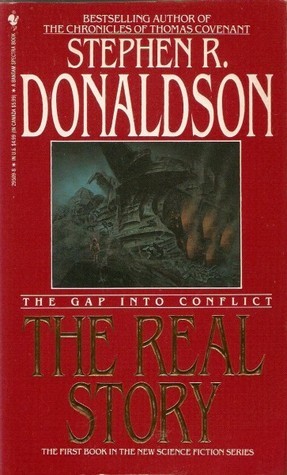
The Gap Into Conflict: The Real Story
Book Description
Betrayal breeds chaos in a shattered universe where the balance of power teeters on the edge. As factions collide and ancient grudges ignite, the stakes rise with every heartbeat. Amidst treachery and heartbreak, unlikely alliances form in a desperate bid for survival. Secrets unravel, revealing truths that twist loyalties and challenge the very fabric of existence. With worlds at war and destinies intertwined, will courage be enough to forge a path through the darkness? A gripping journey awaits, where every choice could spark a conflagration. Who will rise, and who will fall in the unrelenting tide of conflict?
Quick Book Summary
"The Gap Into Conflict: The Real Story" by Stephen R. Donaldson is a grim and gripping exploration of power, betrayal, and survival set against the vast backdrop of space. The novel focuses on a ruthless triangle between the haunted space pilot Nick Succorso, the broken but resilient Morn Hyland, and the sadistic pirate Angus Thermopyle. Each is trapped in a web of manipulation and violence, with shifting loyalties and hidden agendas governing their every move. Donaldson crafts a tense and claustrophobic narrative in which trust is a liability and compassion an exploit, exploring the darkest corners of humanity. The story's relentless psychological twists push its characters to the brink, forcing readers to confront uncomfortable questions about agency, redemption, and the true nature of evil. As secrets are uncovered and alliances shift, the universe itself seems poised on the edge of chaos, making every choice fraught with peril and consequence.


Summary of Key Ideas
Table of Contents
Power, Control, and Manipulation
The novel is rooted in a relentless, high-stakes power struggle among three central characters: Angus Thermopyle, a brutal, cunning space pirate; Morn Hyland, a formerly respected cop and now his captive; and Nick Succorso, a charismatic outlaw whose motives are as dangerous as they are ambiguous. Donaldson's narrative intimately examines how each character wields or surrenders power as they navigate treacherous alliances and personal grievances. Through intense psychological interplay, power dynamics shift rapidly, forcing each to reevaluate allegiances and survival strategies. The struggle for control becomes both a literal and metaphorical battle, echoing larger conflicts in the universe they inhabit.
Survival and Moral Compromise
Survival is a dominant theme, compelling characters into morally dubious choices. Morn Hyland's journey is especially poignant as she endures abuse and captivity, yet clings to hope and survival through mental resilience and tactical cunning. She is forced to make choices that challenge her own morality, illustrating how extreme circumstances can blur the line between victim and perpetrator. In Donaldson’s world, survival often demands the compromise or outright abandonment of personal ethics, and the story constantly challenges readers to contemplate what they might do in similar circumstances.
Identity, Trauma, and Change
Betrayal is the engine that drives the novel's plot and character development. As trust becomes a vulnerable commodity, the characters engage in continual acts of deception and treachery. Alliances are frequently formed and shattered, with each betrayal revealing new facets of character and reshaping the course of events. The corrosive impact of betrayal is seen in damaged relationships and psychological scars, further blurring the moral boundaries between hero and villain. The novel suggests that repeated betrayals change people, making redemption and return to innocence increasingly elusive.
The Corrosive Nature of Betrayal
Identity and trauma are explored through the inner lives of the main characters. Morn’s psychological endurance in the face of repeated abuse is harrowing, and her struggle with trauma is presented with unflinching realism. Both Angus and Nick are revealed to be more than their reputations suggest, shaped by past wounds and haunted by ghosts of their own making. The book delves deeply into how identity can fracture under stress, and how trauma can drive individuals to acts of unexpected courage or cruelty.
Ambiguous Morality and Empathy
Ultimately, "The Gap Into Conflict: The Real Story" is an exercise in ambiguous morality. Donaldson refuses to offer readers simple heroes or villains; instead, he crafts complex characters whose motivations are always suspect, their empathy tainted by necessity. The grey morality of the universe is unrelenting, prompting introspection on the nature of evil and the possibility of redemption. The result is a compelling, disturbing tale that lingers with the questions it raises about power, survival, and human weakness.
Download This Summary
Get a free PDF of this summary instantly — no email required.