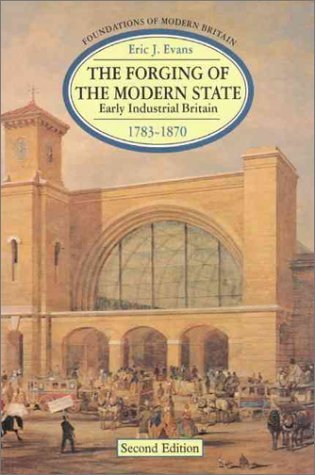
The Forging of the Modern State: Early Industrial Britain, 1783-1870
Book Description
Amidst the smoke and din of burgeoning factories, a nation clamors for change. 'The Forging of the Modern State' unveils the tumultuous era of early industrial Britain, where revolution and reform collide. Power struggles within the corridors of government and the raw energy of the working class shape a landscape brimming with ambition and discord. Economic forces clash with social upheavals, forging a path toward modernity. As the lines between the past and future blur, which ideologies will prevail? In a world on the brink of transformation, can the foundations of a new state withstand the fires of progress?
Quick Book Summary
Eric J. Evans' 'The Forging of the Modern State' provides a vivid and authoritative account of Britain's transformation during the period 1783-1870. The book explores how industrialization fundamentally altered the nation’s economy, society, and political structures. Evans demonstrates how revolutionary pressures from within and the influence of the French Revolution abroad forced the old, aristocratic order to adapt or yield. He details how the expansion of factories and growth of cities spawned new social classes and unrest, compelling a series of political reforms that incrementally broadened democracy. Evans highlights the struggles between established elites and emergent interests, tracing the development of administrative and legal frameworks that underpin the modern British state. In exploring these interconnected changes, Evans reveals the challenges and compromises that shaped a nation on the path to modernity.



Summary of Key Ideas
Table of Contents
Industrialization and Social Change
The British landscape between 1783 and 1870 was fundamentally reshaped by the forces of industrialization. The expansion of factories, new technologies like steam power, and the rapid growth of urban centers radically altered economic life. Traditional rural communities gave way to sprawling industrial towns, leading to new patterns of work and leisure. With these changes came the growth of the middle and working classes, while the landowning aristocracy’s old dominance began to erode. Social mobility increased, yet economic and social tensions multiplied as new inequalities emerged from the unprecedented pace of change.
Revolutions, Reform, and Political Power
Politically, Britain was buffeted by the twin pressures of internal dissatisfaction and the reverberations of the French Revolution. The threat of popular uprising forced conservative governments to implement a range of repressive measures designed to prevent disorder. Yet, over time, mounting social unrest and organized political agitation for reform—most notably in movements like Chartism—pushed the state toward a grudging acceptance of change. The passage of key reforms such as the Great Reform Act of 1832 and the repeal of the Corn Laws signaled the gradual broadening of political participation and an increasingly responsive parliamentary system.
Emergence of Modern Governance
As Britain became more complex, so too did its systems of governance. Evans charts the development of the administrative and legal frameworks necessary to govern a rapidly industrializing society. The civil service was professionalized, the police force was established to manage urban order, and new approaches to welfare and public health emerged in response to the squalor of industrial cities. These innovations extended the reach of the state and helped forge a more centralized and effective government, consolidating the conditions for the emergence of a modern nation-state.
Class Conflict and Social Unrest
The vast social shifts wrought by industrialization also led to recurring waves of unrest and challenge. Workers’ demands for fair wages and improved working conditions led to strikes and sometimes violent confrontations, forcing both entrepreneurs and politicians to reconsider the social contract. Middle-class moral campaigns, suffrage demands, and feminist activism began to reshape public discourse, even as the old elite attempted to retain its privileged position. The competing claims of old and new social groups forged a vibrant if often uneasy, pluralism in the British political landscape.
Nationhood and Identity
Amidst economic growth and relentless change, the British sense of nationhood evolved. The period witnessed debates about identity, as regional, religious, and class loyalties both clashed and coalesced. Empire, industrial prowess, and parliamentary advances became cornerstones of the emerging British identity, even as tensions simmered beneath the surface. By 1870, Evans argues, Britain stands as a far more modern and unified state, albeit one whose future stability remained shaped by the unresolved legacies of its tumultuous transformation.
Download This Summary
Get a free PDF of this summary instantly — no email required.