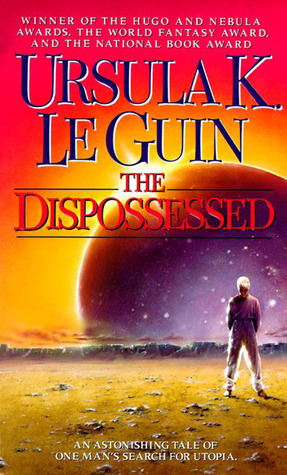
The Dispossessed: An Ambiguous Utopia
Book Description
Two worlds, two stark realities—a thriving capitalist society and a barren anarchist utopia. When Shevek, a brilliant physicist, dares to bridge the divide between them, he ignites a dangerous clash of ideals that challenges everything he knows. Allies turn into enemies, and love becomes a battleground. As he confronts betrayal, longing, and the quest for true freedom, each choice carries unimaginable stakes. Will he shatter the walls that separate them, or will the weight of his ambitions come crashing down? Dive into a tale that asks: What is the price of true liberation?
Quick Book Summary
"The Dispossessed: An Ambiguous Utopia" by Ursula K. Le Guin explores the social, philosophical, and personal ramifications of two contrasting societies—one deprived but committed to anarchist ideals (Anarres), and one prosperous but marked by capitalist competition and hierarchy (Urras). The novel follows Shevek, a gifted physicist from Anarres, as he journeys to Urras in pursuit of universal scientific knowledge and greater freedom. Through Shevek's interactions, betrayals, and aspirations, the novel probes deeply into the possibility and cost of true freedom, the illusion of utopia, and the sacrifices necessary for progress. Le Guin’s tale skillfully challenges traditional ideas of success, property, loyalty, and revolution, forcing both protagonist and reader to reconsider what liberation truly means.




Summary of Key Ideas
Table of Contents
Contrasting Societies and Ideals
The story centers on Shevek, a physicist from the arid, resource-scarce world of Anarres—a society founded on anarchist and egalitarian principles. Anarres is isolated from Urras, its lush and capitalist twin planet, and prides itself on its rejection of personal property and authority. Despite its ideals, Shevek increasingly senses that Anarres enforces conformity in subtle ways, stifling individual ambition and innovation in the name of collective harmony. His groundbreaking scientific work is met with resistance, awakening in him a desire to escape intellectual isolation.
The Quest for Individual and Collective Freedom
Shevek’s journey to Urras offers a stark contrast in societal structures. Welcomed as a celebrity for his scientific expertise, he is initially enamored with the beauty, abundance, and apparent freedom around him. However, Shevek slowly realizes that Urrasti society is deeply hierarchical, rife with class divisions, gender inequality, and political manipulation. The freedom he once envied comes at a high cost, revealing itself to be limited and unevenly distributed, with wealth and privilege dictating one’s power and security.
Barriers to Knowledge and Progress
Throughout his time on both worlds, Shevek’s pursuit of scientific knowledge becomes a symbol for the more profound quest for authentic freedom. He confronts institutional inertia—on Anarres, it’s stifling collectivism; on Urras, it’s the control exerted by powerful interests and the state. Shevek’s scientific innovations represent a potential bridge between worlds, yet his struggle reveals the difficulties inherent in sharing transformative knowledge, particularly when faced with suspicion, censorship, and the threat of weaponization.
The Ambiguity of Utopia
Despite personal and professional betrayals, Shevek’s resolve intensifies as he yearns to shatter the barriers falsifying the idea of utopia on both planets. His experiences lead him to understand that no society is perfect—each is plagued by its own paradoxes and limitations. True liberation, he realizes, is a constant challenge: utopia is never fully achieved, only ambiguously glimpsed through ongoing struggle and critical self-reflection.
Personal Sacrifice and Social Change
By disseminating his discoveries to all, free from political and proprietary constraints, Shevek takes a decisive stand for open knowledge and solidarity. His choice reflects the novel’s ultimate message: lasting social change and genuine freedom demand both individual courage and collective action. Le Guin masterfully weaves Shevek’s scientific journey with personal relationships marked by love, loss, and idealism, making "The Dispossessed" a profound meditation on the complexities and costs of building a better world.
Download This Summary
Get a free PDF of this summary instantly — no email required.