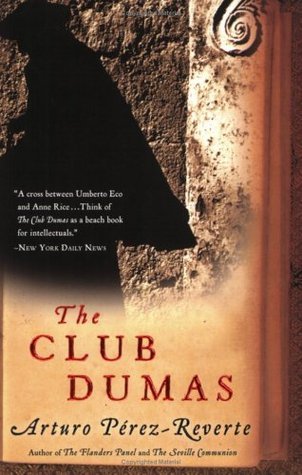
The Club Dumas
Book Description
A priceless manuscript, a mysterious antagonist, and the shadows of the past collide in a race against time. Lucas Corso, a cunning book detective, navigates a labyrinth of betrayal, obsession, and arcane secrets while hunting for a rare text linked to the enigmatic writer Alexandre Dumas. As dark forces close in and the line between reality and fiction blurs, Corso must confront his own demons. With every turn of the page, the stakes escalate, leading to a heart-pounding climax. Can one man decipher the truth before he gets caught in a deadly game of loyalty and deception?
Quick Book Summary
"The Club Dumas" by Arturo Pérez-Reverte is a literary thriller that follows Lucas Corso, a rare book dealer and "book detective," as he investigates two intertwined mysteries. Corso is tasked with authenticating an original manuscript chapter of Alexandre Dumas’ "The Three Musketeers" and uncovering the truth behind "The Nine Doors of the Kingdom of Shadows," a notorious demonic text. As Corso follows clues through Spain and France, he enters a world of obsessive collectors, forgers, and mysterious figures whose motives are as shadowy as the texts they covet. The boundaries between fiction and reality blur, echoing themes from Dumas' stories, as Corso becomes entangled in a dangerous web of deception. Navigating betrayals and haunted by his own demons, Corso races to solve the puzzle before the deadly game consumes him.



Summary of Key Ideas
Table of Contents
Obsession and the Power of Rare Books
Lucas Corso, an expert book detective, is hired to verify the authenticity of a rare manuscript—a chapter supposedly written by Alexandre Dumas himself. At the same time, Corso is commissioned to compare three copies of "The Nine Doors of the Kingdom of Shadows," a legendary and potentially demonic work. His investigation draws him into the dark underworld of bibliophiles, collectors, and forgers. Each new clue exposes the obsessive lengths to which people will go to possess rare texts and secret knowledge, setting the stage for a journey that is as intellectual as it is perilous.
Blurred Lines Between Fiction and Reality
Corso’s search sends him across Spain and France, where he encounters eccentric figures such as the enigmatic Baroness Ungern, the obsessive Liana Taillefer, and the mysterious woman known as "Irene Adler." As the lines between reality and the world of Dumas blur, Corso realizes that the mysteries he chases are not just about books but are part of a much more dangerous struggle involving secret societies and occult rituals. Every confrontation reveals the seductive danger that forbidden knowledge poses to those who seek it.
The Dangers of Secret Societies and Forbidden Knowledge
Throughout the narrative, intertextual references abound—echoes of "The Three Musketeers" and other Dumas works seep into Corso’s reality. Characters adopt the identities and roles of literary figures, and Corso finds himself reenacting Dumas-like adventures, forced to reckon with how stories influence the choices and morality of individuals. The interplay between text and life becomes increasingly complex as Corso questions his own perceptions and motivations.
Identity, Betrayal, and Moral Ambiguity
Themes of betrayal and moral ambiguity are woven through Corso's journey. Alliances shift unpredictably, and neither friends nor enemies are as they appear. Corso himself is a flawed hero, haunted by personal demons and past regrets. His navigation of the book world’s labyrinth is marked by ethical dilemmas and moments of self-doubt. The quest for truth is ultimately a quest into the self, where lines between hero and villain blur as inexorably as those between fact and fiction.
Intertextuality and the Ghosts of Literature
As the climax approaches, the mysteries converge and Corso faces the ultimate confrontation with those who orchestrate the deadly games behind the scenes. With his life at stake, he must untangle the layers of deception, decode the last secrets of the manuscripts, and come to terms with the ghosts—both literal and literary—that haunt him. The novel concludes with a reflection on the enduring power of stories and the peril and promise found in the pursuit of secrets, leaving readers to ponder the limits of obsession and the irresistible allure of forbidden knowledge.
Download This Summary
Get a free PDF of this summary instantly — no email required.