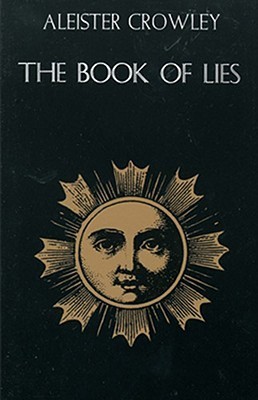
The Book of Lies
Book Description
A labyrinth of truth and deception awaits within "The Book of Lies," where the lines between reality and illusion blur in an electrifying dance of mysticism and philosophy. Each enigmatic verse unravels secrets that have enticed the curious and the daring for centuries, leading to daring revelations about self and the universe. With a kaleidoscope of ideas that challenge perceptions and ignite passion, Crowley's masterpiece confronts the very essence of existence. As the pages turn, a question lingers: What truths will you uncover when you dare to confront your own lies?
Quick Book Summary
Aleister Crowley’s "The Book of Lies" is a multifaceted work that fuses poetry, occult philosophy, and esoteric symbolism into a singular, enigmatic volume. Through a series of cryptic chapters consisting of prose, verse, and paradoxical statements, Crowley invites readers to ponder the nature of truth, reality, and self-deception. The book simultaneously reveals and conceals, employing humor, riddles, and allegory to challenge preconceived notions and to provoke personal revelation. Intended both as a practical manual for initiates and a philosophical labyrinth for seekers, the book encourages the dissolution of dogma, the pursuit of individual enlightenment, and a direct confrontation with one’s own understanding of existence. Its structure and style reflect Crowley’s Thelemic philosophy and belief in the transformative power of questioning and transcending illusions.


Summary of Key Ideas
Table of Contents
The Nature of Truth and Illusion
Aleister Crowley crafted "The Book of Lies" as a labyrinthine work designed to blur the boundaries between truth and deception. The text, composed of 93 brief chapters, is a mosaic of prose, poetry, and paradox; each chapter is an invitation to deep reflection. Crowley purposely employed contradictions, humor, and enigmatic statements not just to obscure meaning, but to force readers to think beyond surface interpretations. This approach encourages questioning not only of the text, but of one’s own perceptions and beliefs. The book’s deliberate ambiguity urges readers to recognize the layers of illusion that shape understanding, both in occult study and personal life.
Occult Symbolism and Hidden Meanings
At the heart of the book is a wealth of occult symbolism, referencing traditions such as Kabbalah, Hermeticism, and Crowley’s own Thelema. Each chapter often conceals references to magical practices, rituals, and initiatory grades. Crowley embeds codes, puns, and esoteric allusions that only the attentive or initiated reader may decipher. These layers of hidden meaning serve dual purposes: they both veil critical teachings from the unprepared and reward those with persistence and insight, evoking the classic path of the magician who must pierce through shrouds to obtain true wisdom.
Initiation and Individual Spiritual Growth
Crowley challenges the reader to move along a mystical journey of initiation and personal transformation. Each enigmatic passage can be seen as a trial or lesson, mirroring the experience of the spiritual aspirant. The rituals of understanding and misunderstanding echo the process of initiation—where the seeker must confront, and ultimately transcend, their limitations. The book does not provide direct doctrine; its utility lies in engendering discovery through struggle and engagement, exemplifying the Thelemic ideal of finding one’s own Way.
Transcendence Through Paradox and Riddle
Central to the book’s power is Crowley’s use of paradox, humor, and riddle. These literary devices do more than entertain; they destabilize rational thought and force the reader into unfamiliar territory. The act of resolving—or failing to resolve—these paradoxes functions as a spiritual exercise, nudging the mind beyond the binary of truth and falsehood. Crowley’s playful yet serious tone makes the book a kind of Koan-esque training tool, using confusion as a gateway to enlightenment.
Thelema and the Challenge to Dogma
"The Book of Lies" is a radical assertion of Thelemic philosophy, urging the reader to confront and discard dogmatic beliefs. Rather than offering external truths, it points inward, demanding self-interrogation and the construction of personal meaning. The book embodies the maxim "Do what thou wilt," challenging spiritual seekers to uncover their own truths amid a thicket of illusions. Crowley’s masterpiece remains a provocatively open-ended work, inviting endless reinterpretation and discovery.
Download This Summary
Get a free PDF of this summary instantly — no email required.