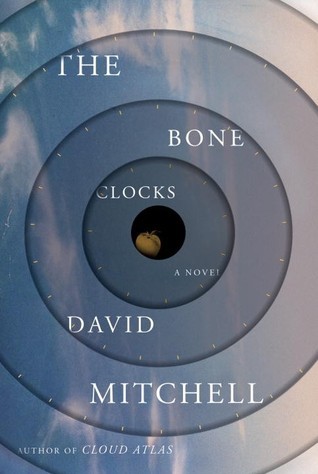
The Bone Clocks
Book Description
Time bends and reality warps in "The Bone Clocks," where a young woman’s life intertwines with shadows of the past and the echoes of the future. As strength and vulnerability clash, Holly Sykes confronts mysterious forces seeking to manipulate her fate. From the vibrant streets of London to eerie realms beyond comprehension, danger lurks in every corner, and alliances are forged in the unlikeliest of places. Love, ambition, and desperation ignite a thrilling quest across decades. What sacrifices will be made as the line between life and death blurs? Can hope survive in a world teetering on the brink?
Quick Book Summary
"The Bone Clocks" by David Mitchell spans six decades, chronicling the extraordinary life of Holly Sykes as she navigates both the ordinary trials of youth and the extraordinary intrusions of an unseen war between mystical forces. Beginning in 1984 with Holly's teenage escape from home, the narrative follows her as she becomes entangled in a supernatural conflict between the immortal Atemporals—two rival factions with opposing views on mortality and power. Each section is told from the perspective of different characters, illuminating Holly's life and the larger cosmic battle. The novel blends literary ambition with magical realism, weaving love, betrayal, ambition, and sacrifice into a sweeping tale that questions the nature of time, identity, and destiny.

Summary of Key Ideas
Table of Contents
Interconnected Lives Across Time
The narrative begins in 1984 with sixteen-year-old Holly Sykes, who flees her troubled home after a fight with her mother. She is soon drawn into events beyond normal reality: cryptic visions and mysterious voices signal her latent psychic abilities. As she wanders the English countryside, Holly crosses paths with enigmatic figures whose motives are unclear, while a personal tragedy—the disappearance of her brother—casts a long shadow on her life. This foundational section introduces the tension between everyday struggles and openings into far stranger realms.
The Battle Between the Atemporals
Subsequent sections expand the story through new narrators, each of whom intersects with Holly during pivotal moments spanning decades. Through the eyes of Hugo Lamb, an ambitious Cambridge student; Ed Brubeck, a war journalist; and others, the novel explores ideals of love, betrayal, and identity. These intertwined perspectives build a complex mosaic, revealing how individual lives overlap—sometimes profoundly influenced by forces they only dimly understand. As characters pursue personal ambitions or seek redemption, their fates become knotted within larger arcs of cosmic conflict.
Power, Ambition, and Sacrifice
At the heart of the novel is a secret war between two groups of immortals: the Anchorites, who prey on the lives of the living to sustain themselves, and the Horologists, who reincarnate naturally in the flow of time. Holly, unknowingly, becomes a focal point in their centuries-old battle. Her empathy, pain, and intuition make her essential both as pawn and eventual player. The clandestine struggle unfolds through mind-bending battles and philosophical debates about mortality, time, and the ethics of power.
The Fragility and Resilience of Humanity
Woven throughout is a meditation on the resilience of the human spirit and the fragility of civilization. As Holly ages, the novel shifts to an unsettling near-future, where climate catastrophe and social collapse imperil humanity. Holly’s journey crystallizes into a fight for hope amid encroaching darkness. The rawness of loss, the persistence of love, and the determination to protect future generations anchor these themes, framing personal and cosmic struggles alike.
The Blurring Boundaries of Reality
Mitchell ultimately blurs the line between reality and the supernatural, seamlessly merging the fantastical with nuanced character study. Time’s passage—embodied in both immortal beings and the “bone clocks” of mortal humans—invites readers to consider how choices reverberate across years and worlds. Holly’s story becomes an exploration of identity, fate, and the endurance of hope when the very nature of reality is threatened, creating a novel as ambitious in scope as it is intimate in feeling.
Download This Summary
Get a free PDF of this summary instantly — no email required.