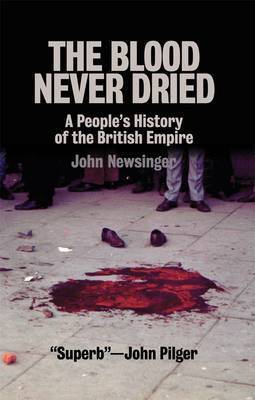
The Blood Never Dried: A People's History of the British Empire
Book Description
Blood stains the pages of history, revealing an empire built on exploitation, violence, and resistance. In "The Blood Never Dried," John Newsinger uncovers the untold stories of those who endured the shadows of the British Empire, showcasing the fierce struggles of indigenous peoples and the tenacity of those who fought back. Through riveting accounts and searing analysis, the book delves into the moral complexities of colonialism and its enduring legacy in today’s world. Can we truly reckon with the past, or will the echoes of oppression continue to shape our future?
Quick Book Summary
"The Blood Never Dried" by John Newsinger is a powerful and unflinching examination of the British Empire’s history from a people's perspective. Rather than focusing on rulers and officials, Newsinger centers the narratives of those subjugated and the often-overlooked resistance movements that challenged imperial rule. Traversing continents and centuries, the book lays bare the exploitation, violence, and dispossession that underpinned Britain's global expansion. Through vivid case studies, Newsinger reveals the brutality at the empire's core and the resilience of indigenous populations. The book argues that the moral ambiguities and injustices of the imperial past continue to echo in contemporary Britain and the world, urging readers to confront colonial legacies with honesty and empathy.


Summary of Key Ideas
Table of Contents
Imperial Violence and Exploitation
"The Blood Never Dried" exposes the pervasive violence at the heart of the British Empire. Newsinger meticulously documents the mechanisms of conquest, including forced labor, massacres, famines, and suppression of dissent. He emphasizes that imperial domination was sustained through overwhelming force and systematic exploitation, with financial and political gains for the ruling elite extracted at the immense cost of indigenous lives and cultures. This violence, both implicit and explicit, permeated every region under British control, from Ireland to India and Africa.
Resistance and Rebellion from the Colonized
Central to Newsinger’s account are the stories of resistance mounted by the colonized peoples. The book highlights numerous uprisings and figures who challenged British power, such as the Indian Rebellion of 1857, the Mau Mau Uprising in Kenya, and anti-colonial struggles in the Caribbean. Newsinger demonstrates that resistance took many forms—armed rebellion, non-violent protest, and cultural resistance—showing the agency and determination of those imperialism sought to silence. These movements, though often bitterly suppressed, significantly shaped the course and eventual downfall of colonial rule.
Challenging the Imperial Narrative
A major theme throughout is the mythologizing of the British Empire as a civilizing force. Newsinger systematically deconstructs this narrative, exposing the ways historical accounts have been manipulated to mask violence and legitimize domination. He challenges readers to reconsider the established histories that glorify imperialism, instead elevating the voices and experiences of the oppressed. Through meticulous research, Newsinger uncovers the realities hidden by official records and public memory.
Legacy of Empire in Modern Britain
The book also addresses the enduring legacy of empire in contemporary Britain and around the world. Newsinger argues that many social tensions, political attitudes, and global inequalities can be traced to colonial structures and mindsets that persist today. He explores how Britain’s refusal to fully reckon with its past has allowed selective memory and nostalgia to flourish, complicating efforts toward justice and reconciliation. The impact of imperialism, he contends, remains visible in systemic racism and foreign policy.
Ultimately, "The Blood Never Dried" compels readers to confront the past without illusions. Newsinger’s critical yet accessible style invites a broader conversation about historical accountability. By documenting both imperial brutality and anti-colonial courage, the book calls for a more honest engagement with history—one that recognizes the suffering inflicted, celebrates resistance, and challenges ongoing injustices rooted in empire.
Download This Summary
Get a free PDF of this summary instantly — no email required.