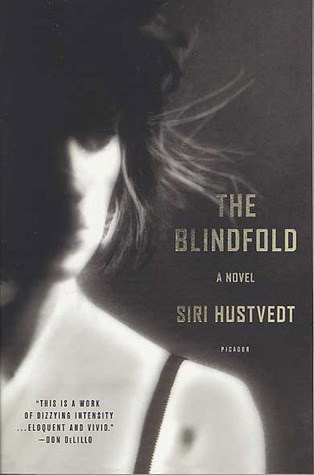
The Blindfold
Book Description
A sudden loss of vision shrouds a woman's world in darkness, propelling her into a labyrinth of secrets and desires. As she navigates the vibrancy of life through a veil of uncertainty, every encounter holds the weight of revelations waiting to unfold. Struggling with intimacy, identity, and the specters of her past, her journey twists through tangled relationships that threaten to unravel everything she thought she knew. With passion igniting in shadowy corners and trust cloaked in ambiguity, can she reclaim her sight—both literally and metaphorically—before the truth consumes her? What happens when the darkness reveals more than it hides?
Quick Book Summary
"The Blindfold" by Siri Hustvedt is a psychologically rich novel set in New York City, following Iris Vegan, a graduate student whose world is thrown into confusion after she experiences episodes of partial blindness. Struggling with her fragmented sense of self, Iris becomes entangled in intense relationships with enigmatic figures—her boyfriend Stephen, a mysterious professor, and a reclusive photographer. These interactions deepen her sense of alienation and force her to confront her complex inner landscape. As Iris attempts to piece together her identity, she grapples with blurred boundaries between reality and fantasy, seeking clarity in a world of uncertainty. The novel explores the intersections of desire, vulnerability, and self-perception, uncovering hidden truths as Iris navigates physical and emotional darkness. Ultimately, Hustvedt crafts a haunting portrait of a young woman's search for understanding, connection, and self-acceptance amidst the shadows of her past and present.



Summary of Key Ideas
Table of Contents
The Complexity of Identity and Self-Perception
Iris Vegan, the protagonist, is a perceptive and often anxious graduate student immersed in the intellectual and artistic culture of New York City. When she suddenly suffers bouts of partial blindness, her physical condition becomes a metaphor for the uncertainty and confusion in her life. Iris is isolated, grappling with her sense of self, unsure of where she fits in with others around her. The blindness she experiences symbolically reflects her difficulties perceiving the truth about herself and her complex relationships.
Power Dynamics in Relationships
Iris’s encounters with several influential figures test her boundaries. Her boyfriend Stephen is possessive, yet emotionally distant, leaving Iris craving intimacy and validation. A professor with ambiguous intentions and a reclusive photographer both pull Iris into situations where power and vulnerability are continually renegotiated. These interactions are tinged with ambiguity, as Iris struggles to discern her genuine feelings from those projected onto her by others—highlighting the shifting power dynamics that often govern relationships.
The Blurring of Reality and Fantasy
Throughout the novel, Iris slips between reality and fantasy. She is haunted by the ghosts of her past and her own imagination, leading her to question the authenticity of her experiences. The narrative frequently bends and blurs, mirroring Iris's struggle to separate what is real from what is imagined. Objects, memories, and even people seem to shape-shift around her, intensifying her feelings of disorientation and uncertainty.
Isolation and Vulnerability in Urban Life
The urban landscape of New York serves as both a liberating and alienating force in Iris’s life. The city’s vibrancy contrasts with her frequent feelings of isolation. Despite being surrounded by people, Iris often moves through her days as an outsider, unable to connect deeply with those around her. This loneliness heightens her vulnerability, making her susceptible to manipulation and further blurring the lines between her internal and external realities.
Sight, Blindness, and the Metaphor of Vision
Vision, both literal and metaphorical, lies at the heart of the novel. Iris's blindness propels her journey, forcing her to rely on senses other than sight and pushing her toward unexpected revelations. As she navigates the shadows in her relationships and psyche, Iris ultimately confronts uncomfortable truths, seeking to reconcile past wounds with present realities. The novel closes on Iris's gradual realization that only by embracing her own complexity and vulnerability can she hope to achieve clarity and self-acceptance.
Download This Summary
Get a free PDF of this summary instantly — no email required.