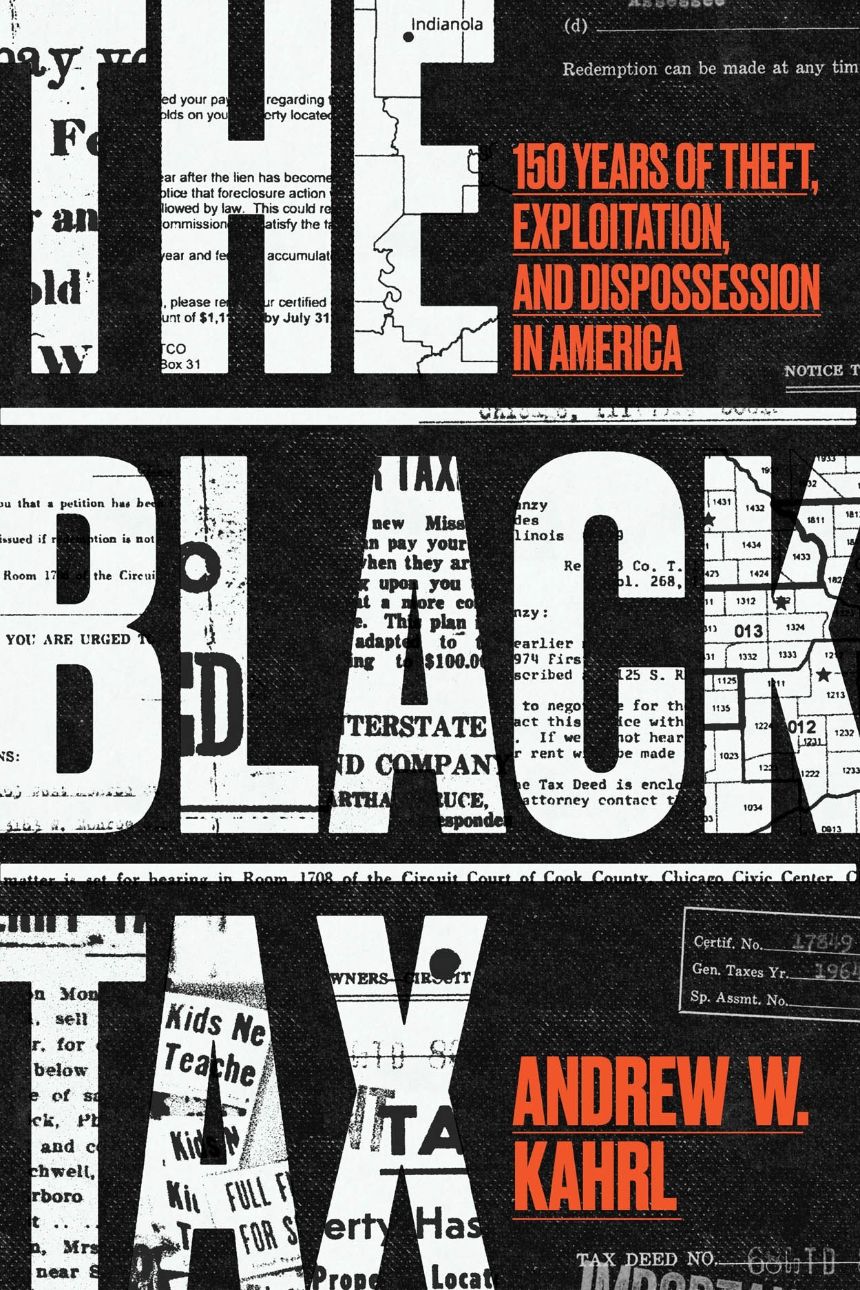
The Black Tax: 150 Years of Theft, Exploitation, and Dispossession in America
Book Description
What if the wealth of a nation was built on the backs of the oppressed? In "The Black Tax," Andrew W. Kahrl exposes 150 years of systemic theft, exploitation, and dispossession faced by Black Americans—a harrowing journey through history that unveils the hidden costs of racism. From land grabs to economic disenfranchisement, this gripping account reveals how policies and practices have created an unrelenting cycle of disadvantage and despair. As the past casts a long shadow over the present, one pressing question lingers: how can society reconcile its fortune with the injustices that fuel it?
Quick Book Summary
"The Black Tax" by Andrew W. Kahrl delves into the persistent and systematic economic disadvantages imposed upon Black Americans since the end of slavery. Spanning 150 years, Kahrl exposes how policies, practices, and everyday abuses—from discriminatory tax systems and redlining to land dispossession and undervaluation of Black property—have extracted wealth from Black communities. Beyond overt racism, the book uncovers the insidious mechanisms used by governments, businesses, and individuals to enforce economic inequality. Kahrl's account highlights not just episodes of theft, but an ongoing system that perpetuates disadvantage and blocks generational wealth-building. Ultimately, the book challenges readers to reckon with the ongoing legacy of this economic injustice and what true reconciliation would demand.



Summary of Key Ideas
Table of Contents
Systemic Economic Dispossession
Kahrl starts by examining how, after the Civil War, newly freed Black Americans attempted to build economic futures amid hostile environments. Local and federal governments, often complicit, systematically design policies that either dispossess Black communities of land or prevent them from acquiring property. Exploitative practices such as manipulated property tax assessments and forced sales ensure that Black wealth remains vulnerable to extraction.
Discriminatory Taxation and Policy
Discriminatory policies are not limited to land loss. Redlining, exclusion from government-backed mortgages, and targeted urban renewal projects deny Black families access to homeownership, the primary engine of middle-class wealth in America. Meanwhile, predatory lending, unequal insurance rates, and insufficient public investment leave Black neighborhoods in cycles of neglect and devaluation, while white communities prosper under more favorable rules.
The Role of Land and Property Theft
Kahrl illuminates how overt and subtle thefts echo across generations. Land grabs—through both legal trickery and red tape—have robbed Black families of millions of acres. At the same time, public infrastructure projects disproportionately target Black-owned properties for demolition or condemnation, slowing or halting the accrual of intergenerational wealth. These patterns are repeated through education funding formulas and employment discrimination, deepening the racial wealth gap.
Barriers to Wealth Accumulation
The author connects these historical injustices to the present, revealing that past policies continue to shape modern racial inequalities. Even when civil rights legislation is passed, enforcement is often weak, redress insufficient, and damages unrepaired. The compounding impact of decades-long disadvantages means that Black Americans today still pay a hidden "tax"—manifested in lower net worth, housing instability, and limited economic mobility.
The Enduring Legacy and Path Forward
Kahrl concludes by urging readers to recognize the scale and persistence of systemic economic dispossession. Addressing the "Black Tax," he argues, requires more than symbolic gestures or token reforms. Full accountability and reparative justice—legal, economic, and moral—are necessary if America hopes to break the cycle of extraction and open genuine paths to prosperity for Black communities. The book ultimately challenges the nation to reckon honestly with its history, and to undertake real change in pursuit of justice.
Download This Summary
Get a free PDF of this summary instantly — no email required.