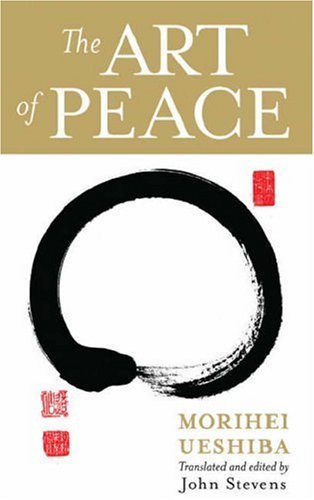
The Art of Peace
Book Description
Amidst chaos and conflict, a quiet revolution stirs. "The Art of Peace" reveals the wisdom of Morihei Ueshiba, the visionary founder of Aikido, who believed in blending strength with harmony. With every turn of the page, stay captivated by teachings that transcend combat, unveiling a path to inner tranquility and global unity. Ueshiba's insights illuminate the balance between martial prowess and spiritual grace, inviting readers to reimagine the essence of true power. Can one man's vision truly redefine the nature of conflict and lead humanity toward a harmonious future?
Quick Book Summary
Morihei Ueshiba’s "The Art of Peace" distills the spiritual and philosophical core behind Aikido, Japan’s martial art rooted in unity rather than aggression. Drawing from his own journey and profound insights, Ueshiba teaches that true strength arises not from domination but from the harmonization of mind, body, and spirit. The book is a collection of aphorisms and meditations inviting readers to transform conflict—both external and internal—into opportunities for growth, compassion, and peace. Ueshiba emphasizes that mastering oneself leads to mastery of any situation, inspiring individuals to cultivate virtue, act with integrity, and contribute to global harmony. The wisdom in these pages serves not only as a guide to martial practice but as an enduring blueprint for living peacefully and purposefully in a turbulent world.




Summary of Key Ideas
Table of Contents
Transforming Conflict through Harmony
Morihei Ueshiba’s teachings center on the fundamental notion that real power comes from harmony, not confrontation. Rather than seeing martial arts as a means to overpower others, Ueshiba envisions them as a way to resolve conflict peacefully. He asserts that through the 'Art of Peace,' individuals can turn aggression into reconciliation, focusing on blending with opponents and circumstances instead of clashing. This approach transforms conflict into an opportunity for dialogue and growth, advancing both personal and collective well-being.
Personal Mastery and Self-Discipline
A recurring theme is the necessity of personal mastery and self-discipline. Ueshiba encourages deep self-reflection and continuous development of one’s character. By controlling one’s thoughts and emotions, practitioners can move beyond reactive behavior. Ueshiba insists that discipline shapes body, mind, and spirit, making one both adaptable and resilient. The cultivation of virtues such as patience, humility, and courage is essential to practice, ultimately enabling individuals to remain centered amid life’s storms.
Nonresistance as True Power
Nonresistance emerges as a core principle for both martial artists and everyday life. Ueshiba teaches that softening to an attack, absorbing and redirecting force, reveals a higher wisdom than outright opposition. He maintains that nonresistance is not weakness but a strategic and spiritual strength. This concept translates into daily living: meeting adversity without anger or fear dissolves hostility and fosters creative solutions. This art of yielding clears the path for peace to take root in the heart and in the world.
Unity of Mind, Body, and Spirit
Central to Ueshiba’s philosophy is the idea of unity—the integration of mind, body, and spirit. Aikido becomes a metaphor for harmonizing conflicting elements within oneself and between people. Through mindful practice, individuals learn to synchronize movement, awareness, and intention. This alignment unlocks a sense of connection to one’s environment and, ultimately, to all of humanity. The recognition of this unity breeds empathy and a sense of responsibility for the broader community.
Living with Compassion and Integrity
Compassion and integrity are presented as the highest ideals. For Ueshiba, the true martial way serves the welfare of others, and every action should be infused with kindness and sincerity. He challenges readers and students to see opponents as partners in mutual growth, not enemies. His vision extends beyond self-defense—it is a call to live with grace, protecting all beings and contributing positively to society. "The Art of Peace" thus offers a transformative path, seeking not the defeat of others, but the flourishing of all.
Download This Summary
Get a free PDF of this summary instantly — no email required.