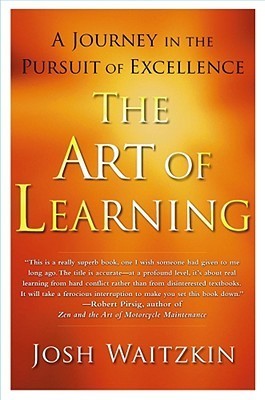
The Art of Learning: A Journey in the Pursuit of Excellence
Book Description
What does it mean to master a skill? In 'The Art of Learning,' Josh Waitzkin unravels the secrets behind excellence, intertwining his journey from chess prodigy to martial arts champion. Each lesson unfolds like a thrilling match, revealing the power of focus, resilience, and the delicate balance between intuition and strategy. As he dives deep into the psychology of learning and performance, the stakes rise—can mastery be attained through deliberate practice, or is there a hidden art to it? Prepare for an inspiring ride that questions everything. How far would one go to uncover the true nature of greatness?
Quick Book Summary
"The Art of Learning" by Josh Waitzkin is a deeply personal exploration of the process of mastering any skill. Waitzkin, a chess prodigy and later a world champion martial artist, shares his journey of pursuing excellence across disciplines. Through storytelling and introspective analysis, he reveals that true mastery is not just about talent or hard work, but about how one learns, overcomes setbacks, and adapts to challenges. Waitzkin emphasizes the importance of embracing discomfort, developing resilience, and striking a balance between disciplined practice and fluid intuition. By merging psychological insight with practical strategies, he crafts a roadmap for turning obstacles into opportunities for growth, inspiring readers to find their own unique path to excellence.



Summary of Key Ideas
Table of Contents
The Process of Mastery Across Disciplines
Drawing from his experiences as both a chess champion and a martial artist, Waitzkin reveals that mastery is a journey defined by continuous learning, adaptability, and a deep understanding of oneself. Mastery is not a destination but a lifelong process of refinement. His story demonstrates that skills are transferable: the mental frameworks honed in chess became instrumental when he took on martial arts, highlighting the universal principles underlying high performance.
Transforming Failure into Growth
Failure, according to Waitzkin, is not a sign of weakness but an essential ingredient for growth. He recounts pivotal defeats—such as high-pressure moments in competitive chess and setbacks in martial arts—and reflects on how these experiences force self-examination and adaptation. By reframing mistakes as opportunities, he illustrates that resilience is cultivated by learning to sit with discomfort, extract lessons, and return to practice with renewed purpose.
The Interplay of Intuition and Analysis
One of the central themes is the synergy between intuition and analysis. Waitzkin explains that deep expertise allows for seemingly instinctive decisions, but intuition is actually built on thousands of micro-analyses absorbed through deliberate practice. By toggling between analytical study and flow states, practitioners internalize patterns that can be summoned under stress, whether making a rapid chess move or reacting in a martial arts bout.
The Role of Resilience and Mindset
Waitzkin also emphasizes the psychological dimensions of learning, advocating for a growth mindset and emotional management. He discusses coping with pressure, visualization techniques, and the narrative we create about our abilities. Through mindfulness and self-reflection, individuals can navigate performance anxiety and maintain focus, turning high-stress situations into catalysts for progress.
Deliberate Practice and Strategic Learning
Lastly, he advocates for deliberate, strategic practice over rote repetition. By breaking skills into component parts, seeking out challenges slightly beyond current capabilities, and maintaining curiosity, learners drive their own development. Waitzkin’s roadmap encourages incremental improvement paired with self-compassion, urging readers to celebrate small wins and persist through obstacles on the road to mastery.
Download This Summary
Get a free PDF of this summary instantly — no email required.