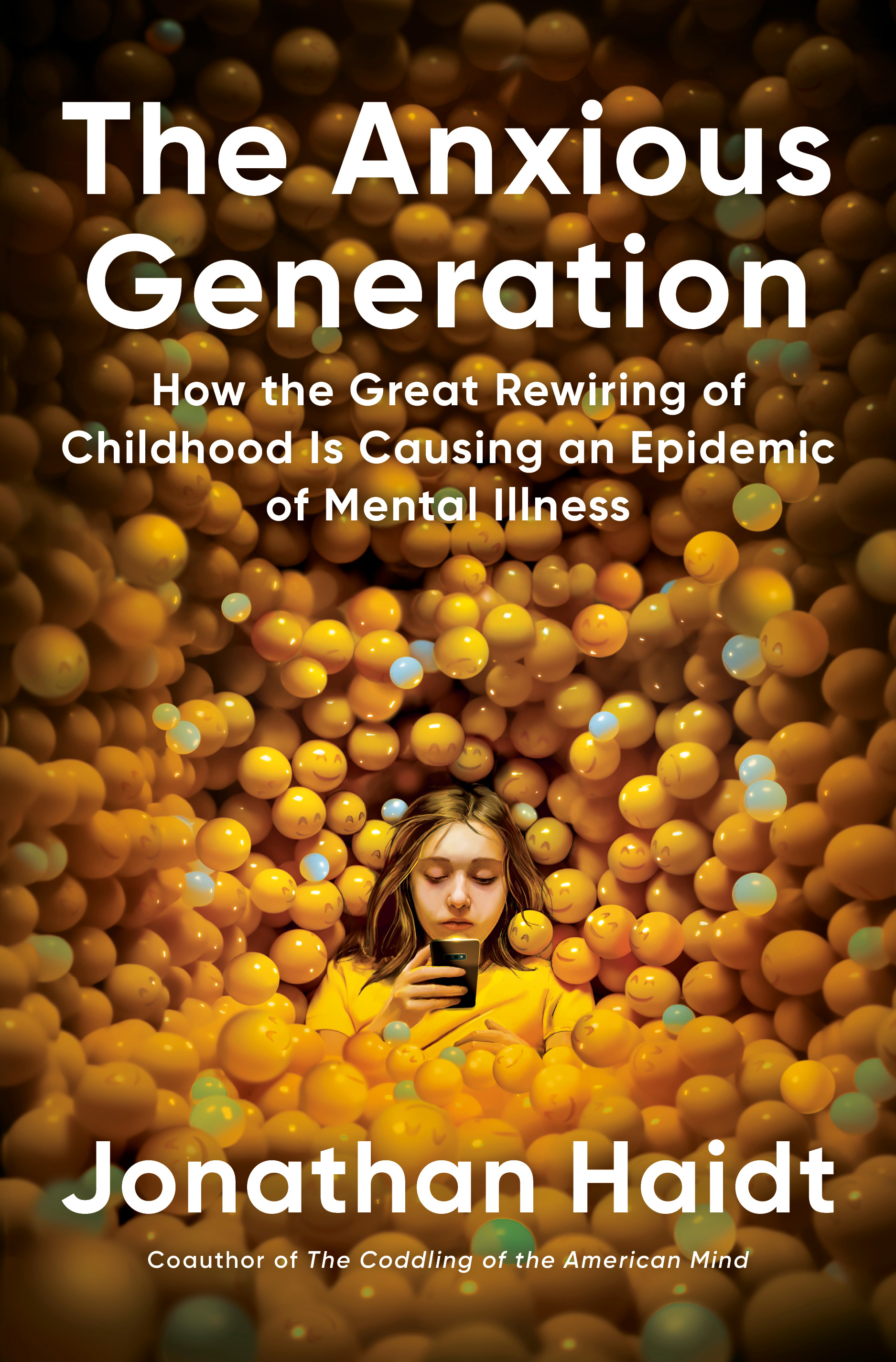
The Anxious Generation: How the Great Rewiring of Childhood Caused an Epidemic of Mental Illness
Book Description
What if the very fabric of childhood has unraveled, leaving a generation gripped by anxiety? In "The Anxious Generation," Jonathan Haidt uncovers the startling truth behind the epidemic of mental illness plaguing today’s youth. As smartphones and social media reshape connections, the consequences are dire—distorted realities, fractured relationships, and an unyielding wave of distress. Haidt combines cutting-edge research with poignant stories, revealing how our cultural shift has created a perfect storm for mental health crises. Can we reclaim a healthier childhood before it’s too late, or are we witnessing the emergence of a lost generation?
Quick Book Summary
"The Anxious Generation" by Jonathan Haidt explores how the rapid technological transformation of childhood—accelerated by smartphones and social media—has led to a dramatic rise in youth anxiety and mental health disorders. Haidt argues that the "great rewiring" of social life and development, starting in the early 2010s, disrupted crucial facets of growing up. Through insights from psychology, sociology, and real stories, Haidt demonstrates how unrestricted online exposure, lack of independent play, and eroding face-to-face interactions have unmoored children from traditional support structures. He calls for collective action from parents, educators, and policymakers to reclaim healthy childhood practices and limit the harms of digital immersion before an entire generation's development is irreparably affected.





Summary of Key Ideas
Table of Contents
- 1. The Impact of Social Media and Smartphones on Youth Mental Health
- 2. Loss of Independent Play and Real-world Socialization
- 3. The Collapse of Traditional Structures and Support Systems
- 4. Biological and Psychological Vulnerabilities in Adolescence
- 5. Pathways to Change: Solutions for a Healthier Generation
The Impact of Social Media and Smartphones on Youth Mental Health
Jonathan Haidt explores how childhood has been fundamentally altered by digital technology. Beginning in the early 2010s, smartphones and social media became near-universal among youth, marking a "great rewiring" of social dynamics and self-development. The consequences have been staggering: rates of anxiety, depression, and self-harm have soared, particularly among adolescent girls. Haidt weaves together statistics, psychological theories, and personal stories to illustrate how constantly connected, yet emotionally distant, young people have become.
Loss of Independent Play and Real-world Socialization
One root problem lies in the diminished opportunities for independent play and in-person social interaction. As parents grew more protective, and digital devices proliferated, children’s unsupervised, creative play sharply declined. This has undermined their ability to build resilience, solve conflicts, and develop autonomy—core components of psychological health. Online interaction, while constant, tends to lack the richness, body language, and feedback loops of real-world connection.
The Collapse of Traditional Structures and Support Systems
Haidt also investigates how traditional support structures—families, schools, and communities—have struggled to adapt to the new digital landscape. Institutions that once provided stability now often facilitate or passively allow the entrenchment of harmful online norms. In addition, the pervasive fear of risk has resulted in fewer opportunities for kids to encounter manageable challenges, further eroding their confidence and competence.
Biological and Psychological Vulnerabilities in Adolescence
A critical element is adolescence's biological vulnerability: the teenage brain is acutely sensitive to social feedback and comparison, which social media amplifies to an unprecedented degree. The dopamine-driven feedback loops of platforms like Instagram and TikTok trigger addictive behaviors and foster constant comparison, leading to lower self-worth, heightened anxiety, and fragile identity formation.
Pathways to Change: Solutions for a Healthier Generation
Despite these daunting challenges, Haidt presents a hopeful vision for change. He outlines culturally and policy-driven solutions—delaying smartphone and social media use, promoting free-range parenting, redesigning schools, and building community resilience. By recovering lost childhood experiences and enforcing thoughtful boundaries on technology, society can mitigate the mental health crisis and give the next generation a stronger foundation for well-being.
Download This Summary
Get a free PDF of this summary instantly — no email required.