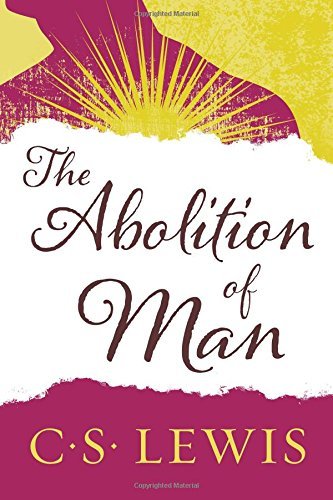
The Abolition of Man
Book Description
Humanity stands at a crossroads, caught between the allure of progress and the haunting echoes of deep moral decline. C.S. Lewis unveils a powerful critique of modern education and the erosion of objective values, warning of a world where reason crumbles under the weight of subjective whims. As society races toward technological triumphs, the very essence of what it means to be human hangs in the balance. Can the age-old truths of virtue, honor, and duty withstand the onslaught of relativism? The stakes have never been higher—will the soul of civilization be lost forever?
Quick Book Summary
"The Abolition of Man" by C.S. Lewis is a profound philosophical critique of modern education and the dangers of abandoning objective values. Lewis argues that by rejecting universal standards of right and wrong—what he refers to as the Tao—societies risk raising individuals unable to distinguish true goodness, beauty, and justice. He contends that subjective approaches to education undermine the moral framework necessary for human flourishing. Without objective values, technology and intellectual progress may actually erode our humanity, reducing people to manipulators and the manipulated. Lewis warns that the abandonment of virtues like honor, duty, and truth threatens the very foundation of civilization, ultimately leading to the ‘abolition’ or loss of what makes us truly human. His work is a rallying call to preserve and cherish the enduring truths that guide moral development.


Summary of Key Ideas
Table of Contents
The Dangers of Moral Relativism
C.S. Lewis opens his work by examining how modern education increasingly teaches students to approach values and moral judgments as mere subjective emotions rather than as reflections of objective truth. He critiques a contemporary English textbook for encouraging students to respond to feelings instead of recognizing inherent qualities like beauty or virtue. Lewis asserts that such approaches subtly erode a student’s ability to discern universal moral truths, setting them adrift in a world governed only by personal preferences and societal trends.
Objective Values and the Tao
Central to Lewis's argument is the concept of the Tao, a term he uses to represent the timeless, cross-cultural set of moral principles shared by humanity. These objective values, Lewis argues, are foundational to meaningful moral discourse and societal wellbeing. He warns that without widespread adherence to the Tao, society loses the ability to cultivate genuine virtues like courage, self-sacrifice, and honor—qualities essential for the flourishing of individuals and communities alike.
Education's Role in Shaping Character
Lewis is deeply concerned with the role of education in shaping moral character. He believes that education should be about more than simply transmitting knowledge; it should nurture the moral imagination and cultivate the affections, training students to love what is good and true. When educators reject the reality of objective values and treat all ethical judgments as relative or subjective, they fail to form students capable of moral reasoning. This, Lewis claims, produces "men without chests"—people lacking the heart necessary to pursue virtue.
The Consequences of Value Abandonment
The abandonment of objective values, Lewis argues, leads not to true liberation, but to the rise of a new kind of tyranny. Advances in science and technology, when divorced from the grounding of the Tao, empower some individuals to manipulate others, treating people as mere objects or material for experimentation. Ultimately, this can result in the destruction of the very qualities that make us human—our capacity for love, justice, and truthfulness—culminating in the “abolition of man.”
The Preservation of Humanity
Lewis closes with an urgent plea to recognize and preserve the foundational role of objective values in human life. He insists that only by anchoring ourselves to the enduring truths of the Tao can we avoid the moral and spiritual collapse of civilization. The call is not simply for the defense of tradition, but a passionate advocacy for the values that give meaning and order to both individuals and societies. His message remains a powerful warning and reminder of what is at stake in our approach to morality and education.
Download This Summary
Get a free PDF of this summary instantly — no email required.