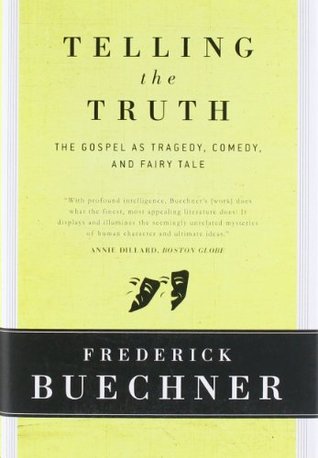
Telling the Truth: The Gospel as Tragedy, Comedy, and Fairy Tale
Book Description
Amidst the cacophony of life’s drama, where laughter and heartbreak intertwine, Frederick Buechner reveals the Gospel's multifaceted essence as tragedy, comedy, and fairy tale. This powerful exploration delves into the human experience, showcasing the divine narrative that resonates deeply within our struggles and joys. With poignant insights and vivid storytelling, Buechner invites readers to uncover the profound truths that shape faith and existence. As the lines between sacred and secular blur, one question looms: What if the stories we tell ourselves hold the key to understanding our place in the cosmos?
Quick Book Summary
In "Telling the Truth: The Gospel as Tragedy, Comedy, and Fairy Tale," Frederick Buechner reimagines how we interpret and share the Christian Gospel. Rather than treating the Gospel as a straightforward set of doctrines or moral teachings, Buechner explores its deeper narrative layers—tragedy, comedy, and fairy tale—to reveal its transformative power. He suggests the telling of the Gospel meets us in the fullness of human experience, addressing sorrow, hope, and wonder. Through personal reflection, biblical storytelling, and literary analysis, Buechner illustrates that truth is not always comfortable or direct but is instead saturated with paradox and mystery. Ultimately, he challenges readers to approach faith with honesty, both about life's pain and its possibilities for redemption.



Summary of Key Ideas
Table of Contents
The Gospel as Tragedy: Facing Brokenness and Loss
Buechner begins by addressing the tragic dimensions of the Gospel, recognizing that its story starts in the depth of human suffering and loss. He argues that to truly engage with faith, one must confront the darkness, despair, and grief embedded in both biblical narratives and our own lives. The tragedy of the Gospel is its honest acknowledgment of how fractured and aching the human condition can be. By facing tragedy without flinching, believers avoid sentimentality and instead find a faith robust enough to handle real pain.
The Gospel as Comedy: Unexpected Grace and Joy
Into this landscape of tragedy, Buechner introduces the concept of the Gospel as comedy—not in the sense of humor, but in the literary sense of unforeseen joy. Comedy emerges when grace breaks into hopelessness, and the story takes an unexpected turn toward life and laughter. He illustrates that the Gospel, at its core, is about joyful reversals: the dead live, the lost are found, and despair gives way to hope. This form of comedy is not trivial but profound, rooted in the belief that joy can emerge out of sorrow.
The Gospel as Fairy Tale: Transformation and Hope
Next, Buechner discusses the Gospel as fairy tale, viewing faith as an invitation to a world that transcends the limitations of reality. He suggests that fairy tales speak to our deepest longings and the possibility for transformation. The Gospel proclaims that the impossible becomes possible; ordinary people are drawn into an extraordinary story. Through this lens, miracles and redemption are not naïve, but necessary responses to the world’s brokenness, opening us to wonder and hope.
The Necessity of Honest Storytelling
A central theme in Buechner’s work is the necessity of honest storytelling. He insists that preachers and believers alike must speak truthfully—acknowledging both sorrow and joy, acknowledging doubts as well as convictions. Rather than sugarcoating reality or offering easy answers, authentic faith occurs when the full spectrum of human experience is brought before God. Buechner’s call is for vulnerability, reminding readers that the Gospel's power lies in its capacity to speak to the actual conditions of human life.
Embracing Paradox in Faith
Throughout, Buechner encourages an embrace of paradox. Faith, he says, is not straightforward or free from contradiction, but is instead a space where hope and despair, sorrow and joy, reside side by side. The Gospel’s truth is multifaceted, speaking differently to different people at different moments. By holding tragedy, comedy, and fairy tale together, Buechner shows how the Christian story holds space for life’s complexity, inviting us into a deeper, more truthful encounter with God.
Download This Summary
Get a free PDF of this summary instantly — no email required.