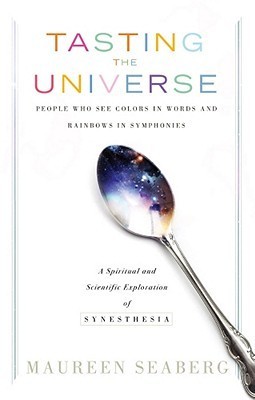
Tasting the Universe: People Who See Colors in Words and Rainbows in Symphonies
Book Description
Colors leap off the page, melodies dance in the air, and every word bursts into a kaleidoscope of sensations. In "Tasting the Universe," Maureen Ann Seaberg takes you on a mesmerizing journey into the extraordinary world of synesthesia, where perception transcends ordinary limits. Meet those who experience an exhilarating blend of senses—where letters shimmer in vibrant hues and sounds evoke breathtaking images. As they navigate a life of chaotic beauty and profound connection, questions arise: How does this vivid perception shape their reality? What does it mean to truly see the universe? Dive into this captivating exploration and discover a realm where imagination knows no bounds.
Quick Book Summary
"Tasting the Universe" by Maureen Ann Seaberg is a fascinating journey into the world of synesthesia, a neurological phenomenon where the senses mingle, producing remarkable perceptions like tasting shapes, hearing colors, or seeing numbers in vibrant hues. Seaberg, herself a synesthete, combines personal experience with thorough research and captivating interviews with others who experience these sensory crossovers. The book explores how synesthesia shapes creativity, perception, and the everyday lives of those who have it. Seaberg delves into the science and art behind this phenomenon, offering insights into how it expands our understanding of human consciousness. Readers are treated to both scientific explanations and rich, personal narratives, revealing the beauty and complexity of a mind where senses blend in extraordinary ways.



Summary of Key Ideas
Table of Contents
Understanding Synesthesia: Merging the Senses
Maureen Ann Seaberg opens her exploration of synesthesia by inviting readers into a world where conventional boundaries between senses are blurred. Through vivid descriptions and the sharing of her own experiences, she illustrates what it’s like to taste words and see colors in response to sounds. The book introduces synesthesia not as a disorder but as a unique variation of perception, sparking curiosity and empathy for those whose minds function in such extraordinary ways.
Personal Narratives and Diverse Experiences
Seaberg enriches her narrative by collecting personal stories from a diverse array of synesthetes—from artists and musicians to everyday people. These narratives highlight the wide range of synesthetic experiences, including grapheme-color synesthesia (associating letters or numbers with colors), chromesthesia (seeing colors in response to sounds), and other unusual sensory pairings. Such firsthand accounts reveal both the joys and challenges synesthetes face, including moments of confusion or isolation and the comfort found in connecting with others who share similar perceptions.
Scientific Exploration and Theories
The book dives into the neuroscience behind synesthesia, detailing the current scientific theories and studies that aim to explain how and why some people experience this fascinating phenomenon. Seaberg discusses brain imaging, genetic research, and the role of neural connections in fostering sensory overlap. She presents synesthesia as a key area that challenges and expands our understanding of perception, consciousness, and the brain’s remarkable plasticity.
Synesthesia’s Impact on Creativity and Perception
A significant portion of Seaberg’s work is devoted to the influence of synesthesia on creativity. She draws connections between synesthetic perception and the arts, profiling musicians, painters, and writers who credit their unique sensory experiences for inspiring their creative output. By linking historical and contemporary artistic figures with synesthetic traits, she suggests that mingled senses can provide a wellspring of innovation and novel artistic expression.
Embracing Neurodiversity and Expanding Awareness
In the final sections, Seaberg advocates for recognizing synesthesia as a natural and valuable aspect of neurodiversity. She explores the broader implications of embracing different modes of seeing and sensing the world, encouraging a society that values cognitive diversity. The book closes with reflections on the potential for synesthesia to expand our collective imagination, fostering greater empathy and deeper appreciation for the rich tapestry of human perception.
Download This Summary
Get a free PDF of this summary instantly — no email required.