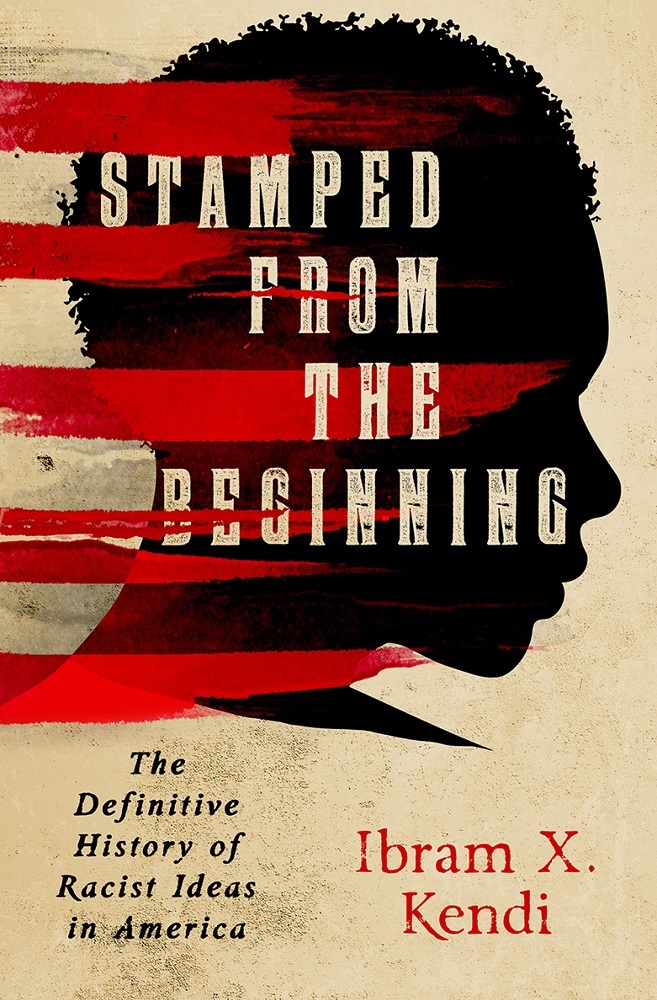
Stamped from the Beginning: The Definitive History of Racist Ideas in America
Book Description
What if the very fabric of American history is woven with threads of racist ideas? "Stamped from the Beginning" unearths the dark roots of racism in America, revealing how deeply ingrained beliefs have shaped society across centuries. Ibram X. Kendi takes you on a relentless journey through the thoughts of influential figures, unveiling a gripping narrative of oppression, resistance, and transformation. From colonial times to the Black Lives Matter movement, the fight against racism pulses with urgency. Can understanding our past ignite a future where equality prevails?
Quick Book Summary
In "Stamped from the Beginning," Ibram X. Kendi delivers a sweeping, deeply researched chronicle of the long and persistent history of racist ideas in the United States. Kendi argues that racist ideas did not arise out of ignorance or hatred alone, but were deliberately constructed to justify and perpetuate discriminatory practices and policies. The book explores how major historical figures perpetuated or challenged racism, tracing the evolution of these ideologies from colonial America to the present day. By examining the lives and works of five key individuals—Cotton Mather, Thomas Jefferson, William Lloyd Garrison, W.E.B. Du Bois, and Angela Davis—Kendi reveals the interplay of segregationist, assimilationist, and antiracist ideas. Ultimately, Stamped from the Beginning urges readers to confront uncomfortable realities, recognize how false beliefs have shaped the nation, and commit to fostering genuine equality.





Summary of Key Ideas
Table of Contents
Racist Ideas as Purposeful Constructs
Ibram X. Kendi’s work contends that racist ideas in America are not simply born of ignorance or fear; rather, they are carefully crafted to protect and justify economic, political, and social interests. These ideas, he demonstrates, have been written into the nation’s history since its earliest days, serving as rationalizations for slavery, segregation, and inequality. Kendi exposes the ways in which such ideas shift and adapt, persisting through centuries in ever-evolving forms and continually shaping the national narrative.
The Dynamics of Segregationist, Assimilationist, and Antiracist Thought
Throughout the book, Kendi categorizes thought about race into three main categories: segregationist, assimilationist, and antiracist. Segregationists believe Black people are inherently inferior, while assimilationists support uplift through mimicry of white norms. Antiracists argue for the inherent equality of all and for the dismantling of racist structures. The tension and interplay among these perspectives recur through each era, embodied by both well-known and overlooked figures whose legacies have influenced how America confronts race.
Influential Figures and Shifting Ideologies
Kendi structures the book around the lives and philosophies of five pivotal people: Cotton Mather, Thomas Jefferson, William Lloyd Garrison, W.E.B. Du Bois, and Angela Davis. Each serves as a lens to examine broader trends in American history: colonialism and early religious justifications for slavery, Enlightenment-era rationalizations, the abolitionist and reconstruction movements, early 20th-century shifts in Black activism, and the explosion of Black Power in the late 20th century. Through these profiles, Kendi illustrates both the spread of racist notions and the evolution of resistance.
Policy and Power: How Racism Endures
A central theme of Kendi’s book is the role of laws and policies in entrenching racism. He reveals how racist policies precede and create demand for racist ideas, not the other way around. Whether through the codification of slavery, Jim Crow laws, redlining, or mass incarceration, structures of power have protected white supremacy and shaped American society. Kendi’s analysis makes clear that policy shifts—driven by power and self-interest—often produce the intellectual justifications for continued oppression.
Resistance and the Path Toward Change
Kendi concludes by challenging readers to acknowledge the deeply rooted nature of racism and the necessity of antiracist action. He stresses that only by understanding the deliberate construction of racist ideas and confronting the policies that sustain them can real progress occur. The history Kendi narrates is one of both enduring injustice and resilient struggle, urging individuals and society to recognize complicity and strive for transformative change toward true equality.
Download This Summary
Get a free PDF of this summary instantly — no email required.