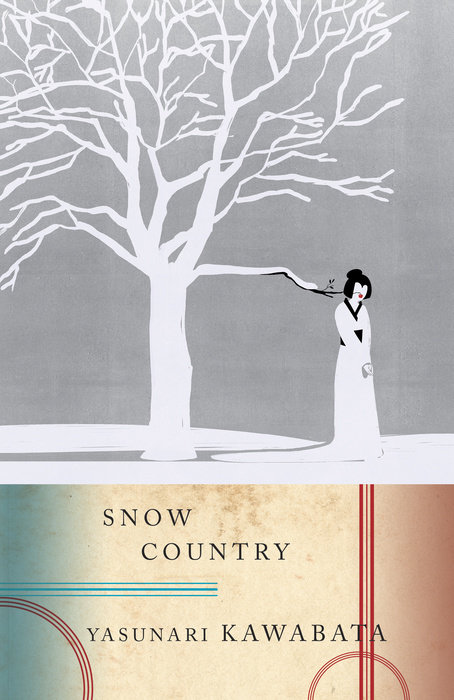
Snow Country
Book Description
Amidst the stark beauty of a remote Japanese hot spring town, a man retreats from the chaos of life, only to find himself ensnared in a tangled web of desire and heartbreak. As snow falls softly outside, tension simmers within; he is drawn to a captivating woman, a geisha whose past haunts her every move. Their fragile relationship unfolds against a backdrop of melancholic landscapes and profound introspection, challenging the boundaries of love and longing. Will their connection withstand the weight of their secrets, or will the harsh winter tear them apart? In a world where beauty and sadness intertwine, what price is one willing to pay for true connection?
Quick Book Summary
Set in the snowy mountains of western Japan, "Snow Country" by Yasunari Kawabata is a haunting tale of unfulfilled love and the search for meaning amidst transience. The narrative centers around Shimamura, a wealthy Tokyoite who frequents a remote hot spring town and becomes involved with Komako, a lively yet troubled geisha. Their relationship is suffused with yearning and melancholy, shaped by the isolating landscape and the impermanence that defines both nature and their emotions. Through lyrical prose and evocative imagery, Kawabata explores themes of beauty, sadness, and the chasm between spiritual aspiration and reality. Shimamura and Komako’s tenuous connection reflects broader questions about the possibility of authentic relationships in a world marked by loneliness, desire, and inevitable loss.


Summary of Key Ideas
Table of Contents
Impermanence and Disconnection
In the pristine and isolated setting of a rural hot spring town, Shimamura, a cultured but emotionally detached Tokyo dweller, seeks respite from his unfulfilling urban life. His frequent retreats to the snow country reveal his fascination with experiences and people that exist outside his ordinary routines. Drawn to the town’s unique beauty, he becomes a regular visitor, contextually set apart from the local inhabitants not just by geography, but by his detachment and observer’s mindset.
Beauty Amidst Sadness
Shimamura’s relationship with Komako, a vibrant and sincere geisha, forms the heart of the narrative. Komako, bound by duty and circumstances, represents both resilience and vulnerability. She is earnest in her affections for Shimamura, yet poignantly aware of the fleeting nature of their affair. Their interactions are charged with longing and sadness, highlighting the emotional gap that persists between them. Komako’s life, shaped by sacrifices and compromises, contrasts sharply with Shimamura’s privileged position as an outsider.
The Nature of Desire
Throughout the novel, the landscape of the snow country acts as both a literal and symbolic backdrop. The cold, silent winters and heavy snowfall evoke feelings of loneliness, isolation, and impermanence. Kawabata’s subtle and poetic description of the environment amplifies the inner states of the characters, where beauty and melancholy are inseparable. The silence and stillness of the snow mirror the characters’ inability to fully bridge the gaps between them.
Contrast Between City and Countryside
Desire, in its various forms, suffuses the story. For Shimamura, the rural world and his attachment to Komako offer an escape from urban ennui, but he remains fundamentally detached, treating love as another aesthetic experience rather than a transformative bond. Komako, on the other hand, is sincere in her longing, yet inevitably hurt by the constraints of society and her position. Their passion is intense but ephemeral, destined to dissolve much like the snow itself.
The Burden of Past and Identity
Finally, the characters are haunted by their pasts and existential uncertainties. Komako’s choices are influenced by her obligations and history, while Shimamura is continually pulled between artistic ideals and emotional emptiness. The novel’s conclusion, marked by both catastrophe and ambiguity, leaves the reader with a lingering sense of unresolved tension. In masterful prose, Kawabata captures the inexorable forces of beauty and impermanence, making "Snow Country" a timeless meditation on love, loss, and the distances—emotional and physical—that define human experience.
Download This Summary
Get a free PDF of this summary instantly — no email required.